
advice/living
Helen Garner,
Simone de Beauvoir,
Constance Debré,
Jennifer Egan,
Sally Rooney,
Jonathan Franzen,
Patricia Highsmith,
Vivian Gornick,
Mario Levrero
just like life advice. ideally philosophical rather than pragmatic
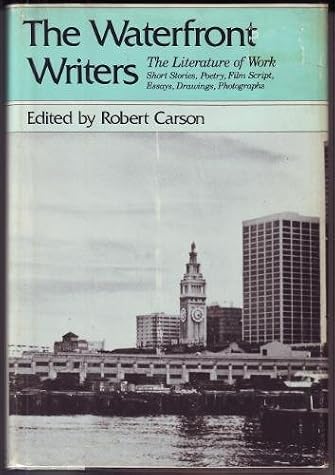
Eight or seven years ago,
before my back
began to scream at night,
we worked a rusted freighter
held together by forgotten screws.
The cargo was burlap bags of coffee
and the lingering heat of Latin suns.
Spilled beans became
ball bearings beneath our feet
as we swung the sacks
into bulging stacks on pallet boards.
The talk was of other lives
and private selves
with dreams of suburbs
and hard-fought football games.
An older brother heard something
in my own embroidered tale
and said, What's
a nice, educated boy like you
doing in a job like this?
I said then,
and pray it can be said at the end,
I sold my body
to save my mind.
AHHHH

He went out again, and again I stayed a long while on the balcony. I watched an orange-red crane turning against the blue background of the sky. I watched a black insect that drew a broad, foaming, icy furrow across the heavens. The eternal youth of the world makes me feel breathless. Some things I loved have vanished. A great many others have been given to me. Yesterday evening I was going up the Boulevard Raspail and the sky was crimson: it seemed to me that I was walking upon an unknown planet where the grass might be violet, the earth blue. It was trees hiding the red glare of a neon-light advertisement. When he was sixty Andersen was astonished at being able to cross Sweden in less than twenty-four hours, whereas in his youth the journey had taken a week. I have experienced wonders like that. Moscow in three and a half hours from Paris!
<3

Sam used to say that Marx was the most fortunate person he had ever met—he was lucky with lovers, in business, in looks, in life. But the longer Sadie knew Marx, the more she thought Sam hadn’t truly understood the nature of Marx’s good fortune. Marx was fortunate because he saw everything as if it were a fortuitous bounty. It was impossible to know—were persimmons his favorite fruit, or had they just now become his favorite fruit because there they were, growing in his own backyard? He had certainly never mentioned persimmons before. My God, she thought, he is so easy to love. “Shouldn’t you wash that?” Sadie asked.

Cleo (to both men): Yes, if there's roads, I'll take them. I'll go up all those roads till I find what I want. I want a love that uses me, that needs me. Don't you think there's a world of joyful men and women? Must all men live afraid to laugh and sing? Can't we sing at work and love our work? It's getting late to play at life; I want to live it. Something has to feel real for me, more than both of you. You see? I don't ask for much ...
Prince: Miss Cleo, believe me, life is lonely, life is empty. Love isn't everything. A dear true friend is more than love -- the serge outlasts the silk. Give me a chance. I know your needs. I love your needs ... What do you have to lose?
Cleo: (immobile): Everything that's me.

The ongoing proletarianization of intellectuals prompts any number of further questions. Should we abandon the corporate publishers before they abandon us? So far we haven’t done so, but we’ve tried — as have many others — to fill the gaps left by the industry’s consolidation and caution. In our own work, should we tend toward more “accessible” language and popular forms — or take the increasing hopelessness of making a living from writing as license to experiment? In search of cheaper rents and fertile ground for new institutions, should we leave Brooklyn and make for the provinces? (Will we cross our displaced academic friends fleeing the other way?) Or do we stay and fight for rent control and the right to the city? And how to reply to the familiar reproach: If you want to change and not just interpret the world, why not give up writing and become an organizer or activist? Part of the answer, at least, is that learning to organize, like learning to write, takes years, and you can’t just substitute one job for the other — we will have to be amateur activists. Another part is that if activists are indispensable, so are intellectuals. The words of Adorno in “Sociology and Empirical Research” (1957), arguing for the Frankfurt School’s own version of critical sociology, come to mind: “Not only theory but also its absence becomes a material force when it seizes the masses.” Just this — for theorists and the masses alike — has been our problem.
These tentative answers to the whole perplex of culture and politics can also be taxed with vagueness and no doubt confusion. We’re trying to figure what to do from an unstable position amid crumbling institutions and generalized crisis. More than one variety of brave and honest, necessarily incomplete response to the dilemma can surely be offered, and still more varieties of evasive bullshit: a good ear will know the difference. We can’t bring ourselves to cheer the failure of institutions that have sustained us — but we can at least be grateful that the collapsing structures are carrying out a sort of structural rescue of meaningful individual choice, in politics and culture. Bobo or ProBo? Siege mentality (“We writers are in this together!”) or sorties beyond the walls: “We’re in this with almost everyone!”? Reform existing institutions, or replace them, or cultivate your own garden, or retire to your Unabomber cabin? Join the traditional intellectuals and seek patronage among think tanks, foundations, rich individuals, and multinational corporations, or do something for cultural revolution? Not that the old Marxist jargon matters too much, adopted or abandoned. What counts is history asking us a question — about our content or purpose in a society of accelerating insecurity, including our own — that one way or another we need to formulate as sharply as possible, since we answer it with our lives.
ahhhhhhh

I realize now that I was trying to undo by writing what could only be undone by action, not alone but with others—and through connections that incantation alone would not conjure. Words, it turned out, did not have all the performative powers that 1990s book-learning sometimes seemed to suggest. In the strange and wonderful final book of Leviathan, “On the Kingdom of Darkness,” Thomas Hobbes describes the job of thinking as untying superstitious knots that enmesh the mind. The superstition I recognized was neoliberal realism, which sets and polices the boundaries of the possible while pretending to map them objectively. But an equal and opposite superstition is the thought that language, style, and invocation could disperse those constraints, as if their being discourse meant they were only words, set to be scattered by other words.

Such a political practice ought to terrify its participants as they embark on it, and discomfit those with whom they seek to engage. Like all stigmatized relationships, political engagements adequate to this moment are as likely to feel confusing or frightening as ecstatic or liberating. Affective struggle has to entail becoming connected to the people who can’t see past their confusion or fear, and building solidarity where there is none by insisting on a form of relationship to which few are accustomed and that the mainstream neoliberal subject sees as genuinely queer: camaraderie. What’s more, the willingness to generate discomfort will require insistence on connection even through multiple rounds of rejection. To lose heart at the first refusal — whether to join a union, attend a protest, or just talk about politics — is one of the indulgences of left melancholy, with its grim satisfaction in defeat. I’ve been sent scurrying from the slammed doors of many people whom I’ve tried to recruit to join my union, including countless people who are today members and leaders of the organization. I doubt this process is nearly as painful or costly as coming out of the closet. (Though being queer in America and being a trade unionist may not be so far apart in stigma as they once were.) Still, it does seem to me that the affective kernel at its core — attempting to form new relationships that violate and undermine the collective norm — is essentially the same.

[...] can the political impulses that Harris represents, the ones that come out of our generation’s distinctive experience, mature into potent collectivity? Or are they individualist from the root, bound to decay into posture and then a racket—absent the guidance of more seasoned activists, or without connection to struggles more deeply historically or socially grounded?
[...] What is the proper relationship to the past for those of us who want to make a new future?
The more traditional socialist left argues for continuity. We’ve been doing occupations since forever, Maisano said; let’s rebuild social-democratic institutions like CUNY, Henwood said. Socialism may be embraced by the young now, but in this version it still looks and sounds like Bernie Sanders—still a project of recuperation as much as invention, resuming an effort interrupted by the neoliberal caesura. In some guises, such historical continuity is humbling and useful. In others, it’s boomer narcissism run amok, reducing every left-wing proposition from a young person to an opportunity to force the past into the present. “Don’t repeat my mistakes,” cries the old socialist to the new one. The result can be formally radical but quite often conservative in affect and mood, dabbling soberly in the far-fetched notion that you can change the structure of society while everyone stays the same kind of people. This is one way of understanding why whiteness and masculinity continue to bedevil the socialist left, even in its committed antiracist and feminist quarters. A left that maintains a tether to a usable past is bound more tightly to the historical American nightmare. It can’t rush toward utopia, because it’s committed to engaging with people as they are and nudging them along.
The insurrectionary left, on the other hand, wants year zero. The power of the occupation, Lennard pointed out, is that when you step into it, you become someone else. The problem with becoming someone else, though, is that you’re disinherited from your history, so you can’t wield it effectively to understand the present or get ready for the future. It’s life in a permanent now, a condition reflected in anarchism’s traditional weakness when it comes to strategic calculation and engagement with state institutions—those durable, blunt objects. What was predictable about Occupy’s destruction—in fact, what was predicted at Bluestockings that night—was for this reason hard to prepare for until it was already under way.
It is, in its way, a generational question. If you kill your parents, you won’t hear their warnings, and then you’ll eventually just become them without realizing it. If you listen to them, you’ll become them on purpose. The question is how to become new and stay that way, how to be a stable point moving steadily from past into future without a neurotic relation to either—neither clinging nor leaping. This is the existential core of the strategic question on the left. It’s a question about growing up.

It was hegemony, Stuart Hall argued in 1983, that was key to understanding the disappointment of his own generation — why Thatcher and the new right had triumphed in remaking common sense after a decade of labor union revolt. Hegemony shaped how people acted when they weren’t thinking about it, what they thought was right and wrong, what they imagined the good life to be. A hegemonic project had to “occupy each and every front” of life, “to insert itself into the pores of the practical consciousness of human beings.” Thatcherism had understood this better than the left. It had “entered the struggle on every single front on which it calculated it could advance itself,” put forth a “theory for every single arena of human life,” from economics to language, morality to culture. The domains the left dismissed as bourgeois were simply the ones where the ruling class was winning. Yet creating hegemony was “difficult work,” Hall reminded us. Never fully settled, “it always has to be won.”
In other words, there is no economic deus ex machina that will bring the revolution. There are still people, in their stubborn, contradictory particularities, as they exist in concrete space and time. It is up to you to figure out how to act together, or not; how to find common ground, or not. Gramsci and Hall insist that you must look relentlessly at things and people as they are, face your prospects with brutal honesty, and act in ways that you think can have an effect. In these ways they are an organizer’s theorists.