
by
Peter Wollen
View all notes
Available query params: commented=1, untagged=1

In the 1940s the Realist tradition reasserted itself, though divided between two different currents. The first of these was inaugurated by Citizen Kane and continued in the later films of Welles and Wyler. Its characteristic feature was the use of deep focus. By this means, the spatial unity of scenes could be maintained, episodes could be presented in their physical entirety. The second current was that of Italian Neo-realism, whose cause Bazin espoused with especial fervour. Above all, he admired Rossellini. In Neo-realism Bazin recognised fidelity to nature, to things as they were. Fiction was reduced to a minimum. Acting, location, incident: all were as natural as possible. Of Bicycle Thieves Bazin wrote that it was the first example of pure cinema. No more actors, no more plot, no more mise en scène: the perfect aesthetic illusion of reality. In fact, no more cinema. Thus the film could obtain radical purity only through its own annihilation. The mystical tone of this kind of argument reflects, of course, the curious admixture of Catholicism and Existentialism which had formed Bazin. Yet it also develops logically from an aesthetic which stresses the passivity of the natural world rather than the agency of the human mind.
The ideological effects of such a recasting of the semiological foundations of art would be of the utmost importance. It would situate the consciousness of the reader or spectator no longer outside the work as receiver, consumer and judge, but force him to put his consciousness at risk within the text itself, so that he is forced to interrogate his own codes, his own method of interpretation, in the course of reading, and thus to produce fissures and gaps in the space of his own consciousness (fissures and gaps which exist in reality but which are repressed by an ideology, characteristic of bourgeois society, which insists on the ‘wholeness’ and integrity of each individual consciousness). All previous aesthetics have accepted the universality of art founded either in the universality of ‘truth’ or of ‘reality’ or of ‘God’. The modern movement for the first time broke this universality into pieces and insisted on the singularity of every act of reading a text, a process of multiple decodings, in which a shift of code meant going back over signals previously ‘deciphered’ and vice versa, so that each reading was an open process, existing in a topological rather than a flat space, controlled yet inconclusive.
The question of good and evil is not for Boetticher a question of abstract and eternal moral principles; it is a question of individual choice in a given situation. The important thing, moreover, is the value which resides in action of a certain kind; not action to values of a certain kind. Evidently, this is a kind of existentialist ethic, which by its nature is impure and imperfect, but which recognises this. Hence the irony which marks Boetticher’s films and particularly his attitude to his heroes. The characters played by Randolph Scott are always fallible and vulnerable; they make their way inch by inch, not at all with the sublime confidence of crusaders. Yet it is possible for Andrew Sarris to talk of the ‘moral certitude ‘ of Boetticher’s heroes; in fact, he is confusing the philosophical integrity which structures the films with what he takes to be the absolute moral endorsement of the hero. Boetticher sympathises with almost all of his characters; they are all in the same predicament in which the prime faults are inauthenticity and self-deception, rather than infringement of any collectively recognised code. The fact that some end up dead and some alive does not necessarily indicate any moral judgment, but an underlying tragedy which Boetticher prefers to treat with irony.
For if, as seems evident enough, Godard is radically dissatisfied with society, then it is the absence of politics which condemns him to rootlessness and despair. To be dissatisfied, after all, is to want change. Politics is the principle of change in history; when we abandon it nothing remains except the scattered, expendable efforts of artists and romantics. In this sense, as Godard has said, art is always left wing. Tradition is the enemy. The tradition of our society, it would be hard to deny, is violence, vandalism, oppression and its developing sanctions, the advertiser’s copy and the carabinier’s gun.
Signs and meaning in the digital age?
The ultimate aftermath of 1968 – the final disintegration of the ‘Public Sphere’, perhaps. The triumph of the ‘Society of the Spectacle’. The Situationists vindicated! Well, vindicated negatively. 1968 was an emblematic moment which spectacularised the idea of change itself, but, as always, history plays strange tricks and the change which came wasn’t the one that had been expected. It was the end of Fordism, the end of Keynesianism, the end of classic social democracy, the beginning of a new world order, constructed around a string of world cities linked by a lattice of electronic communications which facilitated a sweeping reconfiguration of world capital.
Was Marx vindicated? And all his discredited theories about the organic composition of capital and the immiseration of the proletariat proved correct?
It looks that way, doesn’t it?

San Francisco - and the Bay Area in general - has become something of an arcade for the young and plugged in. Uber, Lyft, TaskRabbit, Carbon, Rinse, Instacart, Alfred - a kingdom of cute one-wrod fiefdoms offering chauffer and butler services for the new tech titans. They are shuttled to their corporate campuses - like csummer camp, a world fo priamry colors and playtgrounds and cafes and endless amusement to keep them happy at work. For them, all of life's conveniences can be had at the push of a button; for others, they've got to get running every time the bell rings. The sharing economy meets modern sweatshop. The gamification of life in the city doesn't mean everyone can afford to play.
I went to China, and I remember talking to the minister of economics. He said, "You must invest in our country."
I said, "Why should I? There's a guy that I ran into that built a $90 million choclate company here, and you nationzlied it. You took it from him."
hahahha this idiot can go fuck himself
I've seen start-ups change an industry and challenge huge companies. We saw Tesla change the auto industry, Skype changed the long-distance carriers, and Hotmail changed the post office. Huge things are happening out there, over the last forty-five to fifty years. So much improvement, thanks to the private sector.
I always describe these entrepreneurs as heroes. Heroes are our past, the people we look back on and say they did great things. But superheroes are our future - whether they are industrialists, leaders of societies, or revolutionaries. They are focused on the future. We need to find some superheroes.
he literally just made this heroes/superheroes distinction up???
At Intel, they have this system where you're either a blue badge or a green badge. Blue badge, you're an engineer, you're a top admin. If you're a green badge, you're a subcontractor. Which means you're at the bottom. I was a green badge.
There's special events, like the end of the summer, outside with a carnival, If you were a green badge, you were not allowed to go to the picnic, not allowed outside. Since we made the food, we got to eat it anyways - as lunch. But we weren't allowed to go outside and play the games. You could only look. You couldn't touch.
They had it very separetd - by class - as I liked to say, segregated.
Honestly, making those weird little coffee - that was a chance to do something different. Other than that, you were invisible. You were an invisible worker. Things got restocked magically.
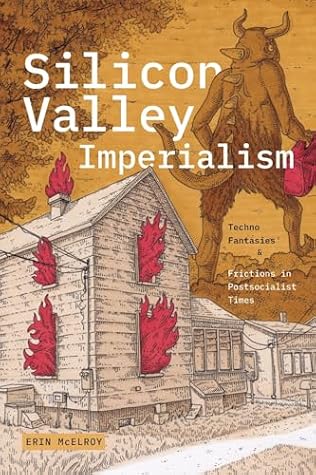
[...] That said, there are plenty of others who are paid far less to engage in more menial tasks “behind the curtain” of automation. Nevertheless, the dream of entrepreneurialism is strong. As Oana Mateescu writes, “With the professionalization of the hipster into the upster (which, in Cluj, signals involvement in the start-up ecosystem), labor becomes a form of social and urban belonging framed in the terms of a technomoral governance that can refashion the entire city into a laboratory.”13 Yet these fantasies are only accessible to some. Very few upsters are Roma, and many aspire to move to higher corporate echelons to eventually land gigs at Google or Oracle. Yet for the most part, technocapitalist logics reduce these workers to surrogate cogs in a machine that accumulates wealth in California’s San Francisco Bay Area region—a space that first “became” Silicon Valley during the Cold War.