
View all notes
Available query params: commented=1, untagged=1

The last time I performed in their theatre—the Jo Ro, opposite the factory—I played Abdullah, a street urchin in Tennessee Williams strange, static play, Camino Real. I was thirteen years old. As Abdullah, I was photographed by the Yorkshire Evening Press, and the accompanying caption came very near to praising my brief performance. I would read this caption over and over in the hope that unequivocal praise for my acting talent might somehow emerge from it.
I was fated to work in a factory. [...] My father managed to avoid working in the textile plants, but he couldn’t help being employed by ancillary businesses; there wasn’t anything else. When I was born he had been working for about five years in an iron foundry that made equipment for the plants. When the industry collapsed a few years later the foundry, like so many other local businesses, fell with it. We emigrated to the United States, where the initial promise of new and fulfilling employment soon gave way to uncertainty, then near-despair. Eventually my father was hired by yet another factory, which manufactured pipes and rods from a hard, resilient, slippery synthetic that for household applications is trademarked Teflon. He worked there until his retirement at the age of sixty-five. Immediately thereafter he began displaying symptoms of Parkinson’s disease, unprovably but almost certainly the result of twenty-seven years’ daily exposure to ambient powdered fluorocarbons. Dementia followed a decade later. His death at eighty came as a consequence of his refusing food and drink for a week, a mode of death known in nursing-home jargon as ‘Alzheimer’s suicide’.
I was about to be sprung from my class status. My father worked in a factory, my parents owned a tiny house and a secondhand car, they were socially awkward and didn’t speak very good English; I didn’t really know what a rise in status would entail. I had no desire to work in finance or to join any clubs. All I knew was that I would be avoiding the sort of life to which my parents had been sentenced. Nevertheless, I referred to myself as working class, and was even more insistent about it in college, when I met kids from fancy backgrounds. This was partly in emulation of my proudly Socialist father, partly because I was an outsider in so many ways that I had no choice but to be defiant about it, and partly because it was 1972. Revolution, the great panacea of a few years earlier, had definitively been scratched, but hopes had not yet crumbled.
Neither had a certain romantic notion of the working class. The United States was famously supposed to be classless, of course, but then almost everybody knew better. In 1972 the working class (along with a few other more or less murky categories, such as ‘street people’ and ‘our brothers and sisters in prison’) was still being floated among middle-class would-be revolutionaries as an edifying model for imitation and as a permanent source of guilt. It was a bit complicated, because ‘hard-hats’, unassailably working class, had beaten up antiwar protesters on the streets of New York City and been hailed as pillars of the Silent Majority by Richard Nixon and Spiro Agnew. But there remained the lingering aura of the Wobblies, of the miners’ strikes and auto-workers’ strikes of the 1930s, as well as a cascade of images from the Paris Commune and the October Revolution and the Long March. We imagined basking in the radiance of that aura when we wore our blue chambray shirts and listened to the MC5, not suspecting that within a decade or two so much of American industry would be exported or terminated. Then the remnants of the working class would either be handed neckties and told they were middle class, or forced into fast-food uniforms and told they didn’t exist.
And yet someone had to make toy sand-shovels for the world. What, in a just society, could ever induce someone to do that sort of work? Should all youths be conscripted to work in factories for a year? Should plastics-factory labour be reserved for the punishment of white-collar criminals? Finally I decided that salaries should be determined by a factor that averaged the arduousness, tediousness, futility and imbecility of a job. The richest people in the world then would be coal miners. Injection-moulding machine operators or tenders would fly to work in their own planes, and competition for such work would be stiff. Having had the experience, I would be quite content to be poor.
[...] In 1890, after new tariffs were introduced by the United States, the velvet workers at Lister’s were told to expect a cut in their wages of up to twenty-five per cent. The velvet workers did not have a trade union. They called for support from the Weavers Association, but Lister and his directors refused to budge and on December 17 a strike began at Manningham which lasted for nineteen weeks. At first only the velvet workers came out, but by March the dyers and spinners had joined them and almost 5,000 workers were on strike. There were violent confrontations between strikers and the police, but the strike was defeated and the production of velvet resumed. This had a large, lasting and unexpected consequence, because, by drawing attention to the lack of union organization inside the Yorkshire textile industry, it helped cause the formation of a political party to represent the interests of the working classes. The Independent Labour Party, later the Labour Party, was founded in 1893 and one of its first branches was in Bradford.
cool bit of history!
This brings us back to Mario Buitrago, who slept outside Lister’s on that very cold night. The day before the opening, the staff of Urban Splash found him freezing on their doorstep when they arrived for work at seven in the morning. They invited him in and gave him a cup of tea. It made a wonderful story for the local papers. He spoke little English but was ‘all smiles and handshakes’, according to the Yorkshire Post reporter who interviewed him. He explained that he wasn’t waiting to buy a flat for himself. He had been paid to queue on behalf of an anonymous client, thought to be a private investor from London and staying in a Bradford hotel, who was keen to secure a particular flat and willing to pay somebody else to sit out in the cold to do it.
christ
[...] Hilary couldn’t believe that they sounded just like girls at school, scurrying in the rat-run of learning and testing, trying to outdo one another in protestations of how little work they’d done. Not once did any of them actually speak seriously about their subjects. Hilary now felt so deeply disappointed in university life that on the spot she made up her mind to dedicate herself to something different and nobler, although she wasn’t clear what. Neil and Julian were concentrating upon sticking a brown lump of something on a pin and roasting it with a match. From her indifferent distance she supposed this must be drugs, but she wasn’t frightened of that now.
pano vibes
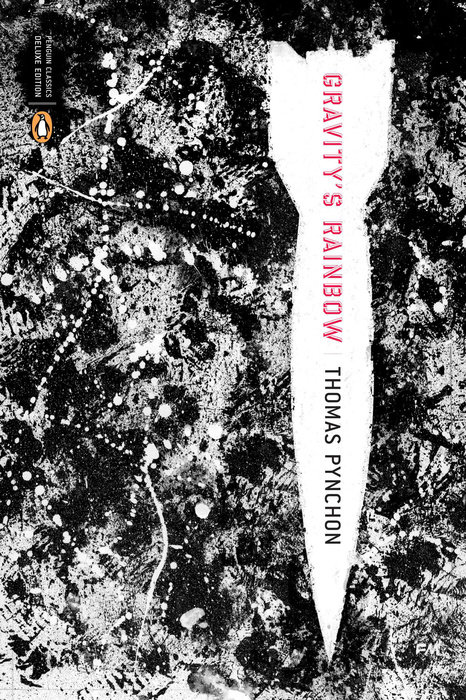
With a clattering of chairs, upended shell cases, benches, and ottomans, Pirate's mob gather at the shores of the great refectory table, a southern island well across a tropic or two from chill Corydon Throsp's mediaeval fantasies, crowded now over the swirling dark grain of its walnut uplands with banana omelets, banana sandwiches, banana casseroles, mashed bananas molded in the shape of a British lion rampant, blended with eggs into batter for French toast, squeezed out a pastry nozzle across the quivering creamy reaches of a banana blancmange to spell out the words C'est magnifique, mais ce n'est pas la guerre (attributed to a French observer during the Charge of the Light Brigade) which Pirate has appropriated as his motto . . . tall cruets of pale banana syrup to pour oozing over banana waffles, a giant glazed crock where diced bananas have been fermenting since the summer with wild honey and muscat raisins, up out of which, this winter morning, one now dips foam mugsfull of banana mead . . . banana croissants and banana kreplach, and banana oatmeal and banana jam and banana bread, and bananas flamed in ancient brandy Pirate brought back last year from a cellar in the Pyrenees also containing a clandestine radio transmitter . . .
why is this so funny?
from earlier in the chapter:
Pirate has become famous for his Banana Breakfast. Messmates throng here from all over England, even some who are allergic or outright hostile to bananas, just to watch—for the politics of bacteria, the soil's stringing of rings and chains in nets only God can tell the meshes of, have seen the fruit thrive often to lengths of a foot and a half, yes amazing but true.
"It came over in a rather delightful way," the voice high-pitched and sullen, "none of my friends are that clever. All my mail arrives by post. Do come collect it, won't you, Prentice." Receiver hits cradle a violent whack, connection breaks, and now Pirate knows where this morning's rocket landed, and why there was no explosion. Incoming mail, indeed. He gazes through sunlight's buttresses, back down the refectory at the others, wallowing in their plenitude of bananas, thick palatals of their hunger lost somewhere in the stretch of morning between them and himself. A hundred miles of it, so suddenly. Solitude, even among the meshes of this war, can when it wishes so take him by the blind gut and touch, as now, possessively. Pirate's again some other side of a window, watching strangers eat breakfast.
ugh i love it
His objective this dripping winter noon is a gray stone town house, neither large nor historic enough to figure in any guidebook, set back just out of sight of Grosvenor Square, somewhat off the official war-routes and corridors about the capital. When the typewriters happen to pause (8:20 and other mythical hours), and there are no flights of American bombers in the sky, and the motor traffic's not too heavy in Oxford Street, you can hear winter birds cheeping outside, busy at the feeders the girls have put up.
neat