
View all notes
Available query params: commented=1, untagged=1

For the managers of social democracy, the attempt to resist these cutbacks and gross transfers of wealth to the private sector was hopelessly utopian. Even if they felt the depth and speed of austerity driven by Angela Merkel and conservative technocrats was too severe, there was no working alternative model of growth on the horizon. And even if the private sector was sluggish and investment pitifully low, there was no question of any other sector leading a new round of growth. Certainly, any government which involved the state in taking over the means of investment and attempting to create new growth through public works would face the risk of stiff resistance from business, banks, civil servants, media, and of course European institutions. The legality and constitutionality of their actions could be challenged, and they might face continual crises and challenges from within. They would risk even lower rates of investment, downgrading by the ratings agencies such that borrowing would become impossible, and speculative attacks. It should not be so surprising, therefore, if we repeatedly find social democratic leaders, egged on by establishment media, capitulating to the agenda of their opponents with an air of heroic self-sacrifice.

She smiled up at him, surprised. She was in her mid-twenties, with an etched delicacy of feature and large and artless eyes. Her beauty had an element of remoteness. This was intriguing but maybe not. Her head rode slightly forward on a slender length of neck. She had an unexpected laugh, a little weary and experienced, and he liked the way she put a finger to her lips when she wanted to be thoughtful. Her poetry was shit.
i enjoyed this
"Where's your car?"
"We can't seem to find it," she said.
"I'd offer you a ride."
"I couldn't. Absolutely. I know you work en route. And I like taxis. I was never good at geography and I learn things by asking the drivers where they come from."
"They come from horror and despair."
"Yes, exactly. One learns about the countries where unrest is occurring by riding the taxis here."
He'd noticed that Torval had stopped calling him Mr. Packer. He called him nothing now. This omission left a space in nature large enough for a man to walk through.
[...] There were eating places up and down the street. He thought of people eating, lives running out over lunch. What was behind such a thought? He thought of bussers combing crumbs off the tables. The waiters and bussers did not die. It was only the patrons who failed to show up, one by one, over time, for soup with packaged crackers on the side.
"And property follows of course. The concept of property is changing by the day, by the hour. The enormous expenditures that people make for land and houses and boats and planes. This has nothing to do with traditional self-assurances, okay. Property is no longer about power, personality and command. It's not about vulgar display or tasteful display. Because it no longer has weight or shape. The only thing that matters is the price you pay. Yourself, Eric, think. What did you buy for your one hundred and four million dollars? Not dozens of rooms, incomparable views, private elevators. Not the rotating bedroom and computerized bed. Not the swimming pool or the shark. Was it air rights? The regulating sensors and software? Not the mirrors that tell you how you feel when you look at yourself in the morning. You paid the money for the number itself. One hundred and four million. This is what you bought. And it's worth it. The number justifies itself."
Vija Kinski (chief of theory) speaking
He'd always wanted to become quantum dust, transcending his body mass, the soft tissue over the bones, the muscle and fat. The idea was to live outside the given limits, in a chip, on a disk, as data, in whirl, in radiant spin, a consciousness saved from void.
The technology was imminent or not. It was semimythical. It was the natural next step. It would never happen. It is happening now, an evolutionary advance that needed only the practical mapping of the nervous system onto digital memory. It would be the master thrust of cyber-capital, to extend the human experience toward infinity as a medium for corporate growth and investment, for the accumulation of profits and vigorous reinvestment.
But his pain interfered with his immortality. It was crucial to his distinctiveness, too vital to be bypassed and not susceptible, he didn't think, to computer emulation. The things that made him who he was could hardly be identified much less converted to data, the things that lived and milled in his body, everywhere, random, riotous, billions of trillions, in the neurons and peptides, the throbbing temple vein, in the veer of his libidinous intellect. So much come and gone, this is who he was, the lost taste of milk licked from his mother's breast, the stuff he sneezes when he sneezes, this is him, and how a person becomes the reflection he sees in a dusty window when he walks by. He'd come to know himself, untranslatably, through his pain. He felt so tired now His hard-gotten grip on the world, material things, great things, his memories true and false, the vague malaise of winter twilights, untransferable, the pale nights when his identity flattens for lack of sleep, the small wart he feels on his thigh every time he showers, all him, and how the soap he uses, the smell and feel of the concave bar make him who he is because he names the fragrance, amandine, and the hang of his cock, untransferable, and his strangely achy knee, the click in his knee when he bends it, all him, and so much else that's not convertible to some high sublime, the technology of mind-without-end.
Maybe he didn't want that life after all, starting over broke, hailing a cab in a busy intersection filled with jockeying junior executives, arms aloft, bodies smartly spinning to cover every compass point. What did he want that was not posthumous? He stared into space. He understood what was missing, the predatory impulse, the sense of large excitation that drove him through his days, the sheer and reeling need to be.
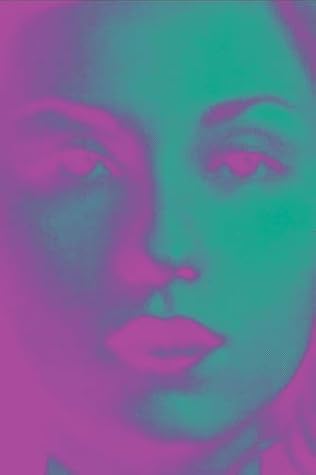
I’m tempted to suggest you skip this introduction and save your energy for Clarice Lispector, but she will give you energy instead of taking yours away. The fruits of her project—both an art and a philosophy (ontological, but also chosen, deliberate, developed)—are strangely restorative. While reading itself is not passive, you can relax, while she is hard at work, asking questions that are inside you, too, so that you yourself don’t have to frame them. Her aspiration is nothing less than to uncover the bizarre mystery of consciousness, to contemplate being while being, to apprehend life while living it. Someone has to do this work. Lispector seems to have recognized that she had a gift for the job and plunged in. I’m not claiming she made art as self-sacrifice. But in some eternal space, the philosophical boiler room of the world, the secret alcove behind a heavy velvet drape, she is yet tarrying in the void, the same void that in you and me is repressed for the sake of appearances. For the sake of “reality.”
So, no. What she ought to do was wrap them up and send them off, without any enjoyment now; wrap them up and, disappointed, send them off; and in astonishment be rid of them. Also because a person must have some consistency, her thinking ought to have some continuity: if she’d spontaneously decided to hand them over to Carlota, she should stick to her decision and give them away. Because no one changed their mind from one moment to the next.