
View all notes
Available query params: commented=1, untagged=1

And then everything righted itself again. It felt important spiritually to go to weddings: to give balance to the wakes and memorial services. People shouldn’t have been set in motion on this planet only to grieve losses. And without weddings there were only funerals. I had seen a soccer mom become a rhododendron with a plaque, next to the soccer field parking lot, as if it had been watching all those matches that had killed her. I had seen a brilliant young student become a creative writing contest, as if it were all that writing that had been the thing to do him in. And I had seen a public defender become a justice fund, as if one paid for fairness with one’s very life. I had seen a dozen people become hunks of rock with their names engraved so shockingly perfectly upon the surface it looked as if they had indeed turned to stone, been given a new life the way the moon is given it, through some lighting tricks and a face-like font. I had turned a hundred Rolodex cards around to their blank sides. So let a babysitter become a bride again. Let her marry over and over. So much urgent and lifelike love went rumbling around underground and died there, never got expressed at all, so let some errant inconvenient attraction have its way. There was so little time.
The weekend her father left – left the house, the town, the country, everything, packing so lightly I believed he would come back – he had said, ‘You can raise Nickie by yourself. You’ll be good at it.’
And I had said, ‘Are you on crack?’
And he had replied, continuing to fold a blue twill jacket, ‘Yes, a little.’
the line in the subject kills me
[...] If you were alone when you were born, alone when you were dying, really absolutely alone when you were dead, why ‘learn to be alone’ in between? If you had forgotten, it would quickly come back to you. Aloneness was like riding a bike. At gunpoint. With the gun in your own hand. Aloneness was the air in your tyres, the wind in your hair. You didn’t have to go looking for it with open arms. With open arms, you fell off the bike: I was drinking my wine too quickly.
[...] Everyone had brought food and it was spread out on a long table between the house and the barn. I had brought two large roaster chickens, cooked accidentally on Clean while I was listening to Michael Jackson on my iPod. But the chickens had looked OK, I thought: hanging off the bone a bit but otherwise fine, even if not as fine as when they had started and had been Amish and air-chilled and a fortune. When I had bought them the day before at Whole Foods and gasped at the total on my receipt, the cashier had said, ‘Yes. Some people know how to shop here and some people don’t.’
i love this paragraph - how run-on it is, how the humour is mostly buried
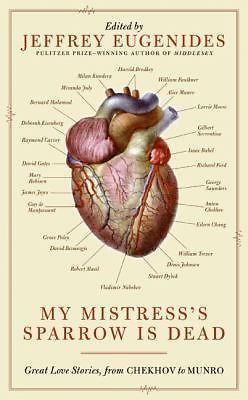
You climb on together, grab adjacent chrome posts, and when the bus hisses and rumbles forward, you take out a book. A minute goes by and he asks what you’re reading. It is Madame Bovary in a Doris Day biography jacket. Try to explain about binding warpage. He smiles, interested.
Return to your book. Emma is opening her window, thinking of Rouen.
“What weather,” you hear him sigh, faintly British or uppercrust Delaware.
Glance up. Say: “It is fit for neither beast nor vegetable.”
It sounds dumb. It makes no sense.
But it is how you meet.
omg
At the movies he is tender, caressing your hand beneath the seat.
At concerts he is sweet and attentive, buying cocktails, locating the ladies’ lounge when you can’t find it.
At museums he is wise and loving, leading you slowly through the Etruscan cinerary urns with affectionate gestures and an art history minor from Columbia. He is kind; he laughs at your jokes.
After four movies, three concerts, and two-and-a-half museums, you sleep with him. It seems the right number of cultural events. On the ste-reo you play your favorite harp and oboe music. He tells you his wife's name. It is Patricia. She is an intellectual property lawyer. He tells you he likes you a lot. You lie on your stomach, naked and still too warm.
When he says, “How do you feel about that?” don’t say “Ridiculous” or
“Get the hell out of my apartment.” Prop your head up with one hand and say: “It depends. What is intellectual property law?”
He grins. “Oh, you know. Where leisure is a suit.” Give him a tight, wiry little smile.
“I just don’t want you to feel uncomfortable about this,” he says.
Say: “Hey. I am a very cool person. I am tough.” Show him your bicep.
STOP
When you were six you thought mistress meant to put your shoes on the wrong feet. Now you are older and know it can mean many things, but essentially it means to put your shoes on the wrong feet.
You walk differently. In store windows you don’t recognize yourself; you are another woman, some crazy interior display lady in glasses stumbling frantic and preoccupied through the mannequins. In public restrooms you sit dangerously flat against the toilet seat, a strange flesh sundae of despair and exhilaration, murmuring into your bluing thighs: “Hello, I’m Charlene. I’m a mistress.”
It is like having a book out from the library.
It is like constantly having a book out from the library.
omg
He is a systems analyst—you have already exhausted this joke—but what he really wants to be, he reveals to you, is an actor.
“Well, how did you become a systems analyst?” you ask, funny you.
“The same way anyone becomes anything,” he muses. “I took courses and sent out resumes.” Pause. “Patricia helped me work up a great resume. Too great.”
“Oh.” Wonder about mistress courses, certification, resumes. Perhaps you are not really qualified.
“But I’m not good at systems work,” he says, staring through and beyond, way beyond, the cracked ceiling. “Figuring out the cost-effectiveness of two hundred people shuffling five hundred pages back and forth across a new four-and-a-half-by-three-foot desk. I’m not an organized person, like Patricia, for instance. She ’s just incredibly organized. She makes lists for everything. It ’s pretty impressive.” Say flatly, dully: “What?”
“That she makes lists.”
“That she makes lists? You like that?”
“Well, yes. You know, what she ’s going to do, what she has to buy, names of clients she has to see, et cetera.”
“Lists?” you murmur hopelessly, listlessly, your expensive beige raincoat still on. There is a long, tired silence. Lists? You stand up, brush off your coat, ask him what he would like to drink, then stump off to the kitchen without waiting for the answer.
Ask Hilda if she will go to lunch with you. Over Reuben sandwiches ask her if she ’s ever had an affair with a married man. As she attempts, mid-bite, to complete the choreography of her chomp, Russian dressing spurts out onto her hands.
“Once,” she says. “That was the last lover I had. That was over two years ago.”
Say: “Oh my god,” as if it were horrible and tragic, then try to miti-gate that rudeness by clearing your throat and saying, “Well, actually, I guess that ’s not so bad.”
“No,” she sighs good-naturedly. “His wife had Hodgkin’s disease, or so everyone thought. When they came up with the correct diagnosis, something that wasn’t nearly so awful, he went back to her. Does that make sense to you?”
“I suppose,” say doubtfully.
“Yeah, maybe you’re right.” Hilda is still cleaning Reuben off the backs of her hands with a napkin. “At any rate, who are you involved with?”
“Someone who has a wife that makes lists. She has Listmaker’s disease.”
“What are you going to do?”
“I don’t know.”
“Yeah,” says Hilda. “That ’s typical.”
Whisper, “Don’t go yet,” as he glides out of your bed before sunrise and you lie there on your back cooling, naked between the sheets and smelling of musky, oniony sweat. Feel gray, like an abandoned locker room towel. Watch him as he again pulls on his pants, his sweater, his socks and shoes. Reach out and hold his thigh as he leans over and kisses you quickly, telling you not to get up, that he ’ll lock the door when he leaves. In the smoky darkness, you see him smile weakly, guiltily, and attempt a false, jaunty wave from the doorway. Turn on your side, toward the wall, so you don’t have to watch the door close. You hear it thud nonetheless, the jangle of keys and snap of the bolt lock, the footsteps loud, then fading down the staircase, the clunk of the street door, then nothing, all his sounds blending with the city, his face passing namelessly uptown in a bus or a badly heated cab, the room, the whole building you live in, shuddering at the windows as a truck roars by toward the Queensboro Bridge.
Wonder who you are.
STOPPPPPP
[for stunt, have MC be on the other side of this, being watched by her, wondering what she is thinking, paranoid that she is happy to have him leave so she can go out etc]