
View all notes
Available query params: commented=1, untagged=1
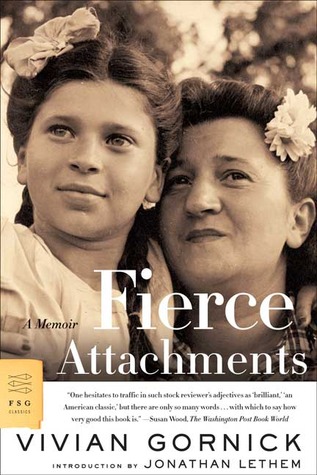
I lived in that tenement between the ages of six and twenty-one. There were twenty apartments, four to a floor, and all I remember is a building full of women. I hardly remember the men at all. They were everywhere, of course – husbands, fathers, brothers – but I remember only the women. And I remember them all crude like Mrs Drucker or fierce like my mother. They never spoke as though they knew who they were, understood the bargain they had struck with life, but they often acted as though they knew. Shrewd, volatile, unlettered, they performed on a Dreiserian scale. There would be years of apparent calm, then suddenly an outbreak of panic and wildness: two or three lives scarred (perhaps ruined), and the turmoil would subside. Once again: sullen quiet, erotic torpor, the ordinariness of daily denial. And I – the girl growing in their midst, being made in their image – I absorbed them as I would chloroform on a cloth laid against my face. It has taken me thirty years to understand how much of them I understood.
During the Depression the Communist Party sponsored and ran the Tenants’ Councils, organisations formed to fight eviction for non-payment of rent. My mother became the head of Tenants’ Council Number 29 in the Bronx (‘I was the only woman in the building who could speak English without an accent, so automatically I was voted head’), and continued to act as head until shortly after I was born, when my father made her ‘stop everything’ to stay home with the baby. Until then, she said, she ran the council. Mama running the council was a childhood classic. ‘Every Saturday morning,’ she would tell me, the way other mothers told their children Mary had a little lamb, ‘I would go down to Communist Party headquarters in Union Square and receive my instructions for the week. Then we would organise, and carry on.’ How she loved saying, ‘Then we would organise, and carry on’. There was more uncomplicated pleasure in her voice when she repeated those words than in any others I ever heard her speak.
<3
‘I bought her, I bought her. You know, Jews believed that if someone you loved was in danger you sold them and that warded off the evil eye.’ She laughs. ‘If they weren’t yours what could happen to them?’
I stare hard at her. She ignores my stare.
‘Roseman came to the door and she said to me, “The girl is dying. Will you buy her?” So I bought her. I think I gave Roseman ten dollars.’
‘Ma,’ I say, ‘you knew this was a peasant superstition, an old wives’ tale, and still you took part in it? You agreed to buy her?’
‘Of course I did.’
‘But, Ma! You were both communists.’
‘Well, listen,’ she says. ‘We had to save her life.’
Everything about Nettie proved to be impossible. She was a Gentile married to a Jew like no Jew we had ever known. Alone most of the time and apparently free to live wherever she chose, she had chosen to live among working-class Jews who offered her neither goods nor charity. A woman whose sexy good looks brought her darting glances of envy and curiosity, she seemed to value inordinately the life of every respectable dowd. She praised my mother lavishly for her housewifely skills – her ability to make small wages go far, always have the house smelling nice and the children content to be at home – as though these skills were a treasure, some precious dowry that had been denied her, and symbolised a life from which she had been shut out. My mother – secretly as amazed as everyone else by Nettie’s allure – would look thoughtfully at her when she tried (often vaguely, incoherently) to speak of the differences between them, and would say to her, ‘But you’re a wife now. You’ll learn these things. It’s nothing. There’s nothing to learn.’ Nettie’s face would then flush painfully, and she’d shake her head. My mother didn’t understand, and she couldn’t explain.
Sometimes, after an hour or so of this, she would say to me, ‘Now you say what you’d like to have happen.’ And I would say, ‘Wouldn’t it be wonderful if there was a flood or an epidemic or a revolution, and even though I’m this little kid they find me and they say to me, “You speak so wonderfully you must lead the people out of this disaster.” ’ I never daydreamed about love or money, I always daydreamed I was making eloquent speeches that stirred ten thousand people to feel their lives, and to act.
heh
The shabby tenement streets below our windows were transformed by darkness and silence. There was in the nighttime air a clarity, a softness and a fullness, indescribably sweet, that intensified the magical isolation I sought and that easily became a conduit for waking dreams. A hungry fantasizing went instantly to work as soon as I was seated with my back to the apartment, my eyes trained on the street. This fantasizing was only one step removed from Nettie’s ‘Wouldn’t it be wonderful’, but it was an important step. Mine began ‘Just suppose’, and was followed not by tales of immediate rescue but by imaginings of ‘large meaning’. That is: things always ended badly but there was grandeur in the disaster. The point of my romances was precisely that life is tragic. To be ‘in tragedy’ was to be saved from what I took to be the pedestrian pains of my own life. These seemed meaningless. To be saved from meaninglessness, I knew, was everything. Largeness of meaning was redemption. It was an adolescent writer’s beginning: I had started to mythicize.
She had a way of walking up the block that had made me uncomfortable from the time I was ten years old. She walked like no other woman in the neighbourhood. A woman’s walk might be brisk or lazy, but inevitably it was the errand-bound walk of a housewife; her legs were attached to her torso for the strict purpose of useful locomotion, she was not walking to feel her body in motion or to have its movement acknowledged or responded to. Nettie was. Her walk was slow and deliberate. She moved first one haunch, then the other, making her hips sway. Everyone knew this woman was going nowhere, that she was walking to walk, walking to feel the effect she had on the street. Her walk insisted on the flesh beneath the clothes. It said, ‘This body has the power to make you want.’ There was nothing like her for a thousand miles around. Men and women alike hungered for her. It was awful. I could see she aroused strong emotion, but that emotion seemed bound up with punishment not privilege. The way people looked at her – the cruelty in the men, the anger in the women – made me fearful. I felt her in danger. Nettie walking up the block became woven into the fabric of early anxiety.
You must be logged in to see this comment.
A glorious day, today: New York hard-edged in the clear autumn sun, buildings sharply outlined against the open sky, streets crowded with pyramids of fruits and vegetables, flowers in papier-mâché vases cutting circles on the sidewalk, newspaper stands vivid in black and white. On Lexington Avenue, in particular, an outpouring of lovely human bustle at noon, a density of urban appetites and absorptions.
:)
In the museum lobby I stop at the permanent exhibit of Alexander Calder’s circus. As usual, a crowd is gathered, laughing and gaping at the wonderfulness of Calder’s sighing, weeping, triumphing bits of cloth and wire. Beside me stand two women. I look at their faces and I dismiss them: middle-aged Midwestern blondes, blue-eyed and moony. Then one of them says, ‘It’s like second childhood,’ and the other one replies tartly, ‘Better than anyone’s first.’ I’m startled, pleasured, embarrassed. I think, What a damn fool you are to cut yourself off with your stupid amazement that she could have said that. Again, I feel the space inside widen unexpectedly.
That space. It begins in the middle of my forehead and ends in the middle of my groin. It is, variously, as wide as my body, as narrow as a slit in a fortress wall. On days when thought flows freely or better yet clarifies with effort, it expands gloriously. On days when anxiety and self-pity crowd in, it shrinks, how fast it shrinks! When the space is wide and I occupy it fully, I taste the air, feel the light. I breathe evenly and slowly. I am peaceful and excited, beyond influence or threat. Nothing can touch me. I’m safe. I’m free. I’m thinking. When I lose the battle to think, the boundaries narrow, the air is polluted, the light clouds over. All is vapor and fog, and I have trouble breathing.