
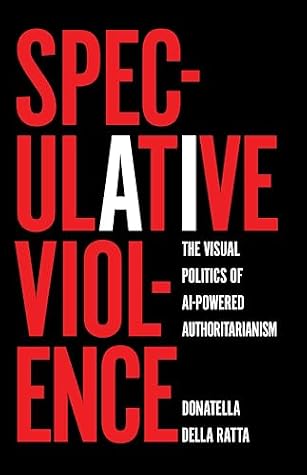
Visual politics increasingly functions as a decisive terrain of struggle, rather than as something secondary, merely symbolic, or confined to the aesthetic or media sphere. Looking at generated images with a discerning eye is a particularly urgent priority at a moment when these very images—often dismissed as AI “slop” or trivialized as pranks, satire, or distasteful kitsch—are, in fact, actively mobilized by exclusionary, supremacist, and even genocidal political projects. Rather than constituting harmless digital byproducts or peripheral synthetic artifacts, they instead function as anticipatory infrastructures: shaping perception, orienting desire, and preparing collective sensibilities for author- itarian agendas that are prefigured to later materialize in law, policy, and institutional practice.
The struggle today is not only over the control of territory, history, or representation, but over time itself: over who designs the horizon of possibility, whose dreams are allowed to solidify into worlds, and which worlds are rendered desirable, and therefore real. Through the lens of speculative violence, we can understand that the future is not a distant horizon but a contested infrastructure of the present, a field where aesthetics, ideology, and power converge. To break into this infrastructure, to intervene in this machinery of vision, is to reclaim the right to do the speculative dreamwork otherwise. It means insisting on futures not built on erasure, not sustained by annihilation, and not made plausible through suffering.