
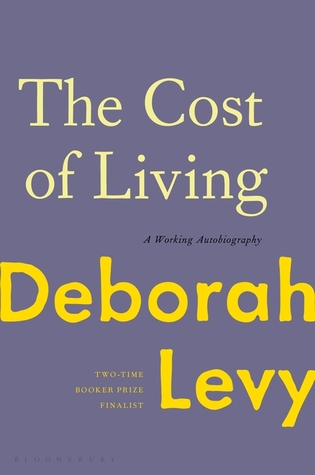
by
Deborah Levy
97
These were not questions the driver could answer. There was no X in his mind’s eye. If the satnav directed him south when I was heading north, that’s what we were going to do. Satnav was his only compass. We were driving at the beginning of Genesis when the earth was formless and empty – apart from the signs on the screen. It seemed to me that satnav had switched off the way that drivers inhabited a city. It made them rootless, ahistorical, unable to trust their memory or senses, to measure the distance between one place and another. The River Thames, referred to by Londoners as the river, was of no geographical significance to the driver. Its brackish water, mostly salt water, flowing for 215 miles, was just one of many abstract rivers flowing through the abstract cities of the world. The river, once the Port of London where apprentices ate salmon fished from its depths, was now just a grammar of digital signs. As I listened to the calm but firm robot voice giving directions, I realized we could be anywhere, so long as the Voice was with us. There were no landmarks. The driver did not look at the Albert Hall when we passed it on the northern edge of South Kensington, he was absent to its physical presence, and instead was existentially alone but together with his satnav. The Albert Hall in Old English was a landmearc, but he worked with digital mearcs – with the bonus of live traffic updates.
These were not questions the driver could answer. There was no X in his mind’s eye. If the satnav directed him south when I was heading north, that’s what we were going to do. Satnav was his only compass. We were driving at the beginning of Genesis when the earth was formless and empty – apart from the signs on the screen. It seemed to me that satnav had switched off the way that drivers inhabited a city. It made them rootless, ahistorical, unable to trust their memory or senses, to measure the distance between one place and another. The River Thames, referred to by Londoners as the river, was of no geographical significance to the driver. Its brackish water, mostly salt water, flowing for 215 miles, was just one of many abstract rivers flowing through the abstract cities of the world. The river, once the Port of London where apprentices ate salmon fished from its depths, was now just a grammar of digital signs. As I listened to the calm but firm robot voice giving directions, I realized we could be anywhere, so long as the Voice was with us. There were no landmarks. The driver did not look at the Albert Hall when we passed it on the northern edge of South Kensington, he was absent to its physical presence, and instead was existentially alone but together with his satnav. The Albert Hall in Old English was a landmearc, but he worked with digital mearcs – with the bonus of live traffic updates.
116
Mary Berry tastes a sponge cake. Paul Hollywood is breaking a slice apart with his big hands to test it is moist and feather-light. It seems the South African child is happy to concentrate on the pleasures of baking. Her middle-aged self watches this child warily. She does not want her to make trouble for her daughters and tell them to get some real problems when they complain about not having the right brand of trainers for school. She has never wanted her own children to have to be brave. Brave like the children on leaking boats fleeing wars. How many medals does a child need pinned on to her pyjamas? Nothing had taught her that having to summon an abundance of courage, far more than anyone should have to bear, is healthy for a child. She had witnessed the courage of the African children in her country of birth who lost their parents in the struggle for human rights like other children lost their milk teeth.
Mary Berry tastes a sponge cake. Paul Hollywood is breaking a slice apart with his big hands to test it is moist and feather-light. It seems the South African child is happy to concentrate on the pleasures of baking. Her middle-aged self watches this child warily. She does not want her to make trouble for her daughters and tell them to get some real problems when they complain about not having the right brand of trainers for school. She has never wanted her own children to have to be brave. Brave like the children on leaking boats fleeing wars. How many medals does a child need pinned on to her pyjamas? Nothing had taught her that having to summon an abundance of courage, far more than anyone should have to bear, is healthy for a child. She had witnessed the courage of the African children in her country of birth who lost their parents in the struggle for human rights like other children lost their milk teeth.
132
I had no regrets about not swimming back to the Big Silver, but I did regret not finding the white Egyptian cotton tablecloth on Christmas Day the year before. In the end I’d had to use a white paper tablecloth. It didn’t look that good, though I had suggested to my daughters that our table looked like the sort of French brasserie where the waiter writes our order on the corners of the paper cloth and then comes round later to add up the bill. They did not recall the sort of brasserie I had in mind and asked if I was going to charge our guests for Christmas lunch. This year the white Egyptian cotton cloth would be adorned with candles, red berries, holly and mistletoe. Their father would join us and I would invite the man who cried at the funeral and his new lover to join the table. And Celia, obviously, if she could fit me into her busy schedule. We decided to make cranberry as well as bread sauce, and swapped tips on how to make both. There was no way we could console each other for the undisclosed hurt that had contributed to sinking the boat, or for our lack of desire to swim back to it. Yet it was true that the societal mask of husband and wife, which we had worn for so long, had slipped, and we could see each other again. Perhaps what we saw was too human to bear. We stood up, put on our coats and kissed each other goodbye.
<3
I had no regrets about not swimming back to the Big Silver, but I did regret not finding the white Egyptian cotton tablecloth on Christmas Day the year before. In the end I’d had to use a white paper tablecloth. It didn’t look that good, though I had suggested to my daughters that our table looked like the sort of French brasserie where the waiter writes our order on the corners of the paper cloth and then comes round later to add up the bill. They did not recall the sort of brasserie I had in mind and asked if I was going to charge our guests for Christmas lunch. This year the white Egyptian cotton cloth would be adorned with candles, red berries, holly and mistletoe. Their father would join us and I would invite the man who cried at the funeral and his new lover to join the table. And Celia, obviously, if she could fit me into her busy schedule. We decided to make cranberry as well as bread sauce, and swapped tips on how to make both. There was no way we could console each other for the undisclosed hurt that had contributed to sinking the boat, or for our lack of desire to swim back to it. Yet it was true that the societal mask of husband and wife, which we had worn for so long, had slipped, and we could see each other again. Perhaps what we saw was too human to bear. We stood up, put on our coats and kissed each other goodbye.
<3