
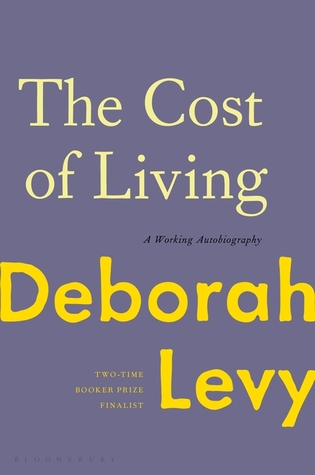
by
Deborah Levy
2
He said, ‘You talk a lot don’t you?’
She thought about this, her fingers combing out the ends of her hair while she watched two teenage boys selling cigars and football shirts to tourists in the cobbled square. It was not that easy to convey to him, a man much older than she was, that the world was her world too. He had taken a risk when he invited her to join him at his table. After all, she came with a whole life and libido of her own. It had not occurred to him that she might not consider herself to be the minor character and him the major character. In this sense, she had unsettled a boundary, collapsed a social hierarchy, broken with the usual rituals.
damn
He said, ‘You talk a lot don’t you?’
She thought about this, her fingers combing out the ends of her hair while she watched two teenage boys selling cigars and football shirts to tourists in the cobbled square. It was not that easy to convey to him, a man much older than she was, that the world was her world too. He had taken a risk when he invited her to join him at his table. After all, she came with a whole life and libido of her own. It had not occurred to him that she might not consider herself to be the minor character and him the major character. In this sense, she had unsettled a boundary, collapsed a social hierarchy, broken with the usual rituals.
damn
5
Everything was calm. The sun was shining. I was swimming in the deep. And then, when I surfaced twenty years later, I discovered there was a storm, a whirlpool, a blasting gale lifting the waves over my head. At first I wasn’t sure I’d make it back to the boat and then I realized I didn’t want to make it back to the boat. Chaos is supposed to be what we most fear but I have come to believe it might be what we most want. If we don’t believe in the future we are planning, the house we are mortgaged to, the person who sleeps by our side, it is possible that a tempest (long lurking in the clouds) might bring us closer to how we want to be in the world.
Life falls apart. We try to get a grip and hold it together. And then we realize we don’t want to hold it together.
Everything was calm. The sun was shining. I was swimming in the deep. And then, when I surfaced twenty years later, I discovered there was a storm, a whirlpool, a blasting gale lifting the waves over my head. At first I wasn’t sure I’d make it back to the boat and then I realized I didn’t want to make it back to the boat. Chaos is supposed to be what we most fear but I have come to believe it might be what we most want. If we don’t believe in the future we are planning, the house we are mortgaged to, the person who sleeps by our side, it is possible that a tempest (long lurking in the clouds) might bring us closer to how we want to be in the world.
Life falls apart. We try to get a grip and hold it together. And then we realize we don’t want to hold it together.
62
One of my own undiscovered talents, I was convinced, was to be a scriptwriter. Everyone I knew was bored with the same old performance of masculinity and femininity written for the major and minor characters. I flash-forwarded to my seventies, and saw myself typing at the edge of my swimming pool in California. I would be a legendary sun-damaged genius of cinema, known for typing in my swimming costume, surrounded by verdant tropical plants which always open the mind and make something happen. At lunchtime my staff would shake up my cocktail and toss fresh squid on the barbecue.
lol
One of my own undiscovered talents, I was convinced, was to be a scriptwriter. Everyone I knew was bored with the same old performance of masculinity and femininity written for the major and minor characters. I flash-forwarded to my seventies, and saw myself typing at the edge of my swimming pool in California. I would be a legendary sun-damaged genius of cinema, known for typing in my swimming costume, surrounded by verdant tropical plants which always open the mind and make something happen. At lunchtime my staff would shake up my cocktail and toss fresh squid on the barbecue.
lol
67
To separate from love is to live a risk-free life. What’s the point of that sort of life? As I wheeled my electric bike through the park on the way to my writing shed, my hands had turned blue from the cold. I had given up wearing gloves because I was always grappling in the dark for keys. I stopped by the fountain, only to find it had been switched off. A sign from the council read, This fountain has been winterized.
I reckoned that is what had happened to me too.
To separate from love is to live a risk-free life. What’s the point of that sort of life? As I wheeled my electric bike through the park on the way to my writing shed, my hands had turned blue from the cold. I had given up wearing gloves because I was always grappling in the dark for keys. I stopped by the fountain, only to find it had been switched off. A sign from the council read, This fountain has been winterized.
I reckoned that is what had happened to me too.
68
Simone de Beauvoir knew that a life without love was a waste of time. Her enduring love for Sartre seems to have been contingent on her living in hotels and not making a home with him, which in the 1950s was more radical than I believe even she realized. She remained committed to Sartre being the essential love of her life for fifty-one years, despite their other attachments. She knew she never wanted children or to serve his breakfast or run his errands or pretend she was not intellectually engaged with the world to make herself more loveable to him. She was appalled by middle age, in ways I did not completely understand. All the same, as she had written to the writer Nelson Algren, in the flush of their new love, ‘I want everything from life, I want to be a woman and to be a man, to have many friends and have loneliness, to work much and write good books and to travel and enjoy myself…’
Simone de Beauvoir knew that a life without love was a waste of time. Her enduring love for Sartre seems to have been contingent on her living in hotels and not making a home with him, which in the 1950s was more radical than I believe even she realized. She remained committed to Sartre being the essential love of her life for fifty-one years, despite their other attachments. She knew she never wanted children or to serve his breakfast or run his errands or pretend she was not intellectually engaged with the world to make herself more loveable to him. She was appalled by middle age, in ways I did not completely understand. All the same, as she had written to the writer Nelson Algren, in the flush of their new love, ‘I want everything from life, I want to be a woman and to be a man, to have many friends and have loneliness, to work much and write good books and to travel and enjoy myself…’
70
And what about the men who, like Algren, wanted home, children and love? In my Boston hotel, I had glimpsed a man sitting with his female companion at a café table overlooking the harbour. He was in love with her, attentive and gentle and kind. She had taken off her sandals and jacket and sunglasses and the gold bracelet on her wrist. While he pressed his lips against the glowing skin of her bare arms, she looked into the distance, and then walked away from his lips and from the sunshine. After a while, he gathered up her sandals, bracelet, sunglasses and bag, his camera, sun cream and phone, and made his way to the table in the shade. Something or someone in his life had made him brave enough to do all the carrying and all the kissing. If he wanted her more than she wanted him, how would she begin that conversation in a way that did not destroy his courage?
And what about the men who, like Algren, wanted home, children and love? In my Boston hotel, I had glimpsed a man sitting with his female companion at a café table overlooking the harbour. He was in love with her, attentive and gentle and kind. She had taken off her sandals and jacket and sunglasses and the gold bracelet on her wrist. While he pressed his lips against the glowing skin of her bare arms, she looked into the distance, and then walked away from his lips and from the sunshine. After a while, he gathered up her sandals, bracelet, sunglasses and bag, his camera, sun cream and phone, and made his way to the table in the shade. Something or someone in his life had made him brave enough to do all the carrying and all the kissing. If he wanted her more than she wanted him, how would she begin that conversation in a way that did not destroy his courage?
73
Marguerite Duras did not have the ‘fatal patience’ that de Beauvoir rightly thought women who were mothers had learned to their detriment. After Duras wrote Lol Stein, she made a curious remark – she said that she gave herself permission to speak ‘in a sense totally alien to women’. I know what she means. It is so hard to claim our desires and so much more relaxing to mock them.
Marguerite Duras did not have the ‘fatal patience’ that de Beauvoir rightly thought women who were mothers had learned to their detriment. After Duras wrote Lol Stein, she made a curious remark – she said that she gave herself permission to speak ‘in a sense totally alien to women’. I know what she means. It is so hard to claim our desires and so much more relaxing to mock them.
84
There is a photograph I have kept of my mother in her late twenties. She is sitting on a rock at a picnic with friends. Her hair is wet because she’s just had a swim. There is a kind of introspection in her expression that I now relate to the very best of her. I can see that she is close to herself in this random moment. I’m not sure that I thought introspection was the best of her when I was a child and teenager. What do we need dreamy mothers for? We do not want mothers who gaze beyond us, longing to be elsewhere. We need her to be of this world, lively, capable, entirely present to our needs.
There is a photograph I have kept of my mother in her late twenties. She is sitting on a rock at a picnic with friends. Her hair is wet because she’s just had a swim. There is a kind of introspection in her expression that I now relate to the very best of her. I can see that she is close to herself in this random moment. I’m not sure that I thought introspection was the best of her when I was a child and teenager. What do we need dreamy mothers for? We do not want mothers who gaze beyond us, longing to be elsewhere. We need her to be of this world, lively, capable, entirely present to our needs.
84
As the vintage story goes, it is the father who is the hero and the dreamer. He detaches himself from the pitiful needs of his women and children and strides out into the world to do his thing. He is expected to be himself. When he returns to the home that our mothers have made for us, he is either welcomed back into the fold, or becomes a stranger who will eventually need us more than we need him. He tells us some of what he has seen in his world. We give him an edited version of the living we do every day. Our mothers live with us in this living and we blame her for everything because she is near by. At the same time, we try not to collude with myths about her character and purpose in life. All the same, we need her to feel anxiety on our behalf – after all, our everyday living is full of anxiety. If we do not disclose our feelings to her, we mysteriously expect her to understand them anyway. And if she moves beyond us, comes close to being a self that is not at our service, she has transgressed from the mythic, primal task of being our protector and nurturer. Yet, if she comes too close, she suffocates us, infecting our fragile courage with her contagious anxiety. When our father does the things he needs to do in the world, we understand it is his due. If our mother does the things she needs to do in the world, we feel she has abandoned us. It is a miracle she survives our mixed messages, written in society’s most poisoned ink. It is enough to drive her mad.
As the vintage story goes, it is the father who is the hero and the dreamer. He detaches himself from the pitiful needs of his women and children and strides out into the world to do his thing. He is expected to be himself. When he returns to the home that our mothers have made for us, he is either welcomed back into the fold, or becomes a stranger who will eventually need us more than we need him. He tells us some of what he has seen in his world. We give him an edited version of the living we do every day. Our mothers live with us in this living and we blame her for everything because she is near by. At the same time, we try not to collude with myths about her character and purpose in life. All the same, we need her to feel anxiety on our behalf – after all, our everyday living is full of anxiety. If we do not disclose our feelings to her, we mysteriously expect her to understand them anyway. And if she moves beyond us, comes close to being a self that is not at our service, she has transgressed from the mythic, primal task of being our protector and nurturer. Yet, if she comes too close, she suffocates us, infecting our fragile courage with her contagious anxiety. When our father does the things he needs to do in the world, we understand it is his due. If our mother does the things she needs to do in the world, we feel she has abandoned us. It is a miracle she survives our mixed messages, written in society’s most poisoned ink. It is enough to drive her mad.
86
When I was a teenager, most arguments with my mother were about clothes. She was baffled by what it was inside myself that I was expressing outside of myself. She could no longer reach or recognize me. And that was the whole point. I was creating a persona that was braver than I actually felt. I took the risk of being mocked on buses and in the streets of the suburbs in which I lived. The secret message that lurked in the zips of my silver platform boots was that I did not want to be like the people doing the mocking. Sometimes we want to unbelong as much as we want to belong. On a bad day, my mother would ask me, ‘Who do you think you are?’ I had no idea how to answer that question when I was fifteen, but I was reaching for the kind of freedom that a young woman in the 1970s did not socially possess. What else was there to do? To become the person someone else had imagined for us is not freedom – it is to mortgage our life to someone else’s fear.
If we cannot at least imagine we are free, we are living a life that is wrong for us
When I was a teenager, most arguments with my mother were about clothes. She was baffled by what it was inside myself that I was expressing outside of myself. She could no longer reach or recognize me. And that was the whole point. I was creating a persona that was braver than I actually felt. I took the risk of being mocked on buses and in the streets of the suburbs in which I lived. The secret message that lurked in the zips of my silver platform boots was that I did not want to be like the people doing the mocking. Sometimes we want to unbelong as much as we want to belong. On a bad day, my mother would ask me, ‘Who do you think you are?’ I had no idea how to answer that question when I was fifteen, but I was reaching for the kind of freedom that a young woman in the 1970s did not socially possess. What else was there to do? To become the person someone else had imagined for us is not freedom – it is to mortgage our life to someone else’s fear.
If we cannot at least imagine we are free, we are living a life that is wrong for us