
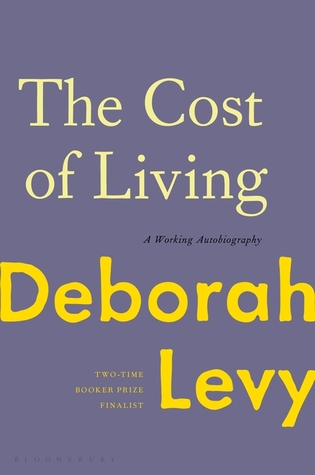
by
Deborah Levy
These were not questions the driver could answer. There was no X in his mind’s eye. If the satnav directed him south when I was heading north, that’s what we were going to do. Satnav was his only compass. We were driving at the beginning of Genesis when the earth was formless and empty – apart from the signs on the screen. It seemed to me that satnav had switched off the way that drivers inhabited a city. It made them rootless, ahistorical, unable to trust their memory or senses, to measure the distance between one place and another. The River Thames, referred to by Londoners as the river, was of no geographical significance to the driver. Its brackish water, mostly salt water, flowing for 215 miles, was just one of many abstract rivers flowing through the abstract cities of the world. The river, once the Port of London where apprentices ate salmon fished from its depths, was now just a grammar of digital signs. As I listened to the calm but firm robot voice giving directions, I realized we could be anywhere, so long as the Voice was with us. There were no landmarks. The driver did not look at the Albert Hall when we passed it on the northern edge of South Kensington, he was absent to its physical presence, and instead was existentially alone but together with his satnav. The Albert Hall in Old English was a landmearc, but he worked with digital mearcs – with the bonus of live traffic updates.