
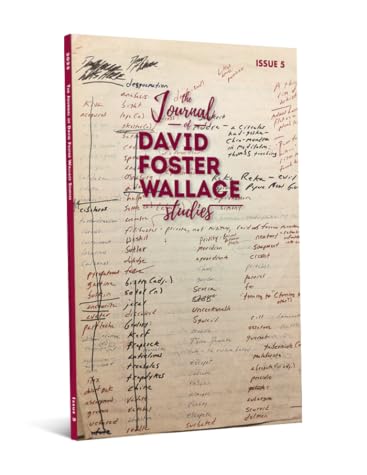
by
Matt Bucher
(editor)
9
I'll close with this: I distinctly remember sitting in the audience of a roundtable discussion at that early conference at Illinois State. And I remember it because something one of the panelists said that night has stuck with me all these years later. The panel was discussing the random acts of kindness Wallace's former students ascribed to their teacher little things, like leaving overgenerous feedback in their papers' margins or giving them a lift when it was cold or they had a long way to walk. And what this tenured panelist said was that, as a professional academic who published on Wallace, she had to "ignore all that 'big heart stuff.'
It will surprise no one that I reject this cold, sterile reasoning even more now than I did in that dark, enormous conference room over a decade ago. Because that "big heart stuff" is why this incredible community of readers exists at all. Underneath all of Wallace's incisive observations, technical brilliance, and literary artistry, it's what drew us to the work in the first place.
I'll close with this: I distinctly remember sitting in the audience of a roundtable discussion at that early conference at Illinois State. And I remember it because something one of the panelists said that night has stuck with me all these years later. The panel was discussing the random acts of kindness Wallace's former students ascribed to their teacher little things, like leaving overgenerous feedback in their papers' margins or giving them a lift when it was cold or they had a long way to walk. And what this tenured panelist said was that, as a professional academic who published on Wallace, she had to "ignore all that 'big heart stuff.'
It will surprise no one that I reject this cold, sterile reasoning even more now than I did in that dark, enormous conference room over a decade ago. Because that "big heart stuff" is why this incredible community of readers exists at all. Underneath all of Wallace's incisive observations, technical brilliance, and literary artistry, it's what drew us to the work in the first place.
18
In a recent article, Tim Yu gives a good overview of Wallace's
"deeply ambivalent" relationship to professionalization and the pro-fessionalization of creative writing!' As Yu notes, Wallace's writing repeatedly features top professionals and professional-like figures who specialize in incredibly narrow domains, whose specialization is both key to their wild vocational successes and the very things that degrade their full humanities. The path to virtuoso mastery, it turns out, is also the royal road away from personhood. The troubled figure of the professional is best exemplified, for Yu's Wallace, by the professional athlete. Wallace wrote extensively about the amazing capacities which also are, at the same time, the amazing incapacities of the figure of the tennis pro. Recall how Wallace argues that Tracy Austin is great not despite the vapidity and seeming banal flatness of her memoir, but because of it. The thing that allows the great ge-nius-level tennis pro to be great and genius-level, as Wallace puts it in the case of Austin, is being able to think "nothing at all?"& So one extreme solution to what Jon Baskin calls the "Cartesian trap" of pathological self-consciousness is evacuating yourself of any sense of self in the first place.
Another illuminating metaphor for the simultaneous capacity and incapacity of the professional athlete is Orin Incandenza's "oversized left arm and big left leg." At one point in Infinite Jest, Wallace's narrator describes Orin's "tennis arm" as "roughly churn-sized," and the other arm as having "dimensions" that are merely "human." Again, specialization and professionalization stand in stark opposition to the "human." In this particular case, the distortion of the human happens not because of any lack of consciousness Orin is nothing if not self-aware but as a byproduct of doing one thing over and over again, of radically leaning into some capacities, and of systematically ignoring others.
In a recent article, Tim Yu gives a good overview of Wallace's
"deeply ambivalent" relationship to professionalization and the pro-fessionalization of creative writing!' As Yu notes, Wallace's writing repeatedly features top professionals and professional-like figures who specialize in incredibly narrow domains, whose specialization is both key to their wild vocational successes and the very things that degrade their full humanities. The path to virtuoso mastery, it turns out, is also the royal road away from personhood. The troubled figure of the professional is best exemplified, for Yu's Wallace, by the professional athlete. Wallace wrote extensively about the amazing capacities which also are, at the same time, the amazing incapacities of the figure of the tennis pro. Recall how Wallace argues that Tracy Austin is great not despite the vapidity and seeming banal flatness of her memoir, but because of it. The thing that allows the great ge-nius-level tennis pro to be great and genius-level, as Wallace puts it in the case of Austin, is being able to think "nothing at all?"& So one extreme solution to what Jon Baskin calls the "Cartesian trap" of pathological self-consciousness is evacuating yourself of any sense of self in the first place.
Another illuminating metaphor for the simultaneous capacity and incapacity of the professional athlete is Orin Incandenza's "oversized left arm and big left leg." At one point in Infinite Jest, Wallace's narrator describes Orin's "tennis arm" as "roughly churn-sized," and the other arm as having "dimensions" that are merely "human." Again, specialization and professionalization stand in stark opposition to the "human." In this particular case, the distortion of the human happens not because of any lack of consciousness Orin is nothing if not self-aware but as a byproduct of doing one thing over and over again, of radically leaning into some capacities, and of systematically ignoring others.
21
Creative writing, at least as Wallace saw it in the late 1980s, is no oasis from the perils of professionalization. On Wallace's account, the literary professional seems fated to suffer from what Guillory wants to call a "déformation professionnelle" by virtue of being a professional in the first place. The term "déformation professionnelle" designates the idea that professionals have a tendency to see the world in a partial way, through the lens of their training, rather than from a general or human perspective. Such deformation is not, on Guillory's account, a personal failing of the individual person—or even a negative phenomenon!— but is rather "an unavoidable by-product of the assertion of that autonomy enabling the cultivation of professional expertise to begin with" and a disposition "that insulates such expertise to some extent from the tyranny of the market and from the draconian interventions of the political system."
Creative writing, at least as Wallace saw it in the late 1980s, is no oasis from the perils of professionalization. On Wallace's account, the literary professional seems fated to suffer from what Guillory wants to call a "déformation professionnelle" by virtue of being a professional in the first place. The term "déformation professionnelle" designates the idea that professionals have a tendency to see the world in a partial way, through the lens of their training, rather than from a general or human perspective. Such deformation is not, on Guillory's account, a personal failing of the individual person—or even a negative phenomenon!— but is rather "an unavoidable by-product of the assertion of that autonomy enabling the cultivation of professional expertise to begin with" and a disposition "that insulates such expertise to some extent from the tyranny of the market and from the draconian interventions of the political system."
22
In laying out this argument, Guillory draws on the famous portrait of the scholar that Friedrich Nietzsche evokes in The Gay Science:
In a scholar's book [Nietzsche writes] there is nearly always something oppressive, oppressed: the "specialist" emerges somehow-his eagerness, his seriousness, his ire, his overestimation of the nook in which he sits and spins, his hunchback every specialist has his hump. Every scholarly book also reflects a soul that has become crooked; every craft makes crooked.
And
One pays dearly for any kind of mastery on earth, where perhaps one pays too dearly for everything; one is master of one's trade at the price of also being its victim.
In laying out this argument, Guillory draws on the famous portrait of the scholar that Friedrich Nietzsche evokes in The Gay Science:
In a scholar's book [Nietzsche writes] there is nearly always something oppressive, oppressed: the "specialist" emerges somehow-his eagerness, his seriousness, his ire, his overestimation of the nook in which he sits and spins, his hunchback every specialist has his hump. Every scholarly book also reflects a soul that has become crooked; every craft makes crooked.
And
One pays dearly for any kind of mastery on earth, where perhaps one pays too dearly for everything; one is master of one's trade at the price of also being its victim.
24
Of course, in many ordinary cases of professionalization, becoming more specialized wouldn't seem to be that much of a problem, spiritual or otherwise. Sure, you can't write a compelling memoir, but you'll have a prodigious near-miraculous backhand. In the case of the fiction-writer, however, becoming professionalized threatens to take you away from the lived experience of humanity whose careful observation is the very raw material you use to write fiction in the first place. Unfortunately, if you want to be an ambitious fiction-writer, the academy is one of the safer routes to continued survival, if not necessarily flourishing. You might find yourself in a sort of academic prison, yes, but as D. T. Max quotes Wallace telling Steven Moore, "The thing I like about my own prison... is I have tenure in my prison. "
Of course, in many ordinary cases of professionalization, becoming more specialized wouldn't seem to be that much of a problem, spiritual or otherwise. Sure, you can't write a compelling memoir, but you'll have a prodigious near-miraculous backhand. In the case of the fiction-writer, however, becoming professionalized threatens to take you away from the lived experience of humanity whose careful observation is the very raw material you use to write fiction in the first place. Unfortunately, if you want to be an ambitious fiction-writer, the academy is one of the safer routes to continued survival, if not necessarily flourishing. You might find yourself in a sort of academic prison, yes, but as D. T. Max quotes Wallace telling Steven Moore, "The thing I like about my own prison... is I have tenure in my prison. "
28
Across these reviews, Wallace consistently prosecutes his own emerging aesthetic project. He engages largely with experimental and postmodern texts that, in one way or another, lose the plot, become too self-involved, too inward-looking. As his review of Acker suggests, there are certain literary artifacts that only an academic could love, and who could love a text that only academics love? Wallace is clearly doing the thinking that will pave the way for Infinite Jest.
Would a book like Infinite Jest only meet the approval of "professional readers," graduate students in everything but name, festooned with guidebooks and eager to do online detective work, or is the form of a book like Infinite fest a route not to a cartoonishly large "churn-like" emotional and intellectual life, but rather a perfectly normal-sized-fully and merely human existence?
eg the negative review of kathy acker
Across these reviews, Wallace consistently prosecutes his own emerging aesthetic project. He engages largely with experimental and postmodern texts that, in one way or another, lose the plot, become too self-involved, too inward-looking. As his review of Acker suggests, there are certain literary artifacts that only an academic could love, and who could love a text that only academics love? Wallace is clearly doing the thinking that will pave the way for Infinite Jest.
Would a book like Infinite Jest only meet the approval of "professional readers," graduate students in everything but name, festooned with guidebooks and eager to do online detective work, or is the form of a book like Infinite fest a route not to a cartoonishly large "churn-like" emotional and intellectual life, but rather a perfectly normal-sized-fully and merely human existence?
eg the negative review of kathy acker
54
Although the fact that one "can't ever truly know what's going on inside somebody else" may doom such an endeavor to failure, the attempt, failed though it may be, leads one closer to establishing a self that can function in the world among others because, as Hayes-Brady writes, such an attempt forces a person to "accept his/her position as an other as well as a self."4 Without such acceptance, both self and other are lost in total noise. Wallace's choice of a keyhole for this metaphor characterizes the self as a door, a boundary with an opening through which one can peer and apprehend an other outside the self and thus become aware of both without inviting confusion or overrelation between the two. While the image of a closed (and locked) door may invite feelings of isolation and despair, such separation ensures the integrity and uniqueness of the self in a way that an open door does not.
Although the fact that one "can't ever truly know what's going on inside somebody else" may doom such an endeavor to failure, the attempt, failed though it may be, leads one closer to establishing a self that can function in the world among others because, as Hayes-Brady writes, such an attempt forces a person to "accept his/her position as an other as well as a self."4 Without such acceptance, both self and other are lost in total noise. Wallace's choice of a keyhole for this metaphor characterizes the self as a door, a boundary with an opening through which one can peer and apprehend an other outside the self and thus become aware of both without inviting confusion or overrelation between the two. While the image of a closed (and locked) door may invite feelings of isolation and despair, such separation ensures the integrity and uniqueness of the self in a way that an open door does not.
64
Two of Wallace's most famous nonfictional texts, "E Unibus Plu-ram" (1993) and This Is Water (2005), essential to Wallace's manifesto, are sociological to the core. In them, Wallace explores the causes of American social predicaments and submits solutions to them. This indicates the centrality of sociology to his literary project. Part of his diagnosis is that "this is a generation that has an inheritance of absolutely nothing as far as meaningful moral values, and it's our job to make them up, and we're not doing it." Part of his solution is that writers must produce literature that functions "as an anodyne against loneliness," i.e., their duty is to recreate a sense of community.
This is the structure of Wallace's sociology: to define the predicament against which he can theorize writing as therapeutic, corrective, redemptive, and a response to the problems of our time. This is why his sociology constitutes the foundation of his intellectual project. There is no division between Wallace's fiction and nonfiction. His fictional production explicitly refers to its historical, social, political, ethical, and metaphysical context, i.e., to what is addressed in the nonfiction. His work thus constitutes a unity with one clear goal: to find the possibility of salvation from unbearable suffering.
Two of Wallace's most famous nonfictional texts, "E Unibus Plu-ram" (1993) and This Is Water (2005), essential to Wallace's manifesto, are sociological to the core. In them, Wallace explores the causes of American social predicaments and submits solutions to them. This indicates the centrality of sociology to his literary project. Part of his diagnosis is that "this is a generation that has an inheritance of absolutely nothing as far as meaningful moral values, and it's our job to make them up, and we're not doing it." Part of his solution is that writers must produce literature that functions "as an anodyne against loneliness," i.e., their duty is to recreate a sense of community.
This is the structure of Wallace's sociology: to define the predicament against which he can theorize writing as therapeutic, corrective, redemptive, and a response to the problems of our time. This is why his sociology constitutes the foundation of his intellectual project. There is no division between Wallace's fiction and nonfiction. His fictional production explicitly refers to its historical, social, political, ethical, and metaphysical context, i.e., to what is addressed in the nonfiction. His work thus constitutes a unity with one clear goal: to find the possibility of salvation from unbearable suffering.
66
Wallace chose philosophical fiction over philosophy because he saw fiction as the better chance to connect with his readers. He wanted to confront philosophical problems by making them concrete. He counted on fiction's "ability to talk meaningfully to us." Because of this intent, his fiction exists in inextricable relationship with his nonfiction, and his overall work is characterized by consistency in subject matter and variation in perspective, weaving fiction, nonfiction, literature, philosophy, sociology, psychology, and science to try to find the truth and in it salvation from despair.
Wallace chose philosophical fiction over philosophy because he saw fiction as the better chance to connect with his readers. He wanted to confront philosophical problems by making them concrete. He counted on fiction's "ability to talk meaningfully to us." Because of this intent, his fiction exists in inextricable relationship with his nonfiction, and his overall work is characterized by consistency in subject matter and variation in perspective, weaving fiction, nonfiction, literature, philosophy, sociology, psychology, and science to try to find the truth and in it salvation from despair.
69
INTERPRET-ME fictions, thus, teach us that the abstract is concrete, the essence of everyday life. Wallace cites Voltaire's Candide (1759), Gombrowicz's Cosmos (1965), Hesse's The Glass Bead Game (1943), Sartre's Nausea (1948), Camus's The Stranger (1942), Pynchon's Gravity's Rainbow (1973), and Markson's Wittgenstein's Mistress (1988) as notable examples of this genre, but the point of course is that his fiction belongs to it too. Like Dostoevsky before him, Wallace chose fiction precisely to care for philosophy by manifesting its pervasion of the daily concrete; he chose fiction to make philosophy concrete.
This is precisely the sense in which he quoted Wittgenstein's famous note to Norman Malcolm (from Malcolm's Ludwig Wittgenstein: A Memoir, 1988): "what is the use of studying philosophy if all that it does for you is to enable you to talk with some plausibility about some abstruse questions of logic, etc. and if it does not improve your thinking about the important questions of everyday life?"
In "The Empty Plenum," Wallace uses a technique that he will employ throughout his nonfiction: praising artists who actualize the ideals, ends, and features of his own art while never explicitly referring to his own goals or stating that someone represents a model for him. Instead, he lets the obvious and essential conformities between him and the artists he praises arise through this strategy of implication that pervades his nonfiction. Thus, he never writes "artist x produces valuable art because he strives to do y, as I myself try to do." Instead, in essay a, he says that "artist x produces valuable art because he does y;" in essay b, that "the contemporary human predicament needs art that does y;" and in interview c, that "I humbly attempt to do y,'26
INTERPRET-ME fictions, thus, teach us that the abstract is concrete, the essence of everyday life. Wallace cites Voltaire's Candide (1759), Gombrowicz's Cosmos (1965), Hesse's The Glass Bead Game (1943), Sartre's Nausea (1948), Camus's The Stranger (1942), Pynchon's Gravity's Rainbow (1973), and Markson's Wittgenstein's Mistress (1988) as notable examples of this genre, but the point of course is that his fiction belongs to it too. Like Dostoevsky before him, Wallace chose fiction precisely to care for philosophy by manifesting its pervasion of the daily concrete; he chose fiction to make philosophy concrete.
This is precisely the sense in which he quoted Wittgenstein's famous note to Norman Malcolm (from Malcolm's Ludwig Wittgenstein: A Memoir, 1988): "what is the use of studying philosophy if all that it does for you is to enable you to talk with some plausibility about some abstruse questions of logic, etc. and if it does not improve your thinking about the important questions of everyday life?"
In "The Empty Plenum," Wallace uses a technique that he will employ throughout his nonfiction: praising artists who actualize the ideals, ends, and features of his own art while never explicitly referring to his own goals or stating that someone represents a model for him. Instead, he lets the obvious and essential conformities between him and the artists he praises arise through this strategy of implication that pervades his nonfiction. Thus, he never writes "artist x produces valuable art because he strives to do y, as I myself try to do." Instead, in essay a, he says that "artist x produces valuable art because he does y;" in essay b, that "the contemporary human predicament needs art that does y;" and in interview c, that "I humbly attempt to do y,'26