
Bookmarker is a personal project by @dellsystem to help with retaining reading material. Source on GitHub.

Activity

You added a note
3 months, 3 weeks ago
Bloody Thursday

On July 5—known on the waterfront ever after as “Bloody Thursday”—police killed two unionists, Howard Sperry, a longshoreman, and Nicholas Bordoise (George Counderakis), a party member and member of the cooks’ union who was volunteering in the union’s soup kitchen. A hundred more were injured durin…

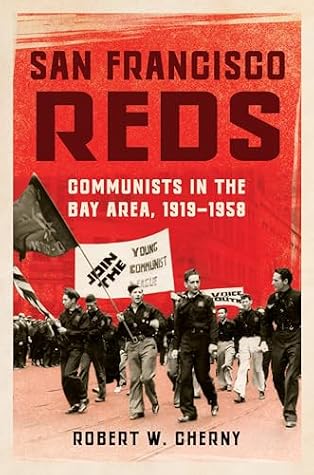
—p.55 San Francisco Reds: Communists in the Bay Area, 1919-1958 Prelude to the Popular Front, 1930–1935 (39) by Robert W. Cherny
You added a note
3 months, 3 weeks ago

hiding the face of the Party

Disputes within the local CP leadership escalated during the longshore and maritime strikes. Hynes was gone, but Harrison George remained to defend ideological orthodoxy against Darcy’s more flexible approach. George, under various pseudonyms, wrote long letters to Browder complaining about Darcy. …

—p.54 Prelude to the Popular Front, 1930–1935 (39) by Robert W. Cherny
You added a note
3 months, 3 weeks ago

ten thousand to fifteen thousand longshoremen walked out

Bridges, Schmidt, and another Albion Hall militant won election to the local’s executive committee. In March 1934, as ILA locals all up and down the Pacific Coast moved toward a coastwise strike, the San Francisco local elected a large strike committee that then elected Bridges as chair. On May 9 t…

—p.53 Prelude to the Popular Front, 1930–1935 (39) by Robert W. Cherny
You added a note
3 months, 3 weeks ago

called themselves Albion Hall

In July, Darcy encouraged radicals among the longshoremen to join the newly chartered local of the International Longshoremen’s Association and to form a militant, but not exclusively CP, caucus there. The caucus included Harry Bridges, Henry Schmidt, and other militants who were neither CP members…

—p.53 Prelude to the Popular Front, 1930–1935 (39) by Robert W. Cherny
You added a note
3 months, 3 weeks ago

some new organization on the docks

The second and third issues of the Waterfront Worker, in February and March 1933, apparently also Hynes’s work, hinted at some new organization on the docks but provided no further information. The fourth issue, in April 1933, acknowledged the MWIU. The fifth issue, in May 1933, cited the MWIU as t…

—p.51 Prelude to the Popular Front, 1930–1935 (39) by Robert W. Cherny