
topic/the-passage-of-time
Simone de Beauvoir,
Mark Doty,
Martin Amis,
Miranda July,
Jenny Erpenbeck,
Jennifer Egan,
Lorrie Moore,
James Salter,
Nicholas Dames

The government reacted forcefully to the commotion, but at least no shots were fired, thinks Katharina. Could it be because the so-called counterrevolutionaries reminded the ancients in power of themselves when they were young idealists? The passage of time. Strange, she thinks, that a crime is called a trespass.
THE PASSAGE OF TIME
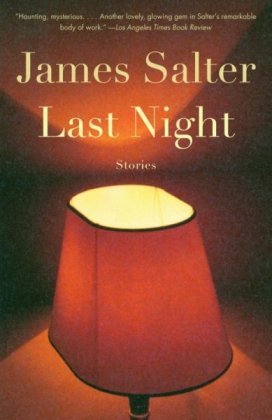
He was barely breathing. He waited, but she did not say anything more. Hardly believing what he was doing he pushed the needle in—it was effortless—and slowly injected the contents. He heard her sigh. Her eyes were closed as she lay back. Her face was peaceful. She had embarked. My God, he thought, my God. He had known her when she was in her twenties, long-legged and innocent. Now he had slipped her, as in a burial at sea, beneath the flow of time. Her hand was still warm. He took it and held it to his lips. He pulled the bedspread up to cover her legs. The house was incredibly quiet. It had fallen into silence, the silence of a fatal act. He could not hear the wind.

Time was, like everyone else, when she had some notion of the passing years and of the changes they bring. Like everyone else she had said, she had told herself, every winter, every spring, and every summer, “I’ve changed so much since last year.” But ever beautiful, with a somewhat varying beauty, she paid no attention to it. Today, suddenly, she did pay attention to it. Today, all at once, instead of once more peaceably realizing the seasons’ slow changes, she had just discovered and understood the minutes’ formidable flight. She had had a sudden revelation of that vanishing of the hour, of that imperceptible race, maddening when one thinks of it, of that infinite procession of little hurried seconds which nibble at the body and the life of man.

She set down her pen and looked at me. “Charlotte, we know this thing is rotten,” she said. “But it’s still in our hands, we can still walk away. All we will have lost is some time!” I saw the martini in her eyes—the heat, the conviction. And a strange feeling overtook me then; it flared at the word “we,” a kind of vision—myself and Irene moving together into another kind of life: a life in which my choices were all different, in which I was different. The life of someone else. I glimpsed that woman rushing somewhere, engaged, engrossed, and a fat knot of hope snaked through me and jammed in my throat. And then she vanished. I was thirty-five. I’d made my choices long ago.
:(
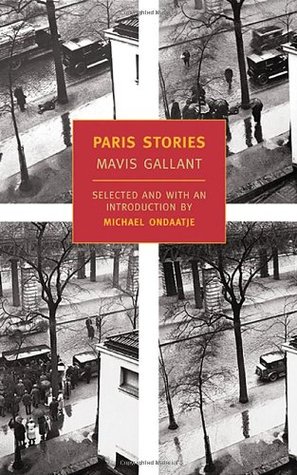
She had learned her lines for nothing. The director he introduced her to also thought she did not look German. She was one of the brown-eyed Catholic girls from around Speyer. She prayed for Gabriel, but his life after the prayers was the same as before. She had a catch in her voice, almost a stammer; she tried to ask Gabriel if he wanted to marry her, but the word caught. He said to himself that she might not enjoy being Liselotte Baum after having been Liselotte Pfligge. Her stepfather, Wilhelm Pfligge — of Swiss origin, she said — had tried to rape her; still, she had his name. Gabriel thought that if the custom of name-changing had been reversed and he had been required, through marriage, to become Gabriel Pfligge, he might have done so without cringing, or at least with tact. Perhaps he would have been expected to call Wilhelm Pfligge “Papa.” He saw Papa Pfligge with a mustache, strangely mottled ears, sporty shoes, a springy walk, speaking with his lips to Gabriel's ear: “We both love Liselotte so much, eh?”
While Gabriel continued to develop this, giving Papa Pfligge increasingly preposterous things to say, Liselotte gave up on love and culture and the au-pair adventure and went home. He accompanied her to the Gare de l'Est and lifted her two cases to the overhead rack. Then he got down and stood on the gray platform and watched her being borne away. The train was blurred, as if he were looking at it through Liselotte's tears.
For a time her letters were like the trail of a child going ever deeper into the woods. He could not decide whether or not to follow; while he was still deciding, and not deciding, the trail stopped and the path became overgrown behind her.

Blackboard covered with a dust
of living chalk, live chaos-cloud
wormed by turbulence: the rod glides
and the vet narrates shadows
I can’t quite force into shape:
His kidneys might . . . the spleen appears . . .
I can’t see what he sees, and so
resort to simile: cloudbank, galaxy
blurred with slow comings
and goings, that far away. The doctor
makes appreciative noises,
to encourage me;
he praises Beau’s stillness.
I stroke the slope beneath
those open, abstracted eyes,
patient, willing to endure whatever
we deem necessary, while the vet
runs along the shaved blonde
Today I’m herding the two old dogs
into the back of the car,
after the early walk, wet woods:
Beau’s generous attention must be
brought into focus, gaze pointed
to the tailgate so he’ll be ready to leap,
and Arden, arthritic in his hind legs,
needs me to lift first his forepaws
and then, placing my hands
under his haunches, hoist the moist
black bulk of him into the wagon,
and he growls a little
before he turns to face me,
glad to have been lifted—
And as I go to praise them,
as I like to do, the words
that come from my mouth,
from nowhere, are Time’s children,
as though that were the dearest thing
a person could say.
Why did I call them by that name?
They race this quick parabola
faster than we do, as though
it were a run in the best of woods,
run in their dreams, paws twitching
—even asleep they’re hurrying.
Doesn’t the world go fast enough?
We’re caught in this morning’s
last-of-April rain, the three of us
bound and fired by duration
—rhythm too swift for even them
to hear, though perhaps we catch
a little of that rush and ardor
—furious poetry!—
the sound time makes,
seeing us through.
Big blocks of ice
—clear cornerstones—
chug down a turning belt
toward the blades of a wicked,
spinning fan; scraping din
of a thousand skates and then
powder flies out in a roaring
firehose spray of diamond dust,
and the film crew obscures
the well-used Manhattan snow
with a replica of snow.
Trailers along the edge of the Square,
arc lamps, the tangled cables
of a technical art, and our park’s
a version of itself. We walk here
daily, the old dogs and I glad
for the open rectangle of air
held in its frame of towers,
their heads held still and high
to catch the dog run’s rich,
acidic atmosphere, whitened faces
—theirs and mine—lifted toward gray
branches veining the variable sky.
Today we’re stopped at the rim:
one guy’s assigned the task
of protecting the pristine field
a woman will traverse
—after countless details are worried
into place—at a careful angle,
headed toward West Fourth.
They’re filming The Hours,
Michael’s novel, a sort of refraction
of Mrs. Dalloway. Both books
transpire on a single June day;
that’s the verb; these books do
breathe an air all attention,
as if their substance were a gaze
entirely open to experience, eager
to know—They believe
the deepest pleasure is seeing
and saying how we see,
even when we’re floored
by spring’s sharp grief, or a steady
approaching wave of darkness.
In the movie version, it’s winter;
they’re aiming for a holiday release,
and so must hasten onward.
Someone calls out Background!
and hired New Yorkers begin
to pass behind the perfect field,
a bit self-conscious, skaters
and shoppers too slow to convince,
so they try it again, Clarissa passing
the sandblasted arch
bound in its ring of chain-link,
monument glowing gray against the gray
A little less now in the world to love.
Taxi on Bleecker, dim afternoon, after
a bright one’s passing, after the hours
in stations and trains, blur of the meadows
through dull windows, fitful sleep,
heading home, and now the darkness inside
the cab deeper than anything a winter afternoon
could tender. Nothing stays, the self
has no power over time, we’re stuck
in a clot of traffic, then this: a florist shop,
where something else stood yesterday,
what was it? Do things give way that fast?
PARADISE FLOWERS, arced in gold
on the window glass, racks and rows
of blooms, and an odd openness on the sidewalk,
and—look, the telltale script of cables
inking the street, trailers near, and Martian lamps,
and a lone figure in a khaki coat poised
with a clutch of blooms while they check her aspect
through the lens: Clarissa, of course,
buying the flowers herself.
I take it personally. As if,
no matter what, this emblem persists:
a woman went to buy flowers, years ago,
in a novel, and was entered
by the world. Then in another novel,
her double chose blooms of her own
while the blessed indifferent life
of the street pierced her, and now
here she is, blazing in a dim trench
of February, the present an image
reduced through a lens, a smaller version
of a room in which love resided.
Though they continue, shadow and replica,
copy and replay, adapted, reduced,
reframed: beautiful versions—a paper cone of asters,
golden dog nipping at a glove—fleeting,
and no more false than they are true.
Your old kitchen, dear, on Bleecker: sugar, dates, black tea.
Your house, then ours. Anyone’s now. Memory’s furious land.

The next day it was his turn: Richard turned forty. Turned is right. Like a half-cooked steak, like a wired cop, like an old leaf, like milk, Richard turned. And nothing changed. He was still a wreck.

Seth gets to the door and I can see he’s still tweaking but slowing down. He’s been gone two days, which is usually what happens after he finishes a job. For a construction worker he’s emaciated, and without his dentures in there’s not a tooth in his head. And this was a rock star, not just locally but in other states. Onstage he’d take off his shirt and girls would throw their beer to see it run down his chest.