
inspo/revelation
Richard Powers,
David Foster Wallace,
Karen Tei Yamashita,
Rachel Kushner,
Lucia Berlin,
Jonathan Franzen,
Jennifer Egan,
Sarah Polley,
Lauren Elkin
something crucial is revealed to the audience
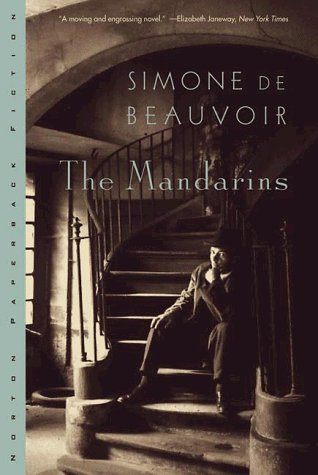
Henri didn't answer. Happy. The fact was the word no longer had any meaning. You can never possess the world, and protecting yourself against it is out of the question, too. You're in it, that's all. In Porto Venere, as in Paris, the whole earth would be present around him, with its miseries, its crimes, its injustices. He could spend the rest of his life fleeing and he would never find a refuge. He would read the papers, he would listen to the radio, he would receive letters. All he could gain would be that he could say to himself, 'There's nothing I can do.' Suddenly, something exploded inside his chest. No. The solitude that was suffocating him that evening, that mute impotence, that wasn't what he wanted. No. He would never consent to say to himself for the rest of his life, 'Everything is happening without me.' Nadine had seen through him: not for a moment had he really chosen that exile. He suddenly realized that for days he had been suffering the thought with dread.
<3!!!

The itching is insane. Every spot above his waist is unreachable fire. When he drops back down to earth again, his mother is there, curled up in the chair next to his bed. A change in his breathing wakes her from her sleep. His father is there, too, somehow. Neelay worries; what will his employers say when they discover he’s not at work?
His mother says, “You came down out of a tree.”
He can’t connect the dots. “Fell?”
“Yes,” she argues. “That’s what you did.”
“Why are my legs in tubes? Is that to keep me from breaking things?”
Her finger wags in the air, then touches her lips. “Everything will be fine.”
His mother doesn’t say such things.
The nurses ease him by degrees off the pain drip. Anguish sets in as the drugs dry up. People come to see him. His father’s boss. His mother’s card-playing friends. They smile like they’re doing calisthenics. Their comfort scares the crap out of him.
“You’ve been through a lot,” the doctor says. But Neelay has been through nothing. His body, perhaps. His avatar. But he? Nothing important in the code has changed.
The doctor is kind, with a tremor when his hand drops to his side, and eyes that fix on a blank spot high up on the walls. Neelay asks, “Can you take the vise-things off my legs?”
The doctor nods, but not in agreement. “You have some mending to do.”
“It’s bugging me, not to be able to move them.”
“You concentrate on healing. Then we’ll talk about what happens next.”
“Can you at least take off the boots? I can’t even wriggle my toes.”
Then he understands. He’s not yet twelve. He has lived for years in a place of his own devising. The thought of countless good things passing out of his life doesn’t quite occur to him. He still has that other place, the heaven in embryo.
But his mother and father: they fall apart. Awful hours set in, days of disbelief and desperate bargaining that he won’t remember. There will be years of supernatural solutions, alternative practices, and miracle cures. For a long time, his parents’ love will make his sentence worse, until they finally put their faith in moksha and accept that their son is a cripple.
But by her second year, the catch becomes clear. In a seminar on forest management, the professor declares that snags and windthrow should be cleaned up from the forest floor and pulped, to improve forest health. That doesn’t seem right. A healthy forest must need dead trees. They’ve been around since the beginning. Birds turn them to use, and small mammals, and more forms of insects lodge and dine on them than science has ever counted. She wants to raise her hand and say, like Ovid, how all life is turning into other things. But she doesn’t have the data. All she has is the intuition of a girl who grew up playing in the forest litter.
Soon, she sees. Something is wrong with the entire field, not just at Purdue, but nationwide. The men in charge of American forestry dream of turning out straight clean uniform grains at maximum speed. They speak of thrifty young forests and decadent old ones, of mean annual increment and economic maturity. She’s sure these men who run the field will have to fall, next year or the year after. And up from the downed trunks of their beliefs will spring rich new undergrowth. That’s where she’ll thrive.
She preaches this covert revolution to her undergrads. “You’ll look back in twenty years, amazed at what every smart person in forestry took to be self-evident truth. It’s the refrain of all good science: ‘How could we not have seen?’”
SHE COMES IN rosy from the cold. Her scarf trails as she pushes the door shut behind her. The Requiem score drops from her hands. She bends to pick it up, and when she straightens, their eyes catch, spilling everything. Scared, defiant, pleading, thuggish. Wanting to be home again, with an old friend.
“Hey! You haven’t budged from that chair.”
“Good rehearsal?”
“The best!”
“I’m glad. What sections did you sing?”
She crosses to where he sits. Something of their old rhythm. She hugs him, Ziemlich langsam und mit Ausdruck. Before he can stand, she slips past, into the kitchen, smelling on herself that blend of salt and bleach. “I’ll just take a quick shower before bed.”
She’s a smart woman, but she has never had much patience with the obvious. Nor does she think him capable of simple observation. She showered twenty minutes before heading out to sing her Brahms.
“The treatment of the arhats is very skilled. Simply on its historical rarity and the quality of the drawing, we put the value between . . .” He mentions two figures that elicit a high-pitched primate giggle before she can throttle it. “Four Arts would be willing to pay you something in the middle of that range.”
She sits back, faking calm. She had hoped for a little freedom from the press of money. Two years, maybe three. But this is a fortune. Freedom. Enough to pay for a whole new life. Mr. Siang appraises her scarred face. His eyes remain impassive behind the blood-red frames. She stares back, ready for a showdown. She has watched the fiercest fire go dead. After Olivia, she can outlast any living gaze.
The scroll lies between them on the table. The wild, drunken calligraphy, the cryptic poem, the seated figures alone in their old forests, almost transformed, almost a part of everything—all hers to dispose of. But disposing of them suddenly feels criminal. Three trees want something from her. But she has less than no idea what.
Outlasting Mr. Siang is as easy as breathing. Three seconds, and he looks away. As he turns, she sees into his art appraiser’s soul. He has stumbled on some reference to this very scroll somewhere in the record. The fact is as clear as the tic on his eyelid. The scroll is worth many times his offer. It’s a long-lost national treasure.
She breathes in, fails to suppress a smile. “I wonder if someone over at the Asian Art Museum might help with identification.”
The Four Arts revised offer is quick in coming. Neither Mimi nor her two sisters nor their children will need to worry about money for a long time to come. It’s a way out for her. Retraining. A new identity. Why stay here any longer?

For there were, by this time, degrees and gradations of public sweating, from a light varnish all the way up to a shattering, uncontrollable, and totally visible and creepy sweat. The worst thing was that one degree could lead to the next if he worried about it too much, if he was too afraid that a single sweat would get worse and tried too hard to control or avoid it. The fear of it could bring it on. He did not truly begin to suffer until he understood this fact, an understanding he came to slowly at first and then all of an awful sudden.

I went home and cried on K.’s shoulder. It was both of us who pooled resources together to do what we could for my dad. For months, K. had been dipping his hand into his pocket for the man who almost made us impossible, the man who would hate him on sight. It was somewhere in that breakdown that I changed my mind. The next day, I took K. to my father’s bedside. My person stood by me, watching us. Where is she? my father asked, ignoring the obvious. I stared back my response, no words involved, just eye to eye, man to man. I saw it click. He swallowed and then opened his mouth to talk. Nothing came out. I repeated myself with a closed mouth, hands in my pockets, staring him down. I felt K. turn to stone in fear. The money we’d both spent bullied my father in front of me, its knuckles ready for his teeth. Do you understand? the money asked him. He shrank and I almost pitied him. I reached for K.’s hand, and feeling how much it had been sweating, I lifted his hand to my mouth and pressed my lips to it before holding his palm to my chest. Are you sure you understand, Dad? I asked. By then, my voice was hot iron. No one, I decided there and then, is allowed to kill me twice. Using my child-voice he said, Yes sir, and using his dad-voice, I said, Good boy.

I don’t remember whether Ulises had already left or was still around. “Sang de satin.” From the start I had trouble with that shitty poem. How to translate the title? “Satin Blood” or “Blood of Satin”? I thought about it for more than a week. And it was then that I was suddenly overcome by the full horror of Paris, the full horror of the French language, the poetry scene, our state as unwanted guests, the sad, hopeless state of South Americans lost in Europe, lost in the world, and then I realized that I wasn’t going to be able to finish translating “Satin Blood” or “Blood of Satin,” I knew that if I did I would end up murdering Bulteau in his study on the Rue de Téhéran and then fleeing Paris like an outlaw. So in the end I decided not to go through with it and when Ulises Lima left (I can’t remember exactly when), that was the end of my dealings with the French poets.
so good