
by
Jon Baskin
why/dfw
Zadie Smith,
Jonathan Franzen,
Jon Baskin,
n+1,
Tom Bissell,
Charles Bock,
Neal Stephenson,
Christopher Sorrentino
(third-party) quotes that explain why DFW was such a good writer

[...] The opening scene stages the very common modern confrontation between an individual who identifies his most precious self with his inner "feelings and beliefs" and a society that treats that human being like an automaton, "bred for a function." The confrontation, Wallace suggests, is mutually reinforcing. The harder the inward-facing individual bumps up against this alienating society (it is symptomatic that as Hal gets more and more uncomfortable, one of the administrators gives the great modern-bureaucratic excuse that they are just "doing our jobs"), the farther he is encouraged to retreat from it, until there can hardly be any communication betwen what the individual conceives of as his essential self nad society at all. [...]
IJ

[...] DFW's writing reflects an attitude that is lovely: a touching, and for the most part well-founded, belief that you can explain anything with words if you work hard enough and show your readers sufficient respect. [...]
As an explanation for milder allergic reactions--and, having proselytized DFW's writing to many friends over the years, I've seen a few--some readers posit (often vaguely and fretfully) that there is some archness or smart-assery in DFW's literary style. This, to me anyway, is an unsupportable conclusion, given the obvious love that DFW brings to what he's writing about, and his explicitly stated opposition to irony-as-lifestyle in his essay E Unibus Pluram. Why do people see it when it's not there? It's something to do with the fact that his conspicuous verbal talent and wordplay create a nagging sense among some readers that there's a joke here that they're not getting or that they are somehow being made fools of by an agile knave. Which DFW was not.
[...]
So in reading Everything and More, cleverness or verbal pyrotechnics or archness are not the emotional tone that comes through to me, but a kind of open-soulness and desire to connect that were touching before, and heartbreaking after, David Foster Wallace succumbed, at the age of 46 to a cruel and incurable disease. Because of this we will not have the opportunity to enjoy and profit from many other explanations that it was in his power to supply on diverse topics, lofty and mundane, and so we must content ourselves with what he did leave behind--an impossibility given the pleasure and the insight he gave us in Everything and More, and his obvious ability to have provided much more, had fortune treated him with as much consideration as he did his readers.
something that i'd like to capture in my from-first-principles posts!
also, the "in his power" could be a sly reference to his undergraduate thesis in philosophy :D

Sonora Review DFW Tribute
by
multiple authors
by
multiple authors
Sonora Review DFW Tribute
by
multiple authors
by
multiple authors
Sonora Review DFW Tribute
by
multiple authors
by
multiple authors
[...] The day I bought BIWHM at the Community Bookstore in Brooklyn, I was still reeling from having been recently left by my fiancee (I even spontaneously asked out the girl who rang the book up; she said no), and was basically spending ungodly amounts of time alone. I went to the movies alone, ate dinner alone, went to the park alone; I was a bouquet of loneliness, irradiated by grief and bewilderment, and this book, which is also irradiated by a different kind of grief and bewilderment, felt in this midst of this self-loathing megalomania somehow aimed at me. [...] I read "Octet" in a Chinese restaurant in Chelsea, and something about Wallace's direct address of the reader, in which he admits that this maneuver is doomed to make him appear "fundamentally lost and confused and frightened and unsure about whether to trust even [his] most fundamental intuitions about urgency and sameness and whether other people deep inside experience things in anything like" the way he, David Foster Wallace, does--well ... can I ask for a critical full-stop here? Can I say something not smart or interesting or James Woodian at all, and just tell you that, reading those words, in this ghastly Chinese restaurant, I put the book down and started to cry? I was lost, and confused, and frightened, and the one person I thought I knew better than anyone, my fiancee, had now revealed to me that, in fact, I knew nothing and no one, not at all, and there I was, as desperate as some kenneled animal, and who do I see beside me, equally caged, but a writer I admired and loved as much as any in this world? It was terrifying as well as heartening, and so my relationship to this book, which I love very much is caught up in the ganglia of a profoundly miserable time in my life, which makes it difficult to talk about on a purely literary level. It is like asking me to describe the fabric of the life jacket I was wearing when I was pulled out of the Atlantic Ocean after being lost at sea for five weeks. [...]
this is heartbreaking and, weirdly, reminds me of Jonathan Franzen
But where David Foster Wallace became singular, in my opinion, where David Foster Wallace transcended all the postmodern games and became flat out heroic--that was the point where he took these structures and took all those superb toys from his playground and applied them to nothing less than the singular struggle to manage the doubts and voices and fears and weaknesses inside your head and ... just ... fucking ... live.
It is unbearably difficult to read writing that makes you more connected to yourself and the universe and all the wonders and disappointments and tiny desires for decency that come with being alive, and also to know that the person who wrote those words hung himself. The easy and natural guess is that Wallace was able to portray the loneliness and sadness and struggle so well because he was so deeply enmeshed in this struggle, every single day of his life. Enmeshed to the point where maybe he related to and saw the struggle more clearly as a mechanism of coping with his depression, the point where maybe his writing about these things was his only release from what was going on inside his head. Where maybe even the struggle and joy of expressing all this so clearly was also its own pressure and caused its own anxiety and depression and problems.
The hard, cold fact is, for a period of almost twenty years David Foster Wallace was able to focus all of his considerable writing gifts and powers of observation on the struggle of fighting with yourself to stay alert and alive. And he was able, with more clarity and acuity and brainpower and charm and humor and insight than anybody else of our time, to express what it was to be completely and utterly locked in this fight.
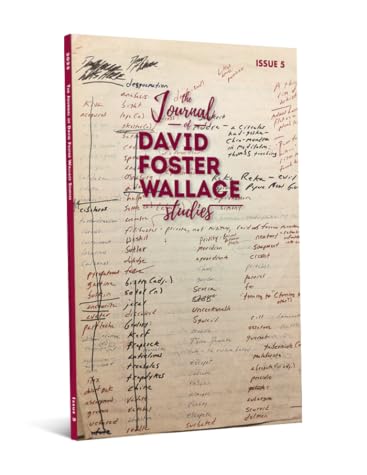
Two of Wallace's most famous nonfictional texts, "E Unibus Plu-ram" (1993) and This Is Water (2005), essential to Wallace's manifesto, are sociological to the core. In them, Wallace explores the causes of American social predicaments and submits solutions to them. This indicates the centrality of sociology to his literary project. Part of his diagnosis is that "this is a generation that has an inheritance of absolutely nothing as far as meaningful moral values, and it's our job to make them up, and we're not doing it." Part of his solution is that writers must produce literature that functions "as an anodyne against loneliness," i.e., their duty is to recreate a sense of community.
This is the structure of Wallace's sociology: to define the predicament against which he can theorize writing as therapeutic, corrective, redemptive, and a response to the problems of our time. This is why his sociology constitutes the foundation of his intellectual project. There is no division between Wallace's fiction and nonfiction. His fictional production explicitly refers to its historical, social, political, ethical, and metaphysical context, i.e., to what is addressed in the nonfiction. His work thus constitutes a unity with one clear goal: to find the possibility of salvation from unbearable suffering.

The accidental progenitor of the blogorrheic style is David Foster Wallace. What distinguishes Wallace’s writing from the prose it begot is a fusion of the scrupulous and the garrulous; all of our colloquialisms, typically diffusing a mist of vagueness over the world, are pressed into the service of exactness. To a generation of writers, the DFW style was the sound of telling the truth, as—in an opposite way—the flat declaratives and simplified vocabulary of Hemingway were for a different generation. But an individual style, terse or wordy, can breed a generalized mannerism, and the path once cleared to saying things truly and well is now an obstacle course. In the case of the blogorrheic style, institutional and technological pressures coincided with Wallace’s example. Bloggers (which more and more is just to say writers) had little or no editing to deal with, and if they blogged for money they needed to produce, produce. The combination discouraged the stylistic virtues of concision, selectivity, and impersonality.