
by
The Point
(editor)
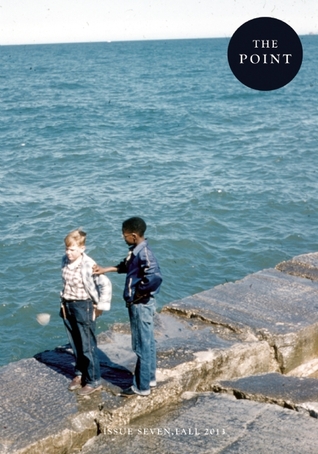
The Point, Issue 7: Fall 2013
The Point, Issue 7: Fall 2013
by
The Point
(editor)
by
The Point
(editor)
The Point, Issue 7: Fall 2013
by
The Point
(editor)
by
The Point
(editor)
79
essays:
Prey
writing about the dead. By Katharine Smyth
(missing author)
writing about the dead. By Katharine Smyth
(missing author)
0
terms
2
notes
79
I wanted to hear more about Laura’s experience, but I noticed that my own attitude toward the visit was one of cynicism. Not only was I treating the cadaver as a mere curiosity, but there was a hint of self-satisfaction in my conviction that its sight would not affect me—I think it derived from a leftover tomboyish belief that invulnerability is always preferable to fear. I envisioned the piece I would write (the organs gleaming like gemstones), as though the visit itself were a formality. Yet such irreverence troubled me. The notion of going to see a cadaver with the prior knowledge I would write about it struck me as manipulative. If I described the lab scene to a trusting reader, but while in the lab had thought only of its literary potential, must a truthful rendering of that scene thus include admission of my mindset? And what of the poor cadaver, whose former occupant had decided to bequeath her body to the medical school, but had likely not foreseen an outcome such as this? Finally I wondered about the repercussions of undergoing certain “significant” experiences simply because they might provide fodder for one’s stories. In Holy the Firm, Annie Dillard asks her students which of them want to be writers, and then she tells them what the decision must mean: “You can’t be anything else. You must go at your life with a broadax…” The line had long appealed to me—Dillard’s vision of the artist, whom she later describes as a kind of sacrificial flame, is flattering, particularly if, as she asserts, “the world without light is wasteland and chaos, and a life without sacrifice is abomination.” But until I visited Laura’s cadaver, I had always assumed it was one’s past one must attack. It had never occurred to me that one must “go at” one’s present and future as well.
I wanted to hear more about Laura’s experience, but I noticed that my own attitude toward the visit was one of cynicism. Not only was I treating the cadaver as a mere curiosity, but there was a hint of self-satisfaction in my conviction that its sight would not affect me—I think it derived from a leftover tomboyish belief that invulnerability is always preferable to fear. I envisioned the piece I would write (the organs gleaming like gemstones), as though the visit itself were a formality. Yet such irreverence troubled me. The notion of going to see a cadaver with the prior knowledge I would write about it struck me as manipulative. If I described the lab scene to a trusting reader, but while in the lab had thought only of its literary potential, must a truthful rendering of that scene thus include admission of my mindset? And what of the poor cadaver, whose former occupant had decided to bequeath her body to the medical school, but had likely not foreseen an outcome such as this? Finally I wondered about the repercussions of undergoing certain “significant” experiences simply because they might provide fodder for one’s stories. In Holy the Firm, Annie Dillard asks her students which of them want to be writers, and then she tells them what the decision must mean: “You can’t be anything else. You must go at your life with a broadax…” The line had long appealed to me—Dillard’s vision of the artist, whom she later describes as a kind of sacrificial flame, is flattering, particularly if, as she asserts, “the world without light is wasteland and chaos, and a life without sacrifice is abomination.” But until I visited Laura’s cadaver, I had always assumed it was one’s past one must attack. It had never occurred to me that one must “go at” one’s present and future as well.
90
DURING HIS SOLE conversation with Janet Malcolm, Joe McGinniss quoted her a passage from a Thomas Mann essay:
The look that one directs at things, both outward and inward, as an artist, is not the same as that with which one would regard the same as a man, but at once colder and more passionate. As a man, you might be well-disposed, patient, loving, positive, and have a wholly uncritical inclination to look upon everything as all right, but as an artist your daemon constrains you to "observe," to take note, lightning fast and with hurtful malice, of every detail that in the literary sense would be characteristic, distinctive, significant, opening insights, typifying the race, the social or the psychological mode, recording all as mercilessly as though you had no human relationship to the observed object whatsoever.
DURING HIS SOLE conversation with Janet Malcolm, Joe McGinniss quoted her a passage from a Thomas Mann essay:
The look that one directs at things, both outward and inward, as an artist, is not the same as that with which one would regard the same as a man, but at once colder and more passionate. As a man, you might be well-disposed, patient, loving, positive, and have a wholly uncritical inclination to look upon everything as all right, but as an artist your daemon constrains you to "observe," to take note, lightning fast and with hurtful malice, of every detail that in the literary sense would be characteristic, distinctive, significant, opening insights, typifying the race, the social or the psychological mode, recording all as mercilessly as though you had no human relationship to the observed object whatsoever.