
by
Granta
55
The Millennial Mind
by Anton Jager
(missing author)
by Anton Jager
(missing author)
1
terms
4
notes
55
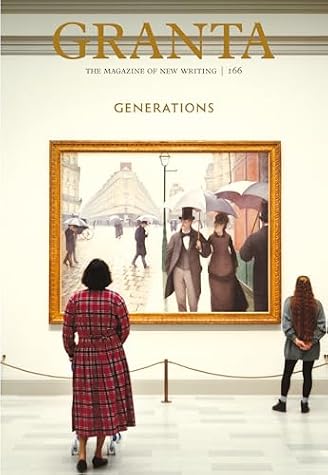
hat does it mean to be a ‘millennial’ today? The generation born in the West between 1981 and 1996, first baptized with a semi-official term in 1991, has been routinely castigated as moralistic, incorrigibly literalist, and intolerant of ambiguity, in contrast to the allegedly post-ironic cohort of zoomers and the self-ironizing individualists of Generation X. Culturally, the differences are not hard to spot. While millennials grew up with the internet and observed its early evolutionary travails, zoomers seem blissfully born into it; while millennials publicly enlisted in generational battles (Occupy, the Great Wall of Gammon, etc.), Generation X had been conditioned to abjure any collective endeavor altogether; while boomers could live off the fruits of the trente glorieuses, millennials surfed on the artificial waves of the credit boom until the hammer fell on them after the 2008 crash.
Compared to other cohorts, millennials appear trapped: they enjoy neither the effortless asubjectivity of Generation Z, nor the historical arrogance of the baby boomer. Born with the promise of globalization in the 1990s, which liberated the planetary flow of goods and information and augured a new civil society, the post-1981 age group entered the new century with hopes that could hardly be met.
hat does it mean to be a ‘millennial’ today? The generation born in the West between 1981 and 1996, first baptized with a semi-official term in 1991, has been routinely castigated as moralistic, incorrigibly literalist, and intolerant of ambiguity, in contrast to the allegedly post-ironic cohort of zoomers and the self-ironizing individualists of Generation X. Culturally, the differences are not hard to spot. While millennials grew up with the internet and observed its early evolutionary travails, zoomers seem blissfully born into it; while millennials publicly enlisted in generational battles (Occupy, the Great Wall of Gammon, etc.), Generation X had been conditioned to abjure any collective endeavor altogether; while boomers could live off the fruits of the trente glorieuses, millennials surfed on the artificial waves of the credit boom until the hammer fell on them after the 2008 crash.
Compared to other cohorts, millennials appear trapped: they enjoy neither the effortless asubjectivity of Generation Z, nor the historical arrogance of the baby boomer. Born with the promise of globalization in the 1990s, which liberated the planetary flow of goods and information and augured a new civil society, the post-1981 age group entered the new century with hopes that could hardly be met.
56
hen the German sociologist Karl Mannheim first drafted reflections on the so-called Generation Question – Generationsfrage – in the middle of the 1920s, the examination of age cohorts was still a relatively novel way to study society. Mannheim did not subscribe to the idea of generations as simple chronological slots. His generations were compound constructs, born out of the clash of a biological continuum with a sequential order of events, which meant that the entity in question had to share a cultural-political experience, not just a year of birth on a passport. ‘The sociological phenomenon of generational cohesion,’ Mannheim claimed, was undoubtedly ‘founded on the fact of the biological rhythm of births and deaths’. But he was careful to emphasize that the biological base needed a political-cultural superstructure: a generation ‘holds within itself an underivable superadditive’, a type of shared experience that catapults the group from natural into human history. Mannheim gave the example of French peasants at the time of Napoleon. Those who did not join Napoleon’s armies remained cloistered in the mental world of their parents and grandparents, where customs and traditions were passed down from father to son. By contrast, the young men who experienced the military campaigns, victories, and defeats of Napoleon, acquired a common generational experience that divided them from those who came before them and those who followed.
hen the German sociologist Karl Mannheim first drafted reflections on the so-called Generation Question – Generationsfrage – in the middle of the 1920s, the examination of age cohorts was still a relatively novel way to study society. Mannheim did not subscribe to the idea of generations as simple chronological slots. His generations were compound constructs, born out of the clash of a biological continuum with a sequential order of events, which meant that the entity in question had to share a cultural-political experience, not just a year of birth on a passport. ‘The sociological phenomenon of generational cohesion,’ Mannheim claimed, was undoubtedly ‘founded on the fact of the biological rhythm of births and deaths’. But he was careful to emphasize that the biological base needed a political-cultural superstructure: a generation ‘holds within itself an underivable superadditive’, a type of shared experience that catapults the group from natural into human history. Mannheim gave the example of French peasants at the time of Napoleon. Those who did not join Napoleon’s armies remained cloistered in the mental world of their parents and grandparents, where customs and traditions were passed down from father to son. By contrast, the young men who experienced the military campaigns, victories, and defeats of Napoleon, acquired a common generational experience that divided them from those who came before them and those who followed.
contrapuntal
(en)
of or in counterpoint
57
The same holds for that other contrapuntal peak in twentieth-century generational warfare: May 1968, when bourgeois parents and bourgeois children found themselves ‘on opposite sides of the barricade’
notable
4 months, 1 week ago
The same holds for that other contrapuntal peak in twentieth-century generational warfare: May 1968, when bourgeois parents and bourgeois children found themselves ‘on opposite sides of the barricade’
notable
4 months, 1 week ago
58
The potent blend of loneliness and agitation might go a long way in explaining the distinctly moralistic sensibility for which the millennial generation has become notorious. To be millennial demands a strong moral posture, but it offers very few tools to channel the commitment in question into anything sustainably collective. Moralism alternates between a luxury and a deprivation for those who do not have to aggregate and publicly negotiate their preferences. Millennials were confronted with a distinctly new mode of interaction between public and private: energetic yet diffuse, modeled on the fluidity of the online world. The mass politics which Mannheim witnessed is hard to detect today; as is the post-politics so characteristic of the 1990s, when Gen Xers openly disavowed any political commitment and proclaimed the end of collective life. The difference between the generation-standard-bearing novelists David Foster Wallace (Gen X) and Sally Rooney (millennial) is a telling indication of the change. In Wallace’s world political conflict has been evacuated from a public sphere in thrall to commercialism and advertising, with only madcap terrorists actively dissenting. The result is a void that can only be filled with acts of individual re-enchantment or therapeutic group therapy. Rooney, by contrast, operates in a public sphere in which politics has clearly reclaimed its urgency, and collective notions of class have acquired a newfound plausibility. But the resultant posture is still fundamentally one of self-expression: a character may serenade her cleaner’s proletarian credentials, another may declare she is a Marxist, but it’s not clear what Marxist organization she’s a member of.
The potent blend of loneliness and agitation might go a long way in explaining the distinctly moralistic sensibility for which the millennial generation has become notorious. To be millennial demands a strong moral posture, but it offers very few tools to channel the commitment in question into anything sustainably collective. Moralism alternates between a luxury and a deprivation for those who do not have to aggregate and publicly negotiate their preferences. Millennials were confronted with a distinctly new mode of interaction between public and private: energetic yet diffuse, modeled on the fluidity of the online world. The mass politics which Mannheim witnessed is hard to detect today; as is the post-politics so characteristic of the 1990s, when Gen Xers openly disavowed any political commitment and proclaimed the end of collective life. The difference between the generation-standard-bearing novelists David Foster Wallace (Gen X) and Sally Rooney (millennial) is a telling indication of the change. In Wallace’s world political conflict has been evacuated from a public sphere in thrall to commercialism and advertising, with only madcap terrorists actively dissenting. The result is a void that can only be filled with acts of individual re-enchantment or therapeutic group therapy. Rooney, by contrast, operates in a public sphere in which politics has clearly reclaimed its urgency, and collective notions of class have acquired a newfound plausibility. But the resultant posture is still fundamentally one of self-expression: a character may serenade her cleaner’s proletarian credentials, another may declare she is a Marxist, but it’s not clear what Marxist organization she’s a member of.
60
illennials seem doomed to generational warfare: without the organisations and categories that once sought to treat the problem of inequality on its distinct, class-based terms, a fight between generations is now the only plausible option. The irony is that the increasing salience of generational categories provides a sociology for a world that has become less sociological: when all other forms of affiliation and belonging have become weak, generational divides are bound to resurface as a last resort. Together with race, gender, or ethnic background, generational markers imply a crisis of collective life rather than a remedy for it. As Mannheim himself never forgot, the persistence of generational thinking means that humanity hasn’t fully liberated itself from biology: the struggle between generations, in this sense, is just another instance of the struggle of species.
illennials seem doomed to generational warfare: without the organisations and categories that once sought to treat the problem of inequality on its distinct, class-based terms, a fight between generations is now the only plausible option. The irony is that the increasing salience of generational categories provides a sociology for a world that has become less sociological: when all other forms of affiliation and belonging have become weak, generational divides are bound to resurface as a last resort. Together with race, gender, or ethnic background, generational markers imply a crisis of collective life rather than a remedy for it. As Mannheim himself never forgot, the persistence of generational thinking means that humanity hasn’t fully liberated itself from biology: the struggle between generations, in this sense, is just another instance of the struggle of species.