
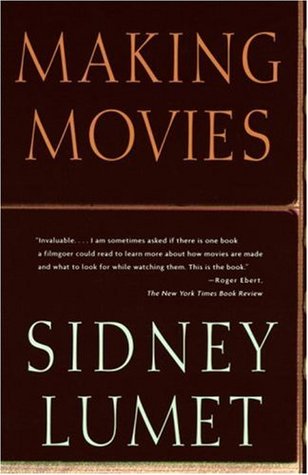
by
Sidney Lumet
170
The Sound of Music: The Sound of Sound
0
terms
4
notes
170
When the score is predictable, when it duplicates in melody and arrangement the action up there on the screen, we call it “mickey-mousing.” The reference is obviously to cartoon music, which duplicates everything down to Jerry kicking Tom’s teeth in. Pictures with scores like that are probably not injured by them. Chances are, the music is not the only cliché in the movie. It’s probably loaded with them.
When the score is predictable, when it duplicates in melody and arrangement the action up there on the screen, we call it “mickey-mousing.” The reference is obviously to cartoon music, which duplicates everything down to Jerry kicking Tom’s teeth in. Pictures with scores like that are probably not injured by them. Chances are, the music is not the only cliché in the movie. It’s probably loaded with them.
174
As I said earlier, I don’t want to “mickey-mouse.” I want the score to say something that nothing else in the picture is saying.
For instance, in The Verdict, nothing much was ever revealed about Paul Newman’s background. At one point there’s an indication that he went through a rough divorce and was the fall guy for his father-in-law’s shady law firm. But we dealt with nothing in his youth or childhood. I told Johnny Mandel that I wanted the deep, buried sound of a religious childhood: parochial school, children’s church choir. He was possibly an acolyte. Since the picture was about this man’s resurrection, he had to have been brought up religiously, so he would have somewhere to fall from. The picture could then be about his return to faith. The score’s function was to provide the state of grace from which to fall.
cool
As I said earlier, I don’t want to “mickey-mouse.” I want the score to say something that nothing else in the picture is saying.
For instance, in The Verdict, nothing much was ever revealed about Paul Newman’s background. At one point there’s an indication that he went through a rough divorce and was the fall guy for his father-in-law’s shady law firm. But we dealt with nothing in his youth or childhood. I told Johnny Mandel that I wanted the deep, buried sound of a religious childhood: parochial school, children’s church choir. He was possibly an acolyte. Since the picture was about this man’s resurrection, he had to have been brought up religiously, so he would have somewhere to fall from. The picture could then be about his return to faith. The score’s function was to provide the state of grace from which to fall.
cool
175
The Pawnbroker had as complex a score as I’ve ever worked on. In the opening scene, Sol Nazerman, a Jewish refugee from Germany, is sitting in a suburban backyard, soaking up the sun. His sister asks for a loan so she and her family can take a vacation in Europe that summer. To Nazerman, everything about Europe is a cesspool. He says, “Europe? It’s rather like a stink, as I remember.” The next sequence shows him driving into New York City, to his pawnshop in Harlem. Those two scenes set up the conception of the score. Earlier, I said that The Pawnbroker was about how and why we establish our own prisons. At the beginning of the movie, Nazerman is encased in his own coldness. He has tried desperately to feel no emotion, and he has succeeded. The story of the movie is how his life in Harlem breaks down the wall of ice with which he has surrounded himself.
The concept of the score was “Harlem triumphant!” —that the life, pain, and energy of his life there forced him to feel again. I decided I wanted two musical themes: one representing Europe, the other Harlem. The European theme was to be classical in its nature, precise but rather soft, a feeling of something old. The Harlem theme, by contrast, would be percussive, with lots of brass, wild in feeling—containing the most modern jazz sound that could be created.
The Pawnbroker had as complex a score as I’ve ever worked on. In the opening scene, Sol Nazerman, a Jewish refugee from Germany, is sitting in a suburban backyard, soaking up the sun. His sister asks for a loan so she and her family can take a vacation in Europe that summer. To Nazerman, everything about Europe is a cesspool. He says, “Europe? It’s rather like a stink, as I remember.” The next sequence shows him driving into New York City, to his pawnshop in Harlem. Those two scenes set up the conception of the score. Earlier, I said that The Pawnbroker was about how and why we establish our own prisons. At the beginning of the movie, Nazerman is encased in his own coldness. He has tried desperately to feel no emotion, and he has succeeded. The story of the movie is how his life in Harlem breaks down the wall of ice with which he has surrounded himself.
The concept of the score was “Harlem triumphant!” —that the life, pain, and energy of his life there forced him to feel again. I decided I wanted two musical themes: one representing Europe, the other Harlem. The European theme was to be classical in its nature, precise but rather soft, a feeling of something old. The Harlem theme, by contrast, would be percussive, with lots of brass, wild in feeling—containing the most modern jazz sound that could be created.
178
When I haven’t been able to find a musical concept that adds to the movie, I haven’t used a score. Studios hate the idea of a picture without music. It scares them. But if the first obligation of Dog Day Afternoon was to tell the audience that this event really happened, how could you justify music weaving in and out? The Hill was also done in a naturalistic style, so no score was used. In Network, I was afraid that music might interfere with the jokes. As the picture went on, the speeches got longer and longer. It was clear at the first screening that any music would be fighting the enormous amount of dialogue. Again, no score.
When I haven’t been able to find a musical concept that adds to the movie, I haven’t used a score. Studios hate the idea of a picture without music. It scares them. But if the first obligation of Dog Day Afternoon was to tell the audience that this event really happened, how could you justify music weaving in and out? The Hill was also done in a naturalistic style, so no score was used. In Network, I was afraid that music might interfere with the jokes. As the picture went on, the speeches got longer and longer. It was clear at the first screening that any music would be fighting the enormous amount of dialogue. Again, no score.