
Search

Yes, in theory, a shoeshine boy from a poor provincial town in Peru can go to Stanford and do a PhD, as the former Peruvian President Alejandro Toledo has done, but for one Toledo we have millions of Peruvian children who did not even make it to high school. Of course, we could argue that all those millions of poor Peruvian children are lazy good-for-nothings, snice Mr. Toledo has proven that they too could have gone to Stanford if they had tried hard enough. But I think it is much more plausible to say that Mr Toledo is the exception. Without some equality of outcome (of parental income), poor people cannot take full advantage of equality of opportunity.
i really liked this passage, but wish he had taken it a step further, with a thought experiment: imagine if, by some fluke, a bunch of his peers had also been super brilliant and would have excelled at Stanford. or even not by some fluke--imagine he and his friends made a study group and helped lift each other up despite all the obstacles in their way. imagine if his entire high school graduating class were brilliant and all worthy of Stanford--maybe even more worthy than any other applicants. Does that mean Stanford will accept them all? No, of course not. Stanford can't accept more than a few token brilliant, poor Peruvians in any given year. The goal of institutions like Stanford is not to meritocratically allocate spaces to the most deserving or most promising students. The goal is to use these so-called meritocratic stories as a shield while, covertly, allocating spaces predominantly to children of alumni and others who fit the ideal that Stanford has created over the years. This facade of meritocracy is what allows people to pretend that the system is fair and thus override their natural squeamishness around inequality.
also ties into exceptionalism re: Obama

[...] Rabois believes PayPal is a "perfect validation of merit" and of Silicon Valley as a meritocracy. "None of us had any connection to anyone important in Silicon Valley," he told me. "We went from complete misfits to the establishment in five years. We were literally nobodies.[...]" The early PayPal team would go on to found some of the biggest companies in Silicon Valley, including Tesla, SpaceX, LinkedIn, YouTube, and Yelp. Thiel funded and joined the board of Facebook. Establishment achieved.
this guy literally knows nothing about anything
But we didn't have a term for "meritocracy" until the twentieth century, when the British sociologist and politician Michael Young wrote a book in 1958 warning of how dangerous the world's relatively new method of establishing status might be. In his novel The Rise of the Meritocracy, Young portrayed a dystopian Britain in which status based on birth and lineage was replaced by status based on education and achievement. Young wasn't advocating for a return to the old system, but he did see grave dangers in the new embrace of meritocracy, eerily predicting that in this new world, status would still be accessible only to a select few: those who had access to elite education. As a result, meritocracy would produce a new social stratification and a sense of moral exceptionalism.
Though Young's book was meant as a cautionary satire, the idea of meritocracy took off, all negative connotations forgotten, as the term for a new equality of opportunity [...]
That's when Young penned an op-ed for the Guardian in which he confessed he was "sadly disappointed" by his book's effect. "It is good sense to appoint individual people to jobs on their merit," he wrote. "It is the opposite when those who are judged to have merit of a particular kind harden into a new social class without room it in it for others ... If meritocrats believe, as more and more of them are encouraged to, that their advancement comes from their own merits, they can feel they deserve whatever they can get. They can be insufferably smug, much more so than the people who knew they had achieved advancement not on their own merit but because they were, as somebody's son or daughter, the benefitciares of neptosim. The newcomesr can actually believe they have morality on their side. As a result, general inequality has been becoming more grievous with every year that passes."
so good

If we are to make progress on these issues in the future, it would be good to begin by working toward greater transparency than exists today. In the United States, France, and most other countries, talk about the virtues of the national meritocratic model is seldom based on close examination of the facts. Often the purpose is to justify existing inequalities while ignoring the sometimes patent failures of the current system. In 1872, Emile Boutmy created Sciences Po with a clear mission in mind: “obliged to submit to the rule of the majority, the classes that call themselves the upper classes can preserve their political hegemony only by invoking the rights of the most capable. As traditional upper-class prerogatives crumble, the wave of democracy will encounter a second rampart, built on eminently useful talents, superiority that commands prestige, and abilities of which society cannot sanely deprive itself.” If we take this incredible statement seriously, what it clearly means is that the upper classes instinctively abandoned idleness and invented meritocracy lest universal suffrage deprive them of everything they owned. One can of course chalk this up to the political context: the Paris Commune had just been put down, and universal male suffrage had just been reestablished. Yet Boutmy’s statement has the virtue of reminding us of an essential truth: defining the meaning of inequality and justifying the position of the winners is a matter of vital importance, and one can expect to see all sorts of misrepresentations of the facts in service of the cause.
great quote that ties in nicely with http://bookmarker.dellsystem.me/note/2102

[...] Bourdieu and Passeron put the argument:
Nothing is better designed than the examination to inspire universal recognition of the legitimacy of academic verdicts and of the social hierarchies they legitimate, since it leads the self-eliminated to count themselves among those who fail, while enabling those elected from among a small number of eligible candidates to see in their election the proof of a merit or “gift” which would have caused them to be preferred to all comers in any circumstances.
Schooling and examinations thus translate class inequalities into inequalities of merit legitimating these inequalities both in the eyes of the dominant and subordinate classes. According to Bourdieu, to a large extent the dominant class of contemporary is a credentialed elite. To recall, this is also Althusser’s argument: that the school ISA is the key institution in reproducing capitalism.
quote from Reproduction in Education, Society and Culture. relevant to my theory of meritocracy (retroactive legitimation)
This relentless focus on intersubjective, interpersonal relations between individual members of different classes completely overlooks the ways in which capitalism operates as a system of objective social relationships. As Ellen Meiksins Wood has argued, the universal market dependence that defines capitalism necessarily imposes certain imperatives on economic activity: competition, profit maximization, accumulation, productivity growth. Workers and capitalists alike are subject to the constraints of the market and are forced to comply with its demands in order to survive. They simply have no choice but to do so, regardless of their personal beliefs, attitudes, and values. Exploitation occurs not because owners and employers are prejudiced against workers but because the whip of competition constantly forces them to cut costs, intensify workers’ labor, and reduce wages. Even if prejudicial attitudes toward working-class people were eradicated tomorrow, class exploitation would still continue. What’s more, those attitudes would likely resurface because abusing and mistreating other human beings always requires a justification.
link this to meritocracy

Meritocracy is the propaganda we use to bless the charade.
[...]
Capitalism is an amoral farce in which every player--investor, employee, entrepreneur, consumer--is complicit.
But hey, look at these shiny iPhones. Right?
Here's another truth about tech life: anyone who claims the Valley is meritocractic is someone who has profited vastly from it via nonmeritocratic means like happenstance, membership in a privileged cohort, or some concealed act of absolute skulduggery.
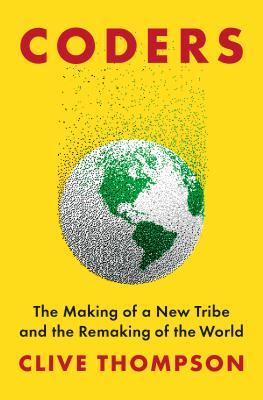
Propelled by these epic feats—clever software, endurance, nutty work hours—the PayPal crew developed a proud sense of having won the gold ring in the meritocracy of Silicon Valley. While most other high-tech firms were collapsing in the dot-com bust of the early ’00s, PayPal was soaring. It successfully went public, then was bought by eBay for $1.5 billion, making its founders remarkably wealthy. PayPal, the vice president Keith Rabois proclaimed, was a “perfect validation of merit.” As he told the journalist Emily Chang: “None of us had any connection to anyone important in Silicon Valley. . . . We went from complete misfits to the establishment in five years. We were literal nobodies. People wouldn’t talk to us.”
lol

Although educational credential inflation expands on false premises—the ideology that more education will produce more equality of opportunity, more high-tech economic performance, and more good jobs—it does provide some degree of solution to technological displacement of the middle class. Educational credential inflation helps absorb surplus labor by keeping more people out of the labor force; and if students receive a financial subsidy, either directly or in the form of low-cost (and ultimately unrepaid) loans, it acts as hidden transfer payments. In places where the welfare state is ideologically unpopular, the mythology of education supports a hidden welfare state. Add the millions of teachers in elementary, secondary, and higher education, and their administrative staffs, and the hidden Keynesianism of educational inflation may be said to virtually keep the capitalist economy afloat.
As long as the educational system can be somehow financed, it operates as hidden Keynesianism: a hidden form of transfer payments and pump-priming, the equivalent of New Deal make-work setting the unemployed to painting murals in post offices or planting trees in conservation camps, Educational expansion is virtually the only legitimately accepted form of Keynesian economic policy, because it is not overtly recognized as such. It expands under the banner of high technology and meritocracy—it is the technology that requires a more educated labor force. In a roundabout sense this is true: it is the technological displacement of labor that makes school a place of refuge from the shrinking job pool, although no one wants to recognize the fact. No matter—as long as the number of those displaced is shunted into an equal number of those expanding the population of students, the system will survive.
whoa
link this to "learn to code"-style policies & skills-biased technological change