
View all notes
Available query params: commented=1, untagged=1

[...] Sometimes I try to concentrate on the story I would like to write, and I realize that what interests me is something else entirely or, rather, not anything precise but everything that does not fit in with what I ought to write—the relationship between a given argument and all its possible variants and alternatives, everything that can happen in time and space. This is a devouring and destructive obsession, which is enough to render writing impossible. In order to combat it, I try to limit the field of what I have to say, divide it into still more limited fields, then subdivide these again, and so on and on. Then another kind of vertigo seizes me, that of the detail of the detail of the detail, and I am drawn into the infinitesimal, the infinitely small, just as I was previously lost in the infinitely vast.
cute
The fact is, my writing has always found itself facing two divergent paths that correspond to two different types of knowledge. One path goes into the mental space of bodiless rationality, where one may trace lines that converge, projections, abstract forms, vectors of force. The other path goes through a space crammed with objects and attempts to create a verbal equivalent of that space by filling the page with words, involving a most careful, painstaking effort to adapt what is written to what is not written, to the sum of what is sayable and not sayable. These are two different drives toward exactitude that will never attain complete fulfillment, one because "natural" languages always say something more than formalized languages can—natural languages always involve a certain amount of noise that impinges upon the essentiality of the information—and the other because, in representing the density and continuity of the world around us, language is revealed as defective and fragmentary, always saying something less with respect to the sum of what can be experienced.
Will the literature of the fantastic be possible in the twenty-first century, with the growing inflation of prefabricated images? Two paths seem to be open from now on. (1) We could recycle used images in a new context that changes their meaning. Postmodernism may be seen as the tendency to make ironic use of the stock images of the mass media, or to inject the taste for the marvelous inherited from literary tradition into narrative mechanisms that accentuate its alienation. (2) We could wipe the slate clean and start from scratch. Samuel Beckett has obtained the most extraordinary results by reducing visual and linguistic elements to a minimum, as if in a world after the end of the world.
Overambitious projects may be objectionable in many fields, but not in literature. Literature remains alive only if we set ourselves immeasurable goals, far beyond all hope of achievement. Only if poets and writers set themselves tasks that no one else dares imagine will literature continue to have a function. Since science has begun to distrust general explanations and solutions that are not sectorial and specialized, the grand challenge for literature is to be capable of weaving together the various branches of knowledge, the various "codes," into a manifold and multifaceted vision of the world.
Among the values I would like passed on to the next millennium, there is this above all: a literature that has absorbed the taste for mental orderliness and exactitude, the intelligence of poetry, but at the same time that of science and of philosophy: an intelligence such as that of Valéry as an essayist and prose writer. (And if I mention Valéry in a context in which the names of novelists prevail, it is partly because, though he was not a novelist and indeed—thanks to a famous quip of his—was thought of as the official liquidator of traditional fiction, he was a critic who understood novels as no one else could, defining their specificity simply as novels.)
If I had to say which fiction writer has perfectly achieved Valéry's aesthetic ideal of exactitude in imagination and in language, creating works that match the rigorous geometry of the crystal and the abstraction of deductive reasoning, I would without hesitation say Jorge Luis Borges. The reasons for my fondness for Borges do not end here, but I will mention only the main ones. I love his work because every one of his pieces contains a model of the universe or of an attribute of the universe (infinity, the innumerable, time eternal or present or cyclic); because they are texts contained in only a few pages, with an exemplary economy of expression; because his stories often take the outer form of some genre from popular literature, a form proved by long usage, which creates almost mythical structures. As an example let us take his most vertiginous "essay" on time, "El jardin de senderos que se bifurcan" (The Garden of Forking Paths), which is presented as a spy story and includes a totally logico-metaphysical story, which in turn contains the description of an endless Chinese novel—and all this concentrated into a dozen pages.
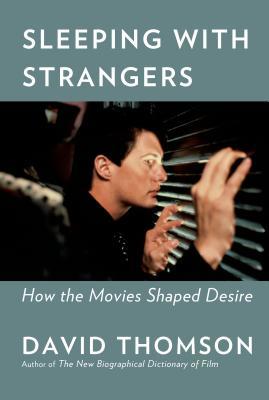
So we did nearly everything together, day after day, week after week. At the National Film Theatre we had complete seasons of Fritz Lang, Howard Hawks, and Jean Renoir, as well as an extended survey of French cinema. This made for a magical coincidence in education, for it was in the early 1960s that revolutions occurred—the films of the French New Wave: The 400 Blows, Shoot the Piano Player, Jules and Jim, Les Cousins, Paris Belongs to Us, as well as Breathless and Vivre Sa Vie. It was not just that these were wildly exciting movies. They were made by young men we knew from the yellow-covered Cahiers du Cinéma where they had for years been reveling in Hollywood cinema. They adored Howard Hawks, Hitchcock, Fritz Lang, Preminger, Vincente Minnelli, Sam Fuller, Anthony Mann, and Nick Ray. In Sight & Sound (the prim English film quarterly we deplored), there had been an article by the editor, “Ray or Ray?,” in which the humanist compassion of Satyajit Ray was preferred to the desperate cinematics of Nicholas Ray. We admired Satyajit Ray, but we adored Nick Ray because his films were closer to our world. His Rebel Without a Cause was a knowing title, getting at the existential uncertainty in modern opportunities. Kieran and I collaborated on the most complete Nick Ray filmography yet done for the insurrectionary magazine Movie in 1963.
<3
We are being allowed to see something that ought to be forbidden. Instead, it captivates us. Movies are the industrialization of murder and orgy as regular human fantasies. There has always been a shadow of censorship or control, and it adds to the air of an illicit thrill coming our way. Though lifelike, the medium is a ticket to transcend our humble circumstances. We say we believe in fidelity in our life, but on screens for decades we enjoyed different men and women, week after week. Faithfulness and promiscuity rattled in the same head, like dice being shaken.
he's weirdly staid when he ought to be poetic but i do like this
[...] One principle in this book—and it has been of enormous influence in our lives as a whole—is that in watching pretense we acquire a deeper sense of our reality but a growing uncertainty over our psychic integrity. What else are movies for? We thought we were identifying with characters for fun, but perhaps we were picking up the shiftiness of acting—for life.
Daphne the misfit has a stranger joy. She is noticed by an addled millionaire, Osgood Fielding III, wonderfully played by Joe E. Brown. When the film reaches the breathless point of needing to end, Osgood has a motorboat to sweep everyone away. He regards Daphne by then as his significant other so she feels she has to make it clear that her relationship with Osgood can only be limited. At last he takes off the wig and can blurt it out. “I’m a man.” To which Osgood responds, “Well, nobody’s perfect,” with the aplomb of an elderly fellow who’ll take what he can get and a premonition that strong or surviving men need not be immaculate.
lol
[...] Ingmar behaved appallingly with wives and children—he had five wives and at least nine children in addition to affairs with many of his stars. He took sexual advantage of actresses who longed to be in his films, because they believed he was so good. To read his autobiography, The Magic Lantern, is to meet a creep, a user, and a cold-blooded, self-pitying predator. He was awful, but fascinating. So will we ban his films now because of that?
I hope not, but I don’t want a sophisticated finessing of the Bergman problem, like a tidy separation of his work from his life such as we often make with Picasso, Chaplin, or Wagner. The riddle is more complicated: the eye for women, the sexual curiosity, and the stress on desire in Bergman’s films are inseparable from his biographical disorder. He gazed at women with conspiratorial longing, and some of those women featured in his private life as much as in his films. You can say that Bergman worshipped women in abstract, but so much of his best work puts them under cruel stress and keeps watching. He was as chronic a voyeur as Hitchcock. In Persona, the Liv Ullmann character sits back in silence, contemplating the Bibi Andersson character, in just the way we are allowed to watch both of them. The overlapping urges to adoration and predation remind me of Molly Haskell’s pioneering book From Reverence to Rape, first published in 1974. Sometimes that is hailed as a feminist classic, but that label is belittling. Her book is about all of us—like Bergman’s films.
i dont love the adjectives here ('creep', etc) but this is kinda interesting even if poorly written