
by
Erin McElroy
View all notes
Available query params: commented=1, untagged=1
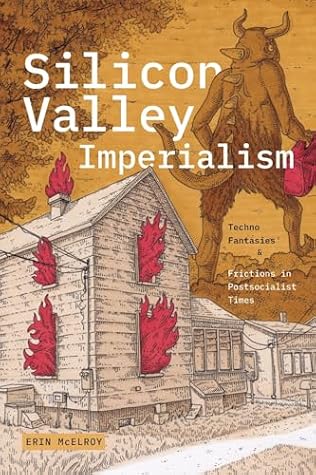
By abolition, here I am thinking with the work of Rinaldo Walcott, who suggests that while an abolitionist future is not possible without the abolition of police, nor is one feasible without the abolition of property.18 After all, it was the formation of private property that helped establish geographies of racial capitalism upon which racialized labor exploitation took place. The police were then required to concretize racial capitalist borders and logics, punishing those who transgressed its authority.19 An abolitionist geography, as Ruth Wilson Gilmore conceptualizes, then “starts from the homely premise that free- dom is a place.”20 This idea of abolition requiring unpropertied futures isn’t entirely new, and in fact Marx and Engels once suggested that “the theory of the Communists may be summed up in the single sentence: Abolition of private property.”21 Yet, and as Fred Moten has critiqued, Marx did not theorize the abolition of slavery when writing this, as he could not imagine “the commodity who shrieked.”22 An abolitionist politic then needs to entail more than decommodification of things rendered as property, but also the abolition of worlds in which p eople can be owned, incarcerated, and exploited. It is one that stands up against racial technocapitalism, freeing land, housing, bodies, and data from dispossessory logics. It would also seek to, as Wendy Liu argues, abolish Silicon Valley, which for her means remaking the world outside of capitalist logics, “decommodifying essential goods while also radically transforming the way we think about work.”23 Unbecoming Silicon Valley is thus a worldmaking project committed to remapping Siliconized lands and labor through abolitionist and anti-imperial visions.
:)

Quite often I felt I was living out this passion in the same way I would have written a book: the same determination to get every single scene right, the same minute attention to detail. I could even accept the thought of dying providing I had lived this passion through to the very end—without actually def ining “to the very end”—in the same way I could die in a few months’ time after finishing this book.
IN FRONT OF people I knew, I tried not to betray my obsession by words, although to exercise such self-control continually is extremely taxing. At the hairdresser’s one day I saw a talkative woman to whom everyone had been speaking perfectly normally until she announced, her head tilted back over the basin: “I’m being treated for my nerves.” Immediately, the staff stiffened and addressed her with distant reserve, as if this irrepressible confession were proof of her insanity. I feared I would also be considered abnormal if I had said: “I’m having a passionate love affair.” Yet when I was among other women, at the supermarket checkout or at the bank, I wondered whether they too were wrapped up in a man. If they weren’t, how could they go on living this way—that is to say, judging by my previous standards, with nothing else to wait for but the weekend, a meal out, the gym class, or the children’s school results: things for which I now felt aversion or indifference.
(Am I the only woman to return to the scene of an abortion? Sometimes I wonder if the purpose of my writing is to find out whether other people have done or felt the same things or, if not, for them to consider experiencing such things as normal. Maybe I would also like them to live out these very emotions in turn, forgetting that they had once read about them somewhere.)
Now it’s April. Sometimes I wake up in the morning without immediately thinking of A. The prospect of rediscovering “life’s little pleasures”—meeting friends, going to the cinema, enjoying a good meal—has become less horrific. I am still in the age of passion (one day I will no longer be aware that I wasn’t thinking of A when I woke up) but it has changed, it has ceased to be continuous.6
Whether or not he was “worth it” is of no consequence. And the fact that all this is gradually slipping away from me, as if it concerned another woman, does not change this one truth: thanks to him, I was able to approach the frontier separating me from others, to the extent of actually believing that I could sometimes cross over it.
I measured time differently, with all my body.
I discovered what people are capable of, in other words, anything: sublime or deadly desires, lack of dignity, attitudes and beliefs I had found absurd in others until I myself turned to them. Without knowing it, he brought me closer to the world.
When I was a child, luxury was fur coats, evening dresses, and villas by the sea. Later on, I thought it meant leading the life of an intellectual. Now I feel that it is also being able to live out a passion for a man or a woman.

[...] In his account of the age of coal, On Barak explains the prevalence of British coal by the fact that products mined in Wales or Northern England could be exported to the colonies in ships that would otherwise have been in ballast (or not carrying cargo). The vast trade in British coal overseas encouraged industrialisation at home, while the rise of mass democracy in Europe resulting from the materialities of coal mining was accompanied by the projection of authoritarian power over colonies overseas.
think more about what she's saying here
The Suez Canal route, like so many other technological marvels of the nineteenth century invented to lubricate the machinery of empire, reproduced the empire itself through feedback loops and self-perpetuation mechanisms – popular revolts or starving labourers and peasants or indebted nations be damned. Because winds blew east–west across the Sinai – transversal to the canal’s north–south route – sailing ships could not navigate the canal. This meant that they were limited to the Cape route, and eventually the canal entailed the decline of oceangoing sailing ships in intercontinental trade.40 Like the railways crisscrossing colonies in Asia and Africa, the canal became an infrastructure constructed in service of further colonial extraction of commodities and capitalisation of global economies. The movement of capital in the era after the inauguration of the Suez Canal is stunningly instructive. In the period between the opening of the canal and the start of World War I, capital investment outside country of origin surged from US$9 billion to $44 billion. The vast majority of this capital was invested in mineral extraction in Asia and Africa.41
[...] Many famous London trading houses had offices in Aden, including Cory Brothers, who by the end of the nineteenth century were the most important coal traders in the London docks. The best-known shipping companies of Aden in the early half of the twentieth century were owned by Antonin Besse and Cowasjee Dinshaw. The French-born Besse was a ruthless businessman who treated his workers poorly and had a monopoly on Shell products in Yemen. His donations went on to found St Antony’s College of Oxford. [...]
lol