
by
James Wood
View all notes
Available query params: commented=1, untagged=1

had a piano teacher who used to talk about the most familiar musical cadence – in which a piece returns, after wandering and variation, to its original key, the tonic – as ‘going home’. It seemed so easy when music did it: who wouldn’t want to swat away those black accidentals and come back to sunny C major? These satisfying resolutions are sometimes called ‘perfect cadences’; there is a lovely subspecies called the ‘English cadence’, used often by composers like Tallis and Byrd, in which, just before the expected resolution, a dissonance sharpens its blade and seems about to wreck things – and is then persuaded home, as it should be.
from https://www.lrb.co.uk/the-paper/v36/n04/james-wood/on-not-going-home. just pretty
[...] When I left this country 18 years ago, I didn’t know how strangely departure would obliterate return: how could I have done? It’s one of time’s lessons, and can only be learned temporally. What is peculiar, even a little bitter, about living for so many years away from the country of my birth, is the slow revelation that I made a large choice a long time ago that did not resemble a large choice at the time; that it has taken years for me to see this; and that this process of retrospective comprehension in fact constitutes a life – is indeed how life is lived. Freud has a wonderful word, ‘afterwardness’, which I need to borrow, even at the cost of kidnapping it from its very different context. To think about home and the departure from home, about not going home and no longer feeling able to go home, is to be filled with a remarkable sense of ‘afterwardness’: it is too late to do anything about it now, and too late to know what should have been done. And that may be all right.
reminds me of DFW's essay on kafka
Or perhaps this is just my fear projected onto him. When I was a teenager, I used to think that Philip Larkin’s line about how life is first boredom, then fear, was right about boredom (those Sundays) and wrong about fear. What’s so fearful about life? Now, at forty-seven, I think it should be the other way around: life is first fear, then boredom (as perhaps the fearful Larkin of “Aubade” knew). Fear for oneself, fear for those one loves. I sleep very poorly these days; I lie awake, full of apprehensions. All kinds of them, starting with the small stuff, and rising. How absurd that I should be paid to write book reviews! How long is that likely to last? And what’s the point of the bloody things? Why on earth would the money not run out? Will I be alive in five years? Isn’t some kind of mortal disease likely? How will I cope with death and loss—with the death of my parents, or, worse, and unimaginably, of my wife, or children? How appalling to lose one’s mind, as my mother-in-law did! Or to lose all mobility, but not one’s mind, and become a prisoner, like the late Tony Judt. If I faced such a diagnosis, would I have the courage to kill myself? Does my father have pancreatic cancer? And on and on.
So Mleville slapped at God. He could not help playing the infidel: he is one of hte most delvingly sacrilegious writers who has ever existed. For him, metaphysics could not stop like a day-trip at some calm watering-place. Dialectic was always an elastic solitude stretching into the desert. [...]
whoa
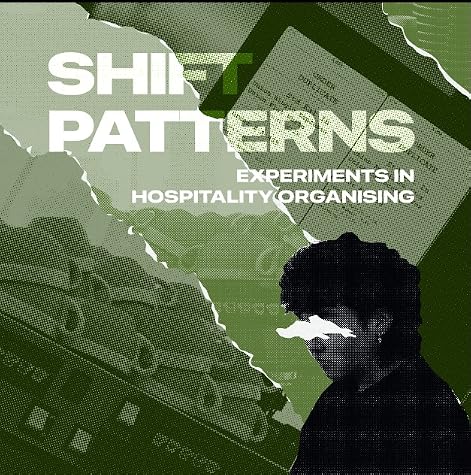
It is important that we understand what is at stake with hospitality worker organising. Hospitality covers a range of different labour processes. At the core, hospitality work is not that different to the industrial work that it is increasingly displacing. Taking the beans out of the can is not so different to putting them in. Indeed, serving up commodities after they have been produced and distributed involves many additional demands.
Rarely do we just want drink or food slopped out into any old container. Instead, workers do not just serve drinks, but they produce an environment in which consumers are willing to pay more. This kind of work, broadly categorised as hospitality, has grown alongside the wider trends of deindustrialisation in Britain. Much of the workforce is younger, often finding this work alongside studying or training for other kinds of work. There is a risk of understanding hospitality as something that people only do for a while, and therefore negative conditions as some sort of “rite of passage.” Even if workers do not identify strongly with the work, many are spending longer periods of time in hospitality, particularly following the 2008 financial crisis.
People come to hospitality work from a range of social origins and vastly different levels of opportunity, and this often shapes the trajectories taken by hospitality workers. While this can fragment class unity in economic terms, it can also produce novel political alliances cutting across many other social issues, which feeds back into the economic struggle. It is clear, therefore, that the stakes of organising in this sector are extremely high, not just for the industry itself, but for the broader workers’ movement. As many contributions in this issue conclude, an organised hospitality sector could play a crucial role in rebuilding a culture of workplace militancy. When we enter a workplace for the first time, we encounter an existing set of informal and formal norms. These are the historic outcomes of managerial directives, social and professional hierarchies, interpersonal relations and worker resistance. The self-organisation of a workforce around a fundamental antagonism between workers and bosses can radically transform this structure of norms. The initial phase of this struggle may be embittered as opposing interests, typically manifesting in more subtle forms, are brought to the fore and sharpened. However, this open conflict can ultimately recast workplace divisions in the long term, setting a new standard for incoming workers as they acclimate to the professional environment. This is the challenge currently facing hospitality workers. Winning over this sector to organised militancy could lead to dramatic and far-reaching changes, particularly given the demographic features of this workforce.
The story of Starbucks in the US is an important reference point for understanding organising in hospitality. The current wave of unionisation began in 2021 with the unionisation of a store in Buffalo, New York with Starbucks Workers United. At the start of 2024, Starbucks agreed to negotiate a collective bargaining agreement. This was a long fight that involved workers collectively organising with petitions, marches on the boss, walkouts, strikes, and plenty of press coverage. Workers have struck across 200 stores and won union elections at over 400 stores. Starbucks Workers United, which is part of SEIU, now represents 10,000 workers out of a workforce of approximately 250,000. As one of the workers involved in the campaign, Sarah Pappin, argued: “We want to not just open the door for the rest of the food service industry, we want to kick it down. Eventually you get tired of jumping to the next job and praying it’s gonna be better. You realize you should just take a stand where you have some good ground.”
While hospitality retailing is significantly affected by both the climate crisis and the cost of living crisis, it is important to maintain sight of the fact that an enormous amount of profit is being made in this industry. Young workers have become the central target of the hospitality industry, and deindustrialisation means there are very few options beyond it. Workers can win. It will not be easy, but with so little fought for in the industry, the low-hanging fruit is there for the picking. If we are to re-draw our class maps for our current moment, to understand how the working class might wield political power now, organising and winning with these young workers is an important investment in the future of the labour movement.
We didn’t go through legalistic routes with our action - it was a wildcat strike. Our walkout lasted less than an hour. But it took place on a Friday evening, so it went from maybe 200 people in the bar, over two floors, to the place being cleared because people weren’t being served for about 45 minutes. That was really incredible. During the strike, we had a petition that went round to customers to get public support for our strike action. We got around 50 signatures from people. The punters were really enthusiastic and on-board with what we were doing.
sick
If there is something poetic in these kinds of organising, it is poetry of the kind that Tom Leonard says most people do not think of as poetry: about politics, employment, what people do with their time. It goes far beyond what is considered the normal way of organising in the hospitality industry. But if we are concerned about the creation of class culture and our contribution to composing a stronger, more self-conscious and powerful working class, these are all worthwhile organising initiatives. The normal approach to organising is to identify suffering or grievance, to focus in on it, and to set out to achieve the negation of this negative, in other words, to frame and gain a positive win which is related to the worker’s conditions, income, or prosperity. This is a noble aim and it is and always will be a mainstay of union organising. But it need not be the only one. ‘Why are you so soundly, so solemnly convinced that only the normal and the positive – in brief, convinced that prosperity alone is advantageous? I’m not campaigning for suffering, or for prosperity. I’m advocating … my own caprice and that it should be guaranteed me when the need arises.’ So wrote Fyoder Dostoyevsky, but you do not need to be a Dostoyevsky wannabe to think that a positive, pay–and-conditions, prosperity-focused type of organising can develop alongside a more capricious and creative organising style and impulse. And if Dostoyevsky focused on the I, communist organising is focused on the we, and on our common capacity, caprice, and creativity.
nice