
View all notes
Available query params: commented=1, untagged=1
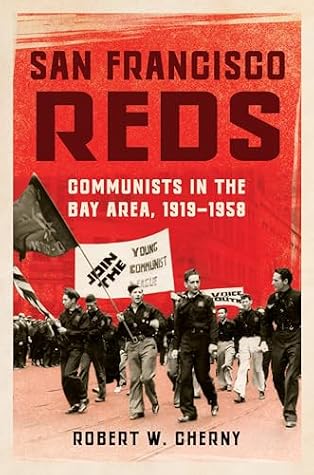
Bill Sennett’s post-party employment was perhaps most at variance from his erstwhile comrades. Within six years he had become a corporate vice president for the company where he had worked in Chicago, and he eventually became president of an international corporation that leased truck trailers for heavy freight. In addition to his corporate positions, he belonged to the Democratic Socialists of America and helped organize a tenants’ association at the high-rise luxury apartment complex where he lived. In retirement in Tiburon, an affluent suburb north of San Francisco, he became publisher of In These Times, a weekly that presented left perspectives on current events and supported organizations that worked to eliminate poverty and racial discrimination.
ha nice
Though those who left the party could be quite critical of the party, other party members, and even themselves, few regretted the time they had given to the party. Sennett said, “My life was enriched by having been a Communist.” Eva Lapin Maas reflected, “The Party had shaped our lives, given us a way of viewing the world, framed our family life, and influenced our selection of friends, books, movies, and activities.” Bailey concluded his memoir by reiterating what had guided his life in the party: “To witness an injustice and do nothing—that is the biggest crime.” Eickman was quite critical of the CP but did not regret his time as a member. “The Party gave me an understanding of the class relationship of society,” he said. “It gave me a political attitude that made me different from any of the others in the union who didn’t have that background. I don’t think they understood politics to the same degree.” Tobin also voiced no regrets: “I don’t think anything I ever did countered the interests of the people in this country. . . . What we went out to do, was a good cause.” Angela Gizzi Ward considered that her experience in the party had been “positive,” that she had “learned a great deal,” and that whatever success she had as a union organizer came in part “because of the support I did get from the Party in thinking, and in organizing my ideas.” Carol Cuénod’s major regret was that the Labor Youth League she led had advised high school students to work in factories rather than go to college.
In 1983, on the fiftieth anniversary of the time Elaine and Karl moved in together, the San Francisco Board of Supervisors presented them with a certificate of honor that noted their lifetimes of effort for “Labor, Civil Rights, Peace, and Against Racism” and stated that “their example has been an inspiration to many of us.” The San Francisco Examiner devoted an article to their lifelong commitment to the CP, noting that “their lives are almost synonymous with labor organizing, civil and racial rights causes and an unceasing commitment to involvement.” When Elaine died five years later, Walter Johnson, secretary of the San Francisco Labor Council, spoke at her memorial service and observed that for many years no picket line in the city had been complete without the presence of Elaine and Karl.
<3

2.7 I’d met Madison, as I’ve already mentioned, two months earlier, in Budapest. I’d been at a conference. She’d been there with some girlfriends. We’d got talking in the hotel bar. An anthropologist, she’d said; that’s … exotic. Not at all, I’d replied; I work for an incorporated business, in a basement. Yes, she said, but … But what? I asked. Dances, and masks, and feathers, she eventually responded: that’s the essence of your work, isn’t it? I mean, even if you’re writing a report on workplace etiquette, or how to motivate employees or whatever, you’re seeing it all through a lens of rituals, and rites, and stuff. It must make the everyday all primitive and strange—no? I saw what she was getting at; but she was wrong. For anthropologists, even the exotic’s not exotic, let alone the everyday. In his key volume Tristes Tropiques, Claude Lévi-Strauss, the twentieth century’s most brilliant ethnographer, describes pacing the streets, all draped with new electric cable, of Lahore’s Old Town sometime in the nineteen-fifties, trying to piece together, long after the event, a vanished purity—of local colour, texture, custom, life in general—from nothing but leftovers and debris. He goes on to describe being struck by the same impression when he lived among the Amazonian Nambikwara tribe: the sense of having come “too late”—although he knows, from having read a previous account of life among the Nambikwara, that the anthropologist (that account’s author) who came here fifty years earlier, before the rubber-traders and the telegraph, was struck by that impression also; and knows as well that the anthropologist who, inspired by the account that Lévi-Strauss will himself write of this trip, shall come back in fifty more will be struck by it too, and wish—if only!—that he could have been here fifty years ago (that is, now, or, rather, then) to see what he, Lévi-Strauss, saw, or failed to see. This leads him to identify a “double-bind” to which all anthropologists, and anthropology itself, are, by their very nature, prey: the “purity” they crave is no more than a state in which all frames of comprehension, of interpretation and analysis, are lacking; once these are brought to bear, the mystery that drew the anthropologist towards his subject in the first place vanishes. I explained this to her; and she seemed, despite the fact that she was drunk, to understand what I was saying. Wow, she murmured; that’s kind of fucked.
enjoyed this
I wrote about all this. It made me famous—relatively speaking. Let’s not get carried away. A famous anthropologist, even one with a real book out, is about as well-known as a third-division footballer. No, less: let’s say an Olympic badminton player, or a reality-TV contestant from an unpopular show five years ago. And come to think of it, I’m even exaggerating the degree of fame my study brought me in my own field, let alone the world of letters. Rather than “made me famous,” it would be more accurate to say that the book “garnered me some attention”—the odd public reading, the odd newspaper review; and, as they say, tomorrow’s fish (unlike ichthyomancers) can’t read. It was enough attention, though, to bring me onto Peyman’s radar, there to beep, or throb, or do whatever things on radars do; which, in turn, prompted him to pluck me from the dying branches of academia and re-graft me inside the febrile hothouse of his company.
[...] I stole a concept from the French philosopher Deleuze: for him le pli, or fold, describes the way we swallow the exterior world, invert it and then flip it back outwards again, and, in so doing, form our own identity. I took out all the revolutionary shit (Deleuze was a leftie); and I didn’t credit Deleuze, either. Big retail companies don’t want to hear about such characters. I did the same thing with another French philosopher, Badiou: I recycled his notion of a rip, a sudden temporal rupture, and applied it, naturally, to tears worn in jeans, which I presented as the birth-scars of their wearer’s singularity, testaments to the individual’s break with general history, to the successful institution of a personal time. I dropped the radical baggage from that, too (Badiou is virtually Maoist). This pretty much set up the protocol or MO I’d deploy in my work for the Company from then on in: feeding vanguard theory, almost always from the left side of the spectrum, back into the corporate machine. The machine could swallow everything, incorporate it seamlessly, like a giant loom that reweaves all fabric, no matter how recalcitrant and jarring its raw form, into what my hero would have called a master-pattern—or, if not that, then maybe just the pattern of the master.
[...] While my supposed business, my “official” function, as a corporate ethnographer, was to garner meaning from all types of situation—to extract it, like a physicist distilling some pure, unadulterated essence out of common-mongrel compounds, or a miner drawing gold ore from deep within the earth’s bowels—I sometimes allowed myself to think that, in fact, things were precisely the other way round: that my job was to put meaning in the world, not take it from it. Divining, for the benefit of a breakfast-cereal manufacturer, the social or symbolic role of breakfast (what fasting represents, the significance of breaking it); establishing for them some of the primary axes shaping the way in which the practice of living is, or might be, carried out; and watching the manufacturer then feed that information back into their product and its packaging as they upgraded and refined these, I understood the end-result to be not simply better-tasting cereal or bigger profits for the manufacturer, but rather meaning, amplified and sharpened, for the millions of risers lifting cereal boxes over breakfast tables, tipping out and ingesting their contents. Helping a city council who were thinking of creating parks and plazas but had yet to understand the ethnographic logic driving such an act; laying out for them the history of public (as opposed to private) space, making them grasp what these zones fundamentally embody, what’s at play in them from a political and structural and sacred point of view; and doing this in such a way that this whole history is then injected back into the squares, sports-fields and playgrounds millions of citizens will then inhabit—same thing. Down in my office, stirred and lulled by ventilation, I would picture myself as some kind of nocturnal worker, like those men who go out and repair the roads, or check the points and switches on the railway tracks, or carry out a range of covert tasks that go unnoticed by the populace-at-large, but on which the latter’s well-being, even survival, is dependent. While the city sleeps, bakers are baking bread in night-kitchens, milkmen are loading crates onto their floats; and river-men are dredging riverbeds or checking water-levels, while other men in buildings with nondescript exteriors track storm surges and spring- and neap-tides on their screens, and activate the flood defences when this becomes necessary. When the populace-at-large wakes up, they just see the milk there on their doorstep, and the fresh bread in the shop down the street, and the street itself still there, unflooded, un-tsunamied from existence; and they take it all for granted, where in fact these men have put the milk and bread there, and have even, in deploying the flood defences, put the city there as well, put it back there every time they deploy them. That’s what I was doing, too, I told myself. The world functioned, each day, because I’d put meaning back into it the day before. You didn’t notice that I put it there because it was there; but if I’d stopped, you’d soon have known it.
The Company’s logo was a giant, crumbling tower. It was Babel, of course, the old biblical parable. It embodied one of Peyman’s signature concepts. Babel’s tower, he’d say, is usually taken to be a symbol of man’s hubris. But the myth, he’d carry on, has been misunderstood. What actually matters isn’t the attempt to reach the heavens, or to speak God’s language. No: what matters is what’s left when that attempt has failed. This ruinous edifice (he’d say), which serves as a glaring reminder that its would-be occupants are scattered about the earth, spread horizontally rather than vertically, babbling away in all these different tongues—this tower becomes of interest only once it has flunked its allotted task. Its ruination is the precondition for all subsequent exchange, all cultural activity. And, on top of that, despite its own demise, the tower remains: you see it there in all the paintings—ruined, but still rising with its arches and its buttresses, its jagged turrets and its rusty scaffolding. What’s valuable about it is its uselessness. Its uselessness sets it to work: as symbol, cipher, spur to the imagination, to productiveness. The first move for any strategy of cultural production, he’d say, must be to liberate things—objects, situations, systems—into uselessness. I read this for the first time, long before I worked for him, in Creative Review; then later, with slight variations, in Design Monthly, Contemporary Business Journal and Icon.
good exposition example
The article kept mentioning “faith.” Skydivers are induced into and graduate up through a world in which faith plays a fundamental role. They must believe in their instructors; in the equipment; in the staff packing their rigs; in tiny ring-pulls, clips and clip-releases, strips of canvas, satin, string. It could be argued, wrote the author, that this belief had nothing of the devotional or metaphysical about it, since each of the things to be believed in had a solid evidential underpinning: the mechanics of a ripcord, say, or a spring-loaded riser—or, of course, on a larger scale, the overall infallibility of physics, its laws of resistance, drag and so on. Yet, he claimed, these things could only carry one so far towards a gaping hole in a plane’s side, and the fundamentally counterintuitive act of throwing oneself through it: to cite the clichéd but apt maxim, they could take the horse to water, but they couldn’t make it drink. That final spur, the one that carried skydivers across the threshold, out into the abyss, was faith: faith that it all—the system, in its boundless and unquantifiable entirety—worked, that they’d be gathered up and saved. For this man, though, the victim, that system, its whole fabric, had unraveled. That, and not his death, was the catastrophe that had befallen him. We’re all going to die: there’s nothing so disastrous about that, nothing in its ineluctability that undermines the structure of our being. But for the faith, the blind, absolute faith into whose arms he had entrusted his existence, from whose mouth he’d sought a whispered affirmation of its very possibility—for that to suddenly be plucked away: that must have been atrocious. He’d have looked around him, seen the sky, and earth, its landmass and horizon, all the vertical and horizontal axes that hold these together, felt acceleration and the atmosphere and all the rest, the fundamental elements in which we hang suspended all the time, whether we’ve just jumped from an aeroplane or not—and yet, for him, this realm, with all its width and depth and volume, would have, in an instant, become emptied of its properties, its values. The vast font at which he prayed, and into which he sank, as though to re-baptize himself, time and again, would, in the blink of a dilated eye, have been voided of godhead, rendered meaningless. Space, even as he plunged into it, through it, would have retreated—recoiled, contracted, pulled back from its frontiers even though these stayed intact—withdrawn to some zero-point at which it flips into its negative. Negative world, negative sky, negative everything: that’s the territory this man had entered. Did that then mean he’d somehow fallen through into another world, another sky? A richer, fuller, more embracing one? I don’t think so.
8.12 Later that evening I sat down, once more, to plot the framework of my Great Report. The clearing I’d made on my desktop was still there, untouched and un-encroached-on—save by a small, dead moth whose corpse had landed there after whatever parachute it had put its faith in had failed. I swept it aside; and, once again, the space was pristine, perfect, blank. Tabula rasa: I pronounced the words aloud as I surveyed the leather, breathing in its smell of cut grass and detergent. Just sitting before it, above it, filled me with a sense of infinite possibility. I pictured myself as an industrialist, viewing a clearing in the forest where his factory would go; or as an urban planner, given carte blanche to design from scratch a new, magnificent cosmopolis; a mathematician, a topologist or trigonometrist, contemplating space in its most pure and abstract form; an explorer, sea-discoverer, world-conqueror from centuries gone by, standing at his prow as his dominion-to-be hove into view: this virgin territory that he would shape after himself and make his own. Placing my laptop in the middle—the exact, geometric centre—of this clearing, I opened a fresh document and stretched its borders out until it filled my screen entirely. As I did this, though, just as the document’s expanding lower boundary reached the bottom of my screen, my finger momentarily lost contact with the glide-pad; when the finger made contact again, it caused the applications docked invisibly at the screen’s base to pop up, impinging on the clean neutrality both of the screen and of my mind. Trying to hide them once more, I accidentally tapped on the docked news page, which slipped from its box, inflating as it rose, like some malicious genie, taking the screen over—and in an instant, all the extraneous clutter, all the world-debris, that I’d so painstakingly eliminated flooded back into the clearing, ruining it.
amazing