
View all notes
Available query params: commented=1, untagged=1

I started with the alt account I’d been using for years, @MadonnaHaraway, and soon achieved the amount of lvl. 99 brain where you can look at or9hniffva13n\qd0j3nf and as;kk jfdnakdjasjdfwda and tell which one is misspelled. I developed a palate for content, the highest caliber being the shitpost—the kind whose only purpose is to make it so every few weeks until you die you’ll think “ear medication for my sick uncle” and go Heh. Saying nothing, revealing nothing. The shitpost is the opposite of self-expression, it is expression minus the self. Whereas sadposts and thirst traps, teleologically identical forms of validation-seeking, are driven by ego, as are opinions, those being (in my opinion) the dangling silk of the toreador. People who post takes, the ones who write articles or list college degrees in their bios or use their wedding photos as profile pics, are willing to endure universal hatred in exchange for the illusion that they matter, having subscribed to that corniest of ideals, the online agora. Inevitably they get what’s coming to them. The only thing worse than opinions is facts.
Now why am I rehashing years-old Twitter wank? Because, first and most importantly, lol. But also, I was behind the whole thing. I generated the profile pics, I made the Pornhub accounts, I wrote the fanfic, I hired the actor who streamed as Chumpa. I wrote many of the outrageous takes about the incidents, and I deleted many of them, and I screenshot and posted the deletions, since the easiest way to get people online to do your bidding for free is to make them think they’re forbidden to. And this was just a single op, lasting about four months; I usually had four or five going at once. Every post and account, all of it, me. Though the discourse it spawned, the recurrences of The Cancer, that was you.
okay that made me chuckle
Let us explain. Throughout our reading we noticed an interesting trajectory in your protagonists’ relation to you, the author. We have a straight white male, a straight white woman, a gay Thai American man, a wealthy white man, and a person of undecidable identity. We’re not questioning your right to write from these perspectives; the problem isn’t appropriation, it’s candor. Not that such a scale really exists, but one could roughly plot these stories along an axis of increasing marginalization, the idea presumably being to consider the theme of rejection from different perspectives. Viewed less charitably, it could be read as a way to head off certain dreaded allegations of self-pity and navel-gazing; an attempt at misdirection, as you smuggle your own hang-ups into theirs, while scoring brownie points for imaginative empathy. However, we believe that these distancing attempts only end up drawing attention to you, in a way that feels embarrassingly unintentional. (Our speculations about your authorial intent might strike you as unfair and out-of-bounds, but this isn’t lit crit, it’s feedback. Fair or not, readers do think about this stuff, and as much as it seems you’d like to control the book’s context, no writer truly gets that luxury, even while alive.)
stopppp
We don’t really know what “Sixteen Metaphors” is even doing in the book at all, except perhaps to bewilderingly underscore the futility of the book’s central metaphor. So we pass over it to conclude at this letter, “Re: Rejection,” a ventriloquist act where you voice your misgivings about the book through a fictional jury of scowling publishers. This to us, for obvious reasons, seemed the most bizarre and pointless flourish of all: arriving shortly after a novella that ends with a metafictional self-commentary implicating the author, we hardly need more of the same. The only thing more boring, exhausted, and self-indulgent than breaking the fourth wall at the end of a story is pointing it out. Even looking past the internet-borne tendency for writers of your generation to ass-cover with tedious disclaimers, the real point, we think, is to foreclose scrutiny, to get ahead of rejection by naming your sins before any reader has a chance to. But this perverse apologizing only feels like you’re cutting and chewing our meat for us, and we reject you (literally) all the harder. What does it matter that we know you saw it coming? Is it high praise to say that a book is conscious of its faults? Given the subject matter, we’d think you might be keen to the futility of writing an unrejectable book; you cannot curb a reader’s reading, nor steer their goodwill, no matter how clean your intentions or nude your soul. To attempt it is to abandon the possibility of an authentic connection with the reader, one in which you put yourself on their level (though, we suppose, at least this way you get to do the rejecting). So this special pleading on your own behalf, by way of adversarial autofiction, is just, well, annoying. And you already did a similar thing in your first book too.
i mean it's smart and funny but also sigh
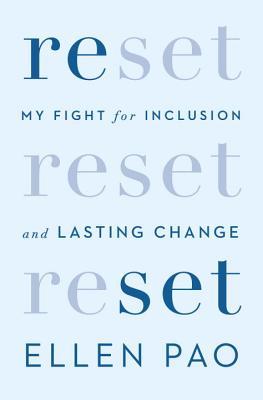
My former boss—one of the idolized leaders in the field, and in many other respects considered one of the good guys—once gave a speech to the National Venture Capital Association in which he described his ideal tech founders as “white, male, nerds who’ve dropped out of Harvard or Stanford—and they absolutely have no social life.”
sadly this is a real John Doerr quote. From Business Insider:
Doerr was giving a keynote with Moritz at a National Venture Capital Association meeting in 2008, when he described being in an Amazon warehouse and seeing programming language books next to titles like "The Joy of Sex."
"These were male nerds trying to get help from an online service," Doerr said.
"That correlates more with any other success factor that I've seen in the world's greatest entrepreneurs. If you look at [Amazon founder Jeff] Bezos, or [Netscape founder Marc] Andreessen, [Yahoo co-founder] David Filo, the founders of Google, they all seem to be white, male, nerds who've dropped out of Harvard or Stanford and they absolutely have no social life," he said.
[...] Spending time with open, optimistic people reminded me that it might be possible to fix some of what was broken in our country - particularly the deep divisions between the rich and poor and between those at the center at those at the margins. I felt renewed and excited. I remembered why I loved tech. When I got home I felt, more than ever, committed to making a difference through my work.
what the fuck lmao
It was almost as if someone had copied my resume verbatim. It was so specific and unconventional, and it matched my unusual background entirely. It was nice to see the choices I made validated in that one job spec - even if my decisions had been more opportunistic than strategic. [...]
ah yes, validation by those in power, what a nice feeling
AS SILICON VALLEY denizens know but others might not: Venture capital is the cash engine that fuels the tech industry. Venture capital firms raise money from rich individuals, wealthy families, universities, foundations, pension funds, funds-of-funds, government investment arms, and others. The money goes into a fund, which usually lasts three to five years. They invest that money in startups. Different VC firms invest in different stages, which range from angel to seed money to Series A to B to C rounds of cash, and so on. Angels invest the first money that a founder raises, often before there is even a team.
Following the money can be confusing. For their work and investment, most VC firms take an annual management fee of around 2.5 percent of the fund for ten years, paid by their investors. They also take what’s called “carry,” Following the money can be confusing. For their work and investment, most VC firms take an annual management fee of around 2.5 percent of the fund for ten years, paid by their investors. They also take what’s called “carry,” or carried interest, usually 20 to 30 percent of any gains. If you have a $1 billion fund—which is smaller than Kleiner’s was when I left—that charges fees at the top end, $250 million of that goes straight to the partners just for management fees. Bam, they get $250 million over ten years. Then if, say, you triple that money in ten years, the partners would get another $600 million as carry from their share of the gains. The bigger the company’s numbers get, the more ridiculous the profit for the venture capital firm.
John, my boss, was king of kingmakers when I joined. He had some early, very big hits: Genentech, Intuit, Amazon. He was one of the first to invest in the internet, with Netscape, and cemented his online reputation later with Google. Several companies already had competing search engines, but John saw Google’s potential to transform the internet. He brought in Eric Schmidt as CEO, making Eric a tech king and a multibillionaire. John viewed things from a different lens, one that showed him something special in these companies. He figured out ways to push them through the system, by using his relationships, raising more funding, and helping them sell. He contributed to making many other people into billionaires, including himself several times over.
making kings out of startup founders, for real
The train took forever. I couldn’t wait to get to the hotel to shower. At last, we were off the train and walking to the hotel. Hotel shower, here I come, I thought.
who writes like this