
View all notes
Available query params: commented=1, untagged=1
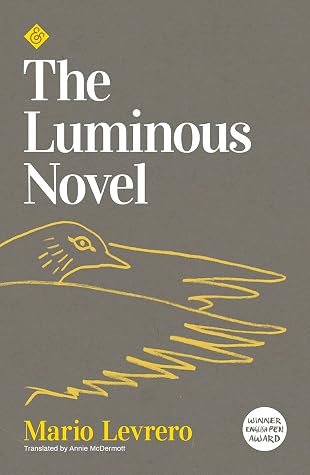
First sighting: tall, proud, shapely, with very black hair and a white dress; suave, elegant, warm and educated. Accompanied by a tall, proud, athletic, elegant and educated man. They came into the place where I worked, in the period following the episode with the green-eyed girl – the period of films, books, alcohol and prostitutes. We talked for a while, and after they left, my business partner and I fell silent, looking at the place where she’d stood. My business partner was having a mild attack of asthma. As the minutes went by, the invisible pedestal holding her aloft grew higher and higher without us noticing. After a while, my business partner and I dared to exchange a glance. Then we looked up and down but with our chins tilted a little to the right, somewhere between nodding and shaking our heads, our lower lips pushed slightly forward to simulate disappointment. What a shame, we were trying to say to each other, that a woman like that could never be ours. In the days that followed, we began to reminisce about her out loud. My business partner, who was very observant, or had an overactive imagination, always added some new detail I’d overlooked or forgotten: the tasteful patterning on her embossed belt, how well the strip of white wool peeping over the top of her dainty leather boots suited her, or the lock of jet-black hair nestling behind her left ear. And after a few more days we’d forgotten her, at least to a certain extent.
How can we say whether anything’s good or bad for us? Are we capable of judging an ordinary event, sure of not being mistaken? [...]
To return to the story of G: we’d got as far as me raising the shutters of the shop each day at 9 a.m. Well, early one morning, the goddess reappeared in the shop. I was by myself; my business partner used to come in the afternoons. She reappeared, strangely enough, at a height altogether more appropriate to my own, having swapped the heels she’d been wearing to match the athlete for others that were very much within reach of my five foot nine and three quarter inches. And what’s more: she was no longer addressing me formally. And what’s more: she asked me to get hold of some books for her, and gave me her phone number. And what’s more – know, reader, that tears are stinging my eyes as I write this. And what’s more: before she left, she told me she had separated from her husband.
What is there in these tears? I don’t know. Perhaps pain, shame, self-pity, humiliation, longing. I don’t know, I don’t know. Please excuse me, reader; for years now I’ve been waiting in vain for some tears. Leave me by myself for a few moments, and then I’ll carry on with the story.
I’ll carry on, saying that my tears were all those things combined, and something else – the memory of having been very happy for a few hours, enormously happy, deliriously happy. They also reveal the chasm stretching between that age and the age I am now; I had mornings, I had work, salaries were high enough that people could buy a thing or two; I could have croissants and café con leche for breakfast, not only because of my purchasing power but also because of the digestive power I enjoyed back then. But what I feel most wistful about, believe it or not, is my ignorance of how the world works – because then (although only then and not before) I was about to begin finding out. Do I know everything now? No; now I only know that it’s not worth knowing – ‘how the world works’, that is. You have to know something so you don’t go under, so you can haul yourself more easily through the mud, so people don’t necessarily always get the better of you in everything; but what I mean is that knowledge doesn’t bring you any closer to what you need in order to make your life better, or even to make you feel better. Does anyone know what I’m talking about? Never mind. I know what I mean.
I got hold of the books she’d asked for – almost immediately, of course. I telephoned her. She came. And it was all so easy that … She hung around chatting until closing time. I lowered the shutters and we talked some more, and all along I was thinking: ‘She’s going to leave now’, ‘She’ll leave any second’, ‘Why isn’t she leaving?’, ‘Surely she’s going to leave’. I didn’t know how to get rid of her. I asked if she wanted to go for a walk and she said she did. We walked. We walked some more. ‘Now she’s going to get on a bus. Surely now she’ll leave. She has to leave. Why isn’t she leaving?’ I realise the reader will be wondering what kind of an idiot I am. Well, you’d be wondering a lot more than that, I can assure you, and in a lot more detail, too, if you’d seen those firm legs encased in black fishnet stockings, which were so generously displayed when she sat down in the bookshop; if you’d seen the look in her eye, if you’d felt her air of docile availability. Yes, reader; you have the right to think as you do. I thought that way myself, and sometimes I still do, especially when I wake up with liver trouble. But at the time, all I wanted was to be rid of her, was for her to leave.
‘That’s OK,’ the reader tells me. ‘I understand. But what I don’t understand is why the hell you’re dumping all this rubbish in your novel rather than talking it through with your therapist. Stop messing me around,’ the reader adds, ‘and write something that’s actually entertaining: images, not sob stories. Like those legs encased in black fishnet stockings.’
‘Point taken,’ I say, ‘point taken. I, too, scrupulously avoid poems written by housewives, and all the sob stories and psychoanalytical material people want me to swallow as if it’s literature. But wait a bit longer, be a little more patient and trust me. I promised you a bunch of grapes, and I can’t get on to the grapes themselves without crossing this squalid, vulgar terrain.’
‘Fine,’ the reader responds. ‘I’ll give you half a page more to masturbate over your delayed adolescence; but I swear, if this goes on much longer I’m ditching this book. You see, I actually have a Chandler on my bedside table that …’
‘OK, OK, let me do things my way, and stop interrupting. You’re not the only one with better things to be doing; I myself have a Beckett on my bedside table …’
:)
Well, I may have had my body, but I saw it as worthless. For a start, I thought I was short, despite my five feet nine and three quarter inches; it’s amazing what an inferiority complex can do. From my height I looked down at a fairly respectable portion of the population, and yet I felt everyone was looking down at me. There are reasons for all this, but I don’t want to go on criticising my parents, especially now I’m a parent myself and my children aren’t exactly lacking in reasons to criticise me. Put simply, my sexual needs, and my need for something resembling affection, made me seek out prostitutes as an emergency solution, while I waited to see what on earth would become of that life of mine which had suddenly, ever since the gaze of the green-eyed girl, transformed into unsteady flailing and going round in circles and bumping into invisible walls. I was like a fly that’s flown into a bottle and got stuck and can feel itself running out of air (ricocheting off G, in the end, was what helped me escape).
Before that, I moved through the city like a sleepwalker; although my eyes were open, I saw no more than the bare minimum I needed in order to get where I had to go. But then, in the time opened up by the green-eyed gaze, the city filled all three, or four, of its dimensions; I lived in it, breathed in it and breathed it in, coming to know its pleasant and not-so-pleasant smells. I began to pick up on the slight sadness of particular neon lights glimmering on particular pavements, or the fleeting joy of an unexpected reflection – the red of a car in a torrent of water, traffic lights on rainy nights (the jubilation of the brilliant red or the gentle purity of the green, wet from the rain and bouncing off the asphalt; marble walls or the shiny surfaces of cars, which contrasted with the sweet, infinite sadness of those meek, tireless March and April showers that fell endlessly onto a city carpeted by the plane trees’ yellowish-brown leaves). Yes, there are happy autumns, just as there is happiness in sadness and even in despair: the point is to be alive and to know it, to feel it – and I curse and curse the dull fear of these long years, when all our lives are gradually drying out, dwindling, reducing, with never any place for sadness: nothing but fear, nothing but hatred, nothing but that long-lost, oft-hidden morsel of hope, worn out from so much manhandling, from our longing to squeeze just a few more drops from it, a few more drops to get us through the present with its shrinking horizons and impenetrable lead roof; and oh, how I also came to hate this city, which was falling to pieces, which was burying us under ever-higher walls and rubble and dust and noise and silence and shame.
And might this not be the real reason for what happened with G? If my heart belonged to someone else … Even now, there are nights when I return to that part of the city, and I feel, of course I do (fool that I am, unable to connect to my feelings unless I sit down and write like a man possessed), I feel a sweet ache; and I glance, of course I do, I glance around, and I don’t dare look any more closely or approach that figure huddling in a doorway, because it might be her, what’s left of her, destroyed like the city by the same cruel, miserable force, the same stupid meanness, the infinite blindness of man. I’m afraid of seeing you defeated, and far more afraid that you’ll recognise me and feel a surge of hope that I’ve come back to you; I wouldn’t dare insult you by throwing you some change, you, who were once whole; and nothing in the world, nothing in the world could make me return with you to that room, to the smell of freshly ironed sperm, to the bells on the doors and the staff listening to tangos by Canaro or Roberto Firpo or football matches on the radio.
I’m sorry, literature, you who also have something of a guileless and pitying prostitute about you, I’ve abandoned you too in this reverie of self-absorption, reminiscing behind your back. I’m losing you, too, but it had to be done. I hope you understand: I’m trying to put my own jigsaw together, calling out in a voice that has to travel down tunnels that are fifteen, eighteen, twenty years long, calling to my scattered pieces, to the unburied corpses of myself, grotesque spectres that never rest, images that never had a mirror to reflect them, broken glass crushed under the wheels of a thousand cars travelling down the road in the same direction, all going to the same place.
I was pleased to see such a high incidence of individualism; although limited, that capacity for transgression made me feel hopeful about the future of ants, a domain of Nature whose societal model had seemed as perfect, absolute and mechanical as that of bees; a model in which the individual counts for nothing. And what became of the individualist transgressors? If you ask me, they got drunk on sugar and had a wild night of hedonism and sexual excess. That’s my opinion. But in fact, what I saw that night by artificial light was a group of ants forming more little black balls. When man, i.e. me, intervened with his twig, they separated with some difficulty, moving slowly and clumsily and never straying too far from the centre of the gathering; not a single ant took hold of another ant’s leg; and at the centre of the gathering was invariably an ant of the same type but with a slightly smaller body. Man went further; he separated two ants from the group and put them on the table. They stayed there for some time, walking around in rather listless circles, looking disoriented and not showing much flight reflex when man goaded them with a stick. The next day, there were no ant corpses to be seen; and neither, oddly, did a single ant take any notice of my bait. They were all busy with their usual tasks.
lol