
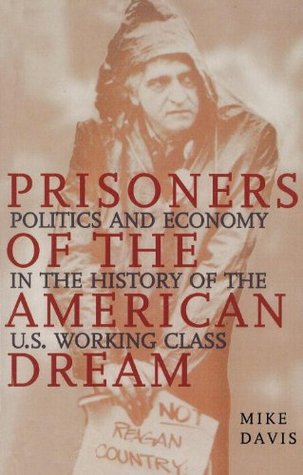
by
Mike Davis
In the United States, on the other hand, a very different politico-juridical framework was present during the infancy of the working class. The most obvious fact, which impressed itself on every Old World visitor, was the absence of residual pre-capitalist class structures and social institutions. As the Hartzian school has emphasized, the Northern colonies were a transplanted ‘fragment’ of the most advanced production relations and ideological superstructures of the seventeenth century: British merchant and agrarian capitalism, Puritan religion, and Lockean philosophy. Long after their official suppression in Britain, New England popular consciousness safeguarded the radical doctrines of the English Revolution and continued to translate them into practice. But no later than 1750, for example, from one half to three quarters of the adult white males in New England, including much of the artisanal population, were already exercising a local franchise. By Andrew Jackson’s second term in 1832, property qualifications had been removed in all but four of the states.8 Thus, in dramatic contradistinction to Europe, popular sovereignty (for white males) was the pre-existent ideological and institutional framework for the industrial revolution and the rise of the proletariat.