
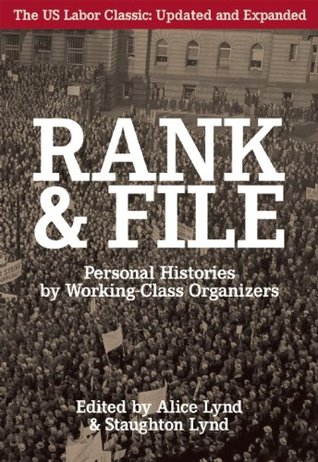
by
Alice Lynd,
Staughton Lynd
(editors)
In the early 1970s, the real wages of working people in the United States began to decline. By the late 1980s, workers' movements were on the defensive. Concessionary contracts surrendered hard-won gains. Employers pushed "jointness," the "team concept," "quality circles," and other forms of labor-management cooperation, to co-opt workers and to weaken the union as an exclusive mechanism for problem solving in the workplace. Collective bargaining agreements tended to become "living agreements," subject to perpetual modification by small groups of company and union negotiators. Even for companies not in financial difficulty, concession bargaining became the norm. Ten- and twelve-hour shifts became commonplace as management sought to operate expensive equipment continuously. Two- and three-tier wage schemes weakened solidarity by giving incumbent workers more than the younger workers coming into the shop. Multinational corporations could make more profit by "disinvesting" from traditional industries like steel, so plants closed and destroyed whole communities. As labor's defeats multiplied, so too did the disappointment and disaffection of union members.