
viii
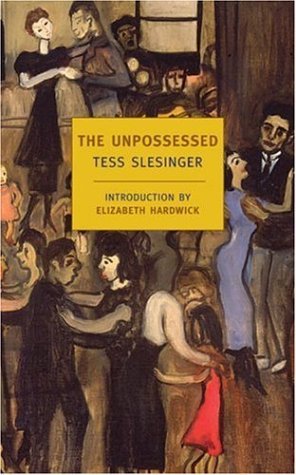
Tess Slesinger attended the progressive school, Ethical Culture, Swarthmore College, and the Columbia School of Journalism. She married Herbert Solow, a man about town in intellectual circles, who was on the staff of the Menorah Journal and, much later, like the progression of so many radicals, on the staff of Fortune magazine. By way of the Menorah Journal, it was the world of Elliot Cohen, Clifton Fadiman, and Lionel Trilling that this young woman, at the age of twenty-three, more gifted than any in the group except Trilling, inhabited in her fashion. She published short stories and, in 1934, her only novel, The Unpossessed; was divorced from Solow, and went to Hollywood. There she married Frank Davis, a producer, had two children, a son and a daughter, worked on successful screenplays, and died at the age of thirty-nine. A crowded life indeed and far more than a footnote in American literature.
wow
xii
In the moil, a Mrs. Fancher enters to be identified for the unknowing outsiders by the knowing Al: “Lady entering in pearls is our first prison-widow. Husband embezzled. Got five years. Damn shame. Best card player I ever knew.” In the staccato brilliance of the party scene more than two dozen voices and human shapes appear in a raucous mingling—not anonymous names on a list but creations distinct and placed in the social order. Miss Bee Powell, a Daughter of the Confederacy with “violet eyes framed in Junior League eyelashes”; Mrs. Stanhope, the horsewoman who never leaves the paddock; Mr. Crawford, “who fell short of being an English lord only by birth and a monocle,” will say “jolly, jolly” at every turn; the butler, of uncertain lineage, has by his station transmogrified into a Republican who would “feed beggars at the backdoor and throw away the rag with which he wiped their crumbs.” The pages have the reckless exuberance of the open bar, the dance floor, the plentiful harvest of the buffet table, the tribal company, each in its vanity, language, armor, and folly.
In the moil, a Mrs. Fancher enters to be identified for the unknowing outsiders by the knowing Al: “Lady entering in pearls is our first prison-widow. Husband embezzled. Got five years. Damn shame. Best card player I ever knew.” In the staccato brilliance of the party scene more than two dozen voices and human shapes appear in a raucous mingling—not anonymous names on a list but creations distinct and placed in the social order. Miss Bee Powell, a Daughter of the Confederacy with “violet eyes framed in Junior League eyelashes”; Mrs. Stanhope, the horsewoman who never leaves the paddock; Mr. Crawford, “who fell short of being an English lord only by birth and a monocle,” will say “jolly, jolly” at every turn; the butler, of uncertain lineage, has by his station transmogrified into a Republican who would “feed beggars at the backdoor and throw away the rag with which he wiped their crumbs.” The pages have the reckless exuberance of the open bar, the dance floor, the plentiful harvest of the buffet table, the tribal company, each in its vanity, language, armor, and folly.
10
There had been small Maggie, child of a family, fastest girl-skater on a city block, most important child in the world (had the world known it? now she had been sure, again it seemed it waited for enlightenment). Growing and growing; then squeezed back into something resembling all other children (she remembered sashes; the day they cut her bangs because her forehead so high and naked made the other children stare) and sent off to school; where to her surprise and terror—and something like relief—she was given not the best desk nor the worst desk nor the farthest nor the nearest nor the most nor the least of anything. The feeling of deprivation! But rising out of it a sense of importance, of social responsibility: the blackboard erasers must be in line, chalk must not strew the school-room floor; one was song-book monitor once a week. So the world of school opened until it took in Saturday morning concerts and Irma Haliburton’s father explaining Damrosch over lunch. And whenever (then) you took stock in the fall, up another grade, maybe a floor higher, granted more freedom this term—you found a newer and bigger world, you belonged to a larger and deeper fraternity. Now you and Miles, you live in a room on Charles Street (the richness of their daring, of their living together and calling the same place home, caught her suddenly unawares), you have never been out of your country or even to the south of it; yet you make out checks from your meager income to send to the Scottsboro boys quaking in Alabama jails; you subscribe to a German paper which names writers you will never read; you visit Russian movies whose characters you comprehend no more than you do their machines.
There had been small Maggie, child of a family, fastest girl-skater on a city block, most important child in the world (had the world known it? now she had been sure, again it seemed it waited for enlightenment). Growing and growing; then squeezed back into something resembling all other children (she remembered sashes; the day they cut her bangs because her forehead so high and naked made the other children stare) and sent off to school; where to her surprise and terror—and something like relief—she was given not the best desk nor the worst desk nor the farthest nor the nearest nor the most nor the least of anything. The feeling of deprivation! But rising out of it a sense of importance, of social responsibility: the blackboard erasers must be in line, chalk must not strew the school-room floor; one was song-book monitor once a week. So the world of school opened until it took in Saturday morning concerts and Irma Haliburton’s father explaining Damrosch over lunch. And whenever (then) you took stock in the fall, up another grade, maybe a floor higher, granted more freedom this term—you found a newer and bigger world, you belonged to a larger and deeper fraternity. Now you and Miles, you live in a room on Charles Street (the richness of their daring, of their living together and calling the same place home, caught her suddenly unawares), you have never been out of your country or even to the south of it; yet you make out checks from your meager income to send to the Scottsboro boys quaking in Alabama jails; you subscribe to a German paper which names writers you will never read; you visit Russian movies whose characters you comprehend no more than you do their machines.
15
BUT COMFORT was salt to his wounds. He had been reared to expect just punishment from an angry God; then God was mercilessly withdrawn and since then nothing adequate supplied. In punishment one found the final solace; in repentance the blessing of convalescence, return to grace. All of his life women (his aunts, his frightened mother, now Margaret) had come to him stupidly offering comfort, offering love; handing him sticks of candy when his soul demanded God; and all of his life he had staved them off, put them off, despising their credulity, their single-mindedness, their unreasoning belief that on their bosoms lay peace. For if he were once to give in, to let their softness stop his ears, still the voices that plagued him this way and that, they would be giving him not peace, but death; the living death of the man who has consented to live the woman’s life and turned for oblivion to love as he might have turned to drink.
BUT COMFORT was salt to his wounds. He had been reared to expect just punishment from an angry God; then God was mercilessly withdrawn and since then nothing adequate supplied. In punishment one found the final solace; in repentance the blessing of convalescence, return to grace. All of his life women (his aunts, his frightened mother, now Margaret) had come to him stupidly offering comfort, offering love; handing him sticks of candy when his soul demanded God; and all of his life he had staved them off, put them off, despising their credulity, their single-mindedness, their unreasoning belief that on their bosoms lay peace. For if he were once to give in, to let their softness stop his ears, still the voices that plagued him this way and that, they would be giving him not peace, but death; the living death of the man who has consented to live the woman’s life and turned for oblivion to love as he might have turned to drink.
18
“You surely aren’t worried, Miles!” she rallied warmly. He hated the way she picked up his crumbs! “We can still afford cigarettes and gin and a Charles Street roof over our heads—Mr. Pidgeon or no Mr. Pidgeon. We don’t give a damn!”
He looked at her slowly, with distaste, the still-born smile sticking in his throat. (But thank God she had not said “each other—we still have each other!” Some tact, some happy accident, prevented that!) “I should hate to think that cigarettes and gin are what our life is made of.”
gasped at this
22
Yet peace sat on his eyelids. Gently his head rose and fell, drifting on the ecstatic tide she strained herself to regulate. Drift! Drift off together, floating out of the world to ecstasy, to sweet oblivion. Ah! if he only dared! if Pinocchio only dared give in! Give in to the blessing of forgiveness without punishment, give in to love. Let the world (which Margaret—blindly? wisely?—hated) with its hideous turmoil spin over their heads, unheeded. “We have each other!”
But that was death! cried out agonizingly the one knot still holding open parched eyes in his breast. That is surrender! cried the part of himself that to this day felt itself the cause of Uncle Daniel’s death, for wishing it to be. Save me! cried the little boy who turned from love as Uncle Daniel turned from drink. Peace—such peace as he saw ahead was death.
His sense of wrong against Margaret turned slowly to a sense of injury. What sort of woman had he got that offered her man the breast when he needed the sword and the power behind him of her own resentment? And what sort of weakling was he, standing meek while he was cut (cut so his wife, earning more than he did, was left more of a man than himself) to come bleeding home and forget his wounds. . . .
39
“O’Neill,” Miles said, piling up on him the lack he felt in Margaret, “didn’t get my people straight. He made them far too Irish, almost quaint; and too explicit. My Uncle Daniel would have sneered at ‘Beyond the Horizon’; even my father would have walked out on it—staggered out, to the nearest saloon.” The thing was, he thought—and did not bother saying, for he knew that Margaret, and perhaps anyone of urban birth, could never understand—that they at once despised the soil for giving them a living and respected it for making that living a hard one. They couldn’t stand rich, easy earth; they needed the stones in their fields—but how could he ever make that clear to Margaret who would gladly spend her life on her hands and knees plucking the stones up out of his path!
“O’Neill,” Miles said, piling up on him the lack he felt in Margaret, “didn’t get my people straight. He made them far too Irish, almost quaint; and too explicit. My Uncle Daniel would have sneered at ‘Beyond the Horizon’; even my father would have walked out on it—staggered out, to the nearest saloon.” The thing was, he thought—and did not bother saying, for he knew that Margaret, and perhaps anyone of urban birth, could never understand—that they at once despised the soil for giving them a living and respected it for making that living a hard one. They couldn’t stand rich, easy earth; they needed the stones in their fields—but how could he ever make that clear to Margaret who would gladly spend her life on her hands and knees plucking the stones up out of his path!
52
That was it, that was the whole thing, she reflected, handing him the can-opener for which he had not asked, on an impulse to contribute something to his joy—he got a kick out of practically anything: men, women, gin without juniper, jokes and espousing justice and his own shallow sparkling books; there was nothing Jeffrey could not eye with pleasure. (She heard Miles in the other room explaining to Norah how economic determinism was responsible for even private motives; “even most marriages” he said in what sounded to her a grim and disillusioned tone.) Avidity immediately followed; insatiable hunger to capture, to make a part of Jeffrey whatever caught his eye—what Miles called spreading himself thin like synthetic cheese to reach indiscriminately everywhere. (Oh Miles, it wasn’t economic determinism darling, that was responsible for us—why Miles, have you forgotten everything?) [...]
That was it, that was the whole thing, she reflected, handing him the can-opener for which he had not asked, on an impulse to contribute something to his joy—he got a kick out of practically anything: men, women, gin without juniper, jokes and espousing justice and his own shallow sparkling books; there was nothing Jeffrey could not eye with pleasure. (She heard Miles in the other room explaining to Norah how economic determinism was responsible for even private motives; “even most marriages” he said in what sounded to her a grim and disillusioned tone.) Avidity immediately followed; insatiable hunger to capture, to make a part of Jeffrey whatever caught his eye—what Miles called spreading himself thin like synthetic cheese to reach indiscriminately everywhere. (Oh Miles, it wasn’t economic determinism darling, that was responsible for us—why Miles, have you forgotten everything?) [...]
55
“I thought you were a communist,” she murmured—and thought how Miles would add ‘this week.’ (She wished that Miles’ ghost would stay outside with Miles, arguing Marx to Norah.)
heh
“I thought you were a communist,” she murmured—and thought how Miles would add ‘this week.’ (She wished that Miles’ ghost would stay outside with Miles, arguing Marx to Norah.)
heh
59
She felt with curiosity—and marvelled at her standing there, so passive—his hands upon her shoulders, moving vague, dispirited, she thought; then leaping, quick with frenzy, through her hair. He drew her closer to that vulnerable shirt; she was surprised that beneath it his heart could beat so fast. Well, this was what she had wanted, what she had made up her mind for once to take; but she felt more distant from him in his arms than she had during the seconds they stood eyeing each other over the rim of a glass.
She had wanted to lose her head; now she found herself too steadily regaining it. She had expected some surge to draw them together, to sweep them all at once to some high, oblivious place. Infidelity—yes; she could face it; she had consented to it in her mind; half expected this might be an understood preliminary. But she had not counted on—mechanics.