
viii
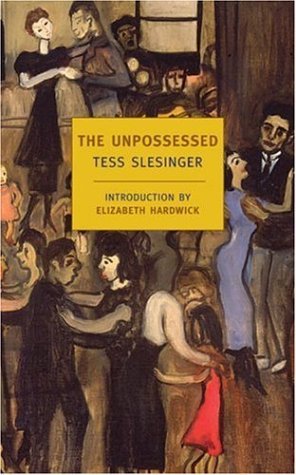
Tess Slesinger attended the progressive school, Ethical Culture, Swarthmore College, and the Columbia School of Journalism. She married Herbert Solow, a man about town in intellectual circles, who was on the staff of the Menorah Journal and, much later, like the progression of so many radicals, on the staff of Fortune magazine. By way of the Menorah Journal, it was the world of Elliot Cohen, Clifton Fadiman, and Lionel Trilling that this young woman, at the age of twenty-three, more gifted than any in the group except Trilling, inhabited in her fashion. She published short stories and, in 1934, her only novel, The Unpossessed; was divorced from Solow, and went to Hollywood. There she married Frank Davis, a producer, had two children, a son and a daughter, worked on successful screenplays, and died at the age of thirty-nine. A crowded life indeed and far more than a footnote in American literature.
wow
xii
In the moil, a Mrs. Fancher enters to be identified for the unknowing outsiders by the knowing Al: “Lady entering in pearls is our first prison-widow. Husband embezzled. Got five years. Damn shame. Best card player I ever knew.” In the staccato brilliance of the party scene more than two dozen voices and human shapes appear in a raucous mingling—not anonymous names on a list but creations distinct and placed in the social order. Miss Bee Powell, a Daughter of the Confederacy with “violet eyes framed in Junior League eyelashes”; Mrs. Stanhope, the horsewoman who never leaves the paddock; Mr. Crawford, “who fell short of being an English lord only by birth and a monocle,” will say “jolly, jolly” at every turn; the butler, of uncertain lineage, has by his station transmogrified into a Republican who would “feed beggars at the backdoor and throw away the rag with which he wiped their crumbs.” The pages have the reckless exuberance of the open bar, the dance floor, the plentiful harvest of the buffet table, the tribal company, each in its vanity, language, armor, and folly.
In the moil, a Mrs. Fancher enters to be identified for the unknowing outsiders by the knowing Al: “Lady entering in pearls is our first prison-widow. Husband embezzled. Got five years. Damn shame. Best card player I ever knew.” In the staccato brilliance of the party scene more than two dozen voices and human shapes appear in a raucous mingling—not anonymous names on a list but creations distinct and placed in the social order. Miss Bee Powell, a Daughter of the Confederacy with “violet eyes framed in Junior League eyelashes”; Mrs. Stanhope, the horsewoman who never leaves the paddock; Mr. Crawford, “who fell short of being an English lord only by birth and a monocle,” will say “jolly, jolly” at every turn; the butler, of uncertain lineage, has by his station transmogrified into a Republican who would “feed beggars at the backdoor and throw away the rag with which he wiped their crumbs.” The pages have the reckless exuberance of the open bar, the dance floor, the plentiful harvest of the buffet table, the tribal company, each in its vanity, language, armor, and folly.