
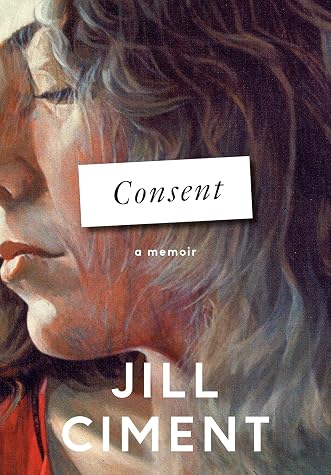
by
Jill Ciment
119
The studios had changed, but not the loneliness of struggling and arguing with himself unobserved. His dealer and the twenty-something East Village artists, the exuberant boys and girls who had visited his studio and danced with him at the Palladium, had perished of AIDS or overdoses or moved on to Soho galleries. Neo-Expressionism fell out of favor. The colors of Arnold’s palette—crimson, Venetian red, Mars black, burnt sienna, yellow ochre, cobalt blue—were replaced by inkjet colors. Then painting itself, the human mark, the fallibility of touch, fell out of favor.
“Am I out of my mind to continue painting?” Arnold would ask as he continued to paint. “I’m like a medieval monk working on an illuminated manuscript after the printing press was invented.”
<3
119
He painted—not the hellscape that was outside his window, but the hellscape that was eternal, the same view that Goya had.
No matter the hour, whenever I stopped by his studio unannounced, I would find him working. We had his palette table put on casters to give him more mobility and freedom. When he thought I wasn’t looking, he would lean on the table, as if it were a walker, and push himself toward his painting. Whenever his age overcame me and I would be on the brink of heartbreak, the stroke his brush left behind on the canvas would be no less muscular and vibrant than it had ever been.
I came to believe what Goya’s housekeeper must have believed each time she returned from the butcher and saw the old master feverishly painting day after week after month: She was witnessing a miracle.
120
How does one grow old as the younger woman? One doesn’t. I always looked fresher than he. If I gained a few pounds, he gained more. If my skin wasn’t as taut as it once was, his was looser. And I always had more energy. When he fell asleep during a movie, I poked him awake. When he nodded off during a dinner party, I kicked him under the table. As his senses diminished, mine grew keener. From ten yards off, I could spot a crack in the sidewalk before he stumbled. From another room, I could hear the punch lines to jokes he missed on TV and shout them back to him. Arnold still retained his impressive, curious mind, but he lost things daily—keys, words, height, mass, the ability to hear conversations. And most alarming, the loss of the sixth sense, proprioception, the ability to know the position of one’s body parts. Arnold wasn’t always sure where his hands and feet were without having to look for them. It took him a wooden moment to reach for things, to make those measurements one unconsciously calculates each time one dips under a low beam or eats popcorn in the dark. I was becoming his copilot. My senses worked double time shepherding his body and mine through space, but not to point out the cracked sidewalk, not to repeat the punch line he couldn’t hear, would mean abandoning him in the wooly, dim, mute isolation of old age.
How does one grow old as the younger woman? One doesn’t. I always looked fresher than he. If I gained a few pounds, he gained more. If my skin wasn’t as taut as it once was, his was looser. And I always had more energy. When he fell asleep during a movie, I poked him awake. When he nodded off during a dinner party, I kicked him under the table. As his senses diminished, mine grew keener. From ten yards off, I could spot a crack in the sidewalk before he stumbled. From another room, I could hear the punch lines to jokes he missed on TV and shout them back to him. Arnold still retained his impressive, curious mind, but he lost things daily—keys, words, height, mass, the ability to hear conversations. And most alarming, the loss of the sixth sense, proprioception, the ability to know the position of one’s body parts. Arnold wasn’t always sure where his hands and feet were without having to look for them. It took him a wooden moment to reach for things, to make those measurements one unconsciously calculates each time one dips under a low beam or eats popcorn in the dark. I was becoming his copilot. My senses worked double time shepherding his body and mine through space, but not to point out the cracked sidewalk, not to repeat the punch line he couldn’t hear, would mean abandoning him in the wooly, dim, mute isolation of old age.
141
I gave him his privacy until the sobs subsided. He had every right to cry for what was about to be taken from him.
Everything.
When I finally joined him in the bedroom, he said, “It’s hard to believe that I’m not going to be here in a few weeks.”
“You could have months,” I said.
“It’s just as impossible to accept that I’m not going to be here in a few months,” he said.
142
With only weeks to live, he found mixing colors too time-consuming. His last drawing was a pen-and-ink landscape—the lake and the woods beyond. Rather than draw the woods as a solid black shape, he drew the trees individually. He was getting weaker by the day and there were thousands of trees. Did he hope that as long as there were trees still to be drawn, he would be allowed to finish?
He drew the trees as thick, black, nuanced lines running from the top of the paper to the horizon, a pencil line. From the horizon to the bottom of the paper, he drew the trees’ less stable gray reflections in the lake.
He worked long hours for a man who was dying. He returned to his studio every morning, if only to sleep in his armchair.
Just shy of total blackness, while a few bright shafts of white paper remained, he put away his pen and ink and asked me to help him back to bed, which he never again left.