
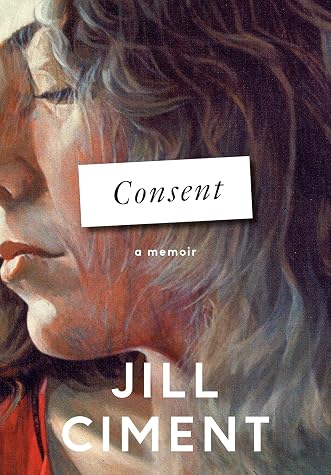
by
Jill Ciment
71
Later, she would remember asking the man who answered if his wife would be home, and then listening to a convoluted story about divorce and custody that struck her as more tiresome than suspicious, yet she caught a whiff of something that alarmed her, like the scent of a nearby fire. A moment later, the air smelled clear again, and she assumed she only imagined it.
such a typical female intuition experience :(
89
My doubts about conceptual art had been seeded in me during my senior year. Was newness the point of art? Experimentation? Cleverness? Shock? Was it the artist’s duty to rush ahead of humanity and report back from the future? If there was an advance guard, were we at war? Who was the enemy? But my first awareness that faith had abandoned me happened the night of my BFA show. I had left my mother unattended in the crowded exhibition hall to escort the Martins to their daughter’s memorial show. When I returned, I was reeking of their grief. My mother was unaware of my presence. She was studying one of the student artworks—animal organs nailed to a wall in the shape of a lamb. Her face told me what I already knew. If art were a conversation, which I believed it was, this work wasn’t interested in hearing what my mother had to say. This art didn’t care that she had once ridden a streetcar to the museum during a snowstorm to stand in front of Gauguin’s Are You Jealous? and let herself be transported to Tahiti and join in the ongoing conversation (which includes those who have died and those who haven’t yet been born) about who is jealous of whom.
My doubts about conceptual art had been seeded in me during my senior year. Was newness the point of art? Experimentation? Cleverness? Shock? Was it the artist’s duty to rush ahead of humanity and report back from the future? If there was an advance guard, were we at war? Who was the enemy? But my first awareness that faith had abandoned me happened the night of my BFA show. I had left my mother unattended in the crowded exhibition hall to escort the Martins to their daughter’s memorial show. When I returned, I was reeking of their grief. My mother was unaware of my presence. She was studying one of the student artworks—animal organs nailed to a wall in the shape of a lamb. Her face told me what I already knew. If art were a conversation, which I believed it was, this work wasn’t interested in hearing what my mother had to say. This art didn’t care that she had once ridden a streetcar to the museum during a snowstorm to stand in front of Gauguin’s Are You Jealous? and let herself be transported to Tahiti and join in the ongoing conversation (which includes those who have died and those who haven’t yet been born) about who is jealous of whom.
90
During his own crisis of faith, when he had let his paints go dry for a decade, he had written a novel, a Henry Miller–like romp about a middle-aged artist who sleeps with his models. An editor at Knopf had encouraged him, but after three drafts and no contract, Arnold put it away. Soon after we became lovers, he gave me the pages and asked if I agreed with his editor’s criticisms. At seventeen, I thought the novel was marvelous just as it was.
I read it again, this time with the cold critical eye of a twenty-one-year-old. The tone wasn’t at all as I remembered it—droll and wise. The narration was therapeutic and the story indulgent in a way that his paintings never were. I might never paint as brilliantly as him, but I knew I could tell a more original story.
oof
91
That night, Arnold sat me down at his typewriter because he could see that holding a pencil had prompted me to confuse handwriting with drawing. He assured me that if I could learn to draw, I could learn to write. His unshakable confidence in my intellect quieted my terrors. An age-appropriate boyfriend might have told me the same things, but I would not have believed him.
That night, Arnold sat me down at his typewriter because he could see that holding a pencil had prompted me to confuse handwriting with drawing. He assured me that if I could learn to draw, I could learn to write. His unshakable confidence in my intellect quieted my terrors. An age-appropriate boyfriend might have told me the same things, but I would not have believed him.
95
Nudity is different than nakedness. To be naked is to be oneself. To be nude is to be seen naked by others. In Arnold’s life drawing classes, I did not learn to draw a naked body; I learned to draw a nude. He taught me to seek out the body’s imperfections and irregularities to make my drawings dynamic and original. When I looked at Arnold’s fifty-five-year-old body as he stepped out of the shower or lowered himself on top of me, the physical imperfections—the loose skin, the extra flesh, all that six decades does to a body—made me feel as if our love was dynamic and original.
Nudity is different than nakedness. To be naked is to be oneself. To be nude is to be seen naked by others. In Arnold’s life drawing classes, I did not learn to draw a naked body; I learned to draw a nude. He taught me to seek out the body’s imperfections and irregularities to make my drawings dynamic and original. When I looked at Arnold’s fifty-five-year-old body as he stepped out of the shower or lowered himself on top of me, the physical imperfections—the loose skin, the extra flesh, all that six decades does to a body—made me feel as if our love was dynamic and original.
97
We were both in a fervent state of uncharted creativity—me for the first time, him for the second. We pulled all-nighters and still managed to make love afterward. We critiqued each other’s work—brutally, lavishly, meticulously—not as teacher and pupil, but as collaborators. If I saw something lacking in his painting, I would pick up a brush and make my corrections directly on the canvas. If he read a digression in my story that petered out, he would excise it with a thick pencil stroke. Sometimes I would cry and rip up all my pages, but he would invariably collect the shreds out of the wastebasket and tape them back together.
Where did Arnold get his energy? From me, of course. But please don’t equate this with an old vampire drinking a maiden’s lifeblood. To offer someone you love energy when you are practically bursting with it feels heady and magnanimous.
101
I need to emphasize here that not only was Arnold drawn to youth, but that youth was drawn to Arnold. Within minutes, he vanquished their bemused expressions with the intensity of his concentration: He did not so much look at art as dissect it. He walked from portrait to portrait, cocked his head this way and that, leaned close enough to observe the paint’s microscopic application, the opacity of the glazes, the transition from one value to another, and then stepped back to see the whole. The energy he exuded was massively out of alignment with his age, and that was what fascinated young people. Arnold promised wisdom without the loss of vitality.
I need to emphasize here that not only was Arnold drawn to youth, but that youth was drawn to Arnold. Within minutes, he vanquished their bemused expressions with the intensity of his concentration: He did not so much look at art as dissect it. He walked from portrait to portrait, cocked his head this way and that, leaned close enough to observe the paint’s microscopic application, the opacity of the glazes, the transition from one value to another, and then stepped back to see the whole. The energy he exuded was massively out of alignment with his age, and that was what fascinated young people. Arnold promised wisdom without the loss of vitality.
106
My novel was stuck one hundred pages in. I had not been able to commit a word to paper since we had moved to New York six months before. Sometimes a writer gets stuck because she is at a loss as to what comes next. Sometimes a writer knows too much about what comes next and is paralyzed by her own puny prophecies.
I was both.
My novel was about a sixteen-year-old girl who falls in love with a forty-seven-year-old man, the tired plot of countless novels and films by middle-aged men in the second half of the twentieth century. My twist was that I would tell the story from the teenage girl’s point of view. The first titillating chapters had come easily. In my fictional account, the older man sleeps with the mother before the daughter has a chance to seduce him. I guess I thought the age difference wasn’t risqué enough. In any case, the teenager and the old man’s improbable love story somehow rights itself and…
I could not imagine how the story would end.
Lolita and Humbert Humbert marry and live happily ever after? Who would believe such a story? Who would believe a scene in which Lolita takes Humbert Humbert for cataract surgery? Or worries about his prostate? How would I compose the scene where Lolita arranges hospice care for the man who supposedly stole her childhood? Wouldn’t I have to include the day Lolita is at Humbert Humbert’s bedside when he dies? Isn’t that what happily ever after means? A love that lasts long enough that one lover is there to close the other lover’s eyelids?
damn
111
The first night of Arnold’s convalescence I slept on the sofa. Around midnight, I startled myself awake and went to check on him. I had forgotten to shut the bedroom light. Snoring loudly from the anesthesia, his bandaged eyes wrapped in thick gauze, he lay supine, unaware of my presence. I crossed the room and stood over him. He looked helpless and blind and unbearably old, and I feared that the most difficult part of my life was about to begin.
I returned to the sofa, but only slept in fits and starts.
When I checked on him the next morning, I found him sitting up in bed, labeling his invitations by touch alone.
“How are you feeling? Can I get you anything?” I asked.
“I think I’ve got everything I need. Go finish your novel.”
How could I not return to my computer to try to chip away at the frozen improbable love story while my sixty-three-year-old husband was in the next room blindly labeling invitations to an exhibition that would open while he still wore bandages over his eyes?
118
“I’m the same age Goya was when he painted The Drowning Dog,” Arnold said the midnight he turned seventy-three. We were seated on a park bench in Tompkins Square. It was full summer and too hot to stay in our apartment. “He was living at the farmhouse he had bought miles from Madrid. He had been going deaf for decades, but now he was stone deaf. Stone. What a perfect description. Think about it: He had once been the favored portraitist of the Spanish royal court, and now the only person who saw his work was the peasant woman who cleaned and cooked for him.”
“Do you think she thought the dog was drowning or swimming?” I asked.
“She thought the dog was going to heaven either way.”
Arnold’s appreciation of Goya had evolved over time from reverence of a master to camaraderie with another septuagenarian. Arnold had finally accepted that the power of the Black Paintings could not be separated from the medium in which they grew, the coming solitude of old age.