
Bookmarker is a personal project by @dellsystem to help with retaining reading material. Source on GitHub.

Activity

You added a note
10 months, 1 week ago
from that moment on there will be no more flexibility

"Look, Kathleen," I offered. "You still have a chance to make amends to your girls. Talk to them. Find out what it is you've done to make them call in the union and tell them you're willing to change. Assure them that they can come to you with any complaint, and let them know you'll really listen. …

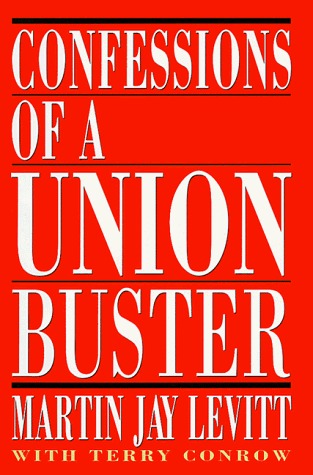
—p.187 Confessions of a Union Buster by Martin Jay Levitt
You added a note
10 months, 1 week ago

the moment they were drafted into management

But the moment they were drafted into management, the LPNs had to give up the union meetings. At the kick-off I warned them that they could be fired for attending. Not Copeland's rule, mind you, but the federal government's rule on surveillance. I told the LPNs they didn't dare go anywhere near the…

—p.177 by Martin Jay Levitt
You added a note
10 months, 1 week ago

packaging union-busting costs with in-service training

Three M, as a favorite union buster to hospitals, was one of the prime beneficiaries of the public treasury. Since hospitals receive money from many government sources, including the federal Medicaid program, a substantial portion of the hospital fees collected by Three M actually came from taxpaye…

—p.151 by Martin Jay Levitt
You added a note
10 months, 1 week ago

the "concession bargaining" system

So the unions won a round—but very belatedly and only by a hair. That same year the mighty Chrysler Corporation declared itself on the brink of bankruptcy and appealed to President Jimmy Carter for an emergency bailout loan. The taxpayer loan was granted, but only under the condition that the labor…

—p.145 by Martin Jay Levitt
You added a note
10 months, 1 week ago

upped the stakes of the war on labor

The advantages of union organization were clear to many, but labor unions had been built by and for blue-collar workers in industry and the building trades, and until the 1960s they didn't reach much farther. Then, in a dramatic shift that gained momentum throughout the 1970s, organized labor began…

—p.142 by Martin Jay Levitt