
Bookmarker is a personal project by @dellsystem to help with retaining reading material. Source on GitHub.

Activity

You added a note
8 months, 3 weeks ago
we're pro-company and pro-employee

So just what does John Sheridan Associates do? I wanted to know. "We do the Lord's work," was Sheridan's answer. I was electrified as Sheridan and Bannon described their business, and I found myself seduced into coveting the job. "We force management to clean up its act," Bannon announced. "Our job…

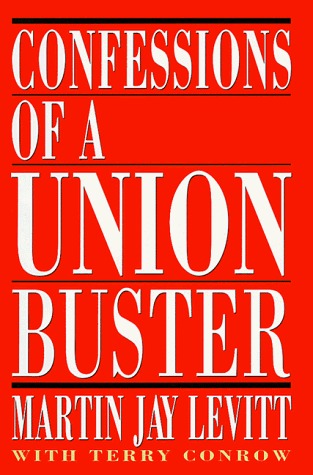
—p.49 Confessions of a Union Buster by Martin Jay Levitt
You added a note
8 months, 3 weeks ago

the loopholes in Landrum-Griffin

But the loopholes in Landrum-Griffin are shameful-enormous, gaping errors in the law that have left room for a sleazy billion-dollar industry to plod through without even sucking in its bloated middle. The law states that management consultants only have to file financial disclosures if they engage…

—p.41 by Martin Jay Levitt
You added a note
8 months, 3 weeks ago

his four decades in anti-union employee relations work

In 1961, two years after Labor Relations Associates dissolved in shame, Shefferman published a book entitled The Man in the Middle, a 292-page justification of his four decades in anti-union employee relations work. In the book Shefferman whines a great deal about his treatment before the McClellan…

—p.38 by Martin Jay Levitt
You added a note
8 months, 3 weeks ago

the McClellan Anti-Racketeering Committee

[...] By 1957 organized labor seemed so rife with corruption that the Senate appointed a special subcommittee to investigate allegations of criminal activities. The committee, headed by Senator John McClellan of Arkansas, boasted such lofty membership as John F. Kennedy, then a young senator from M…

—p.37 by Martin Jay Levitt
You added a note
8 months, 3 weeks ago

Taft-Hartley was devastating to labor

[...] In the postwar furor, business leaders characterized unions as fat, greedy, corrupt, and decidedly un-American. They demanded that Congress amend the Wagner Act, complaining that the law gave unions an insurmountable advantage over management. Executives charged that by protecting unions, but…

—p.35 by Martin Jay Levitt