
Bookmarker is a personal project by @dellsystem to help with retaining reading material. Source on GitHub.

Activity

You added a note
5 months ago
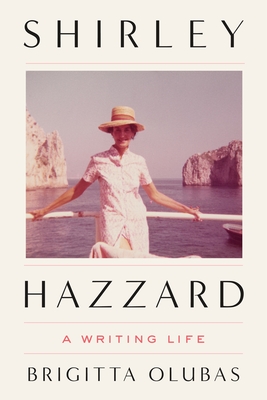
one of the great women characters of the modern novel

There is also Transit’s untimely relation to feminism. The second wave that was exploding all around through the years of its writing is barely evident in its pages, despite its interest in women’s lives. Shirley was not, then or ever, drawn to feminism; her concern with women’s authority and agenc…

—p.339 Shirley Hazzard: A Writing Life The Transit of Venus: 1970–1980 (308) by Brigitta Olubas
You added a note
5 months ago

The Transit of Venus is undeniably a masterpiece

All this was distraction; her real work continued, slowly, behind the scenes. In May 1979 the New York Times poetry editor Thomas Lask reported in his column that “a major novel by Shirley Hazzard … longer and more complex than anything this writer has done previously” would be published the follow…

—p.336 The Transit of Venus: 1970–1980 (308) by Brigitta Olubas
You added a note
5 months ago

love’s overwhelming consequence

Throughout the novel, time is upended, complicated, its passage thwarted—the past is never past. At one point Sophie remembers a failed love affair, remembers listening to the man’s “complicated exposition of the reasons why he could not love her in return,” and she is “glad now to be reminded of t…

—p.278 Small Masterpieces: 1966–1970 (277) by Brigitta Olubas
You added a note
5 months ago

two people clearly capable of appreciating each other fully

Maxwell was, Edward Hirsch observed, “the most present of anyone I’ve ever known as a person. He immediately, if he liked you, started talking to you about your childhood. It sort of dismantled everything else. For me with him it was love at first sight. Friendship was immediate. When he spoke to y…

—p.273 Amitié Littéraire: 1963–1966 (243) by Brigitta Olubas
You added a note
5 months ago

love is a form of intelligence

Within these circles the Steegmullers were distinctive figures. Alfred Kazin’s biographer wrote that Alfred and his then wife, Ann Birstein, had always found Francis charming, “a figure of intellectual grace out of a different era who had survived into ‘overheated New York,’ quietly coexisting with…

—p.269 Amitié Littéraire: 1963–1966 (243) by Brigitta Olubas