
Bookmarker is a personal project by @dellsystem to help with retaining reading material. Source on GitHub.

Activity

You added a note
3 years, 9 months ago
beholden to the dominant economic interests

Of course the Republicans did not lend their support to woman suffrage after the Union victory was won. But it was not so much because they were men, it was rather because, as politicians, they were beholden to the dominant economic interests of the period. Insofar as the military contest between…

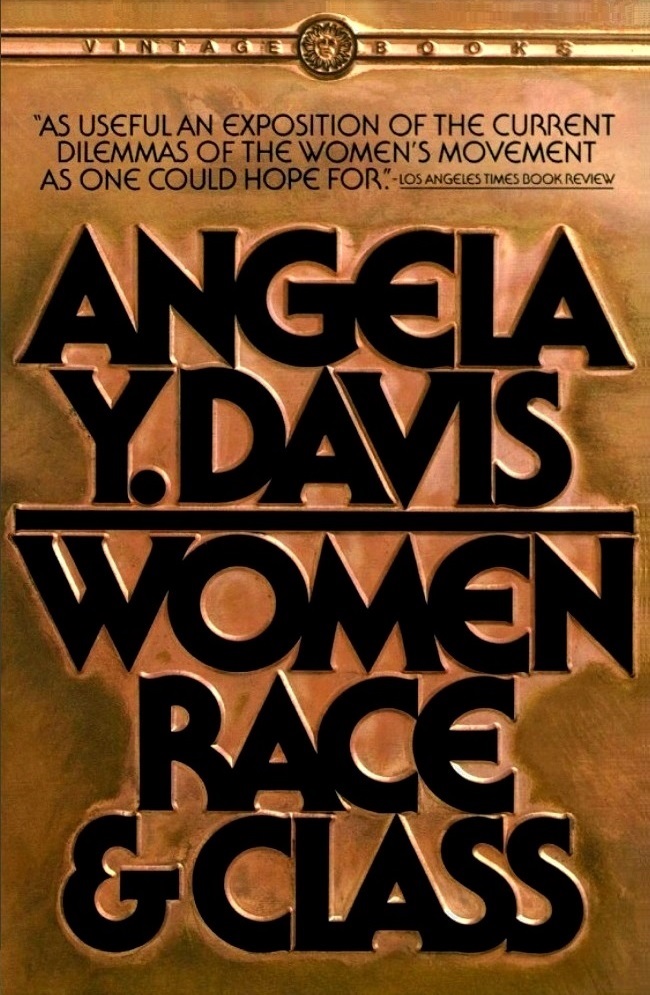
—p.74 Women, Race & Class RACISM IN THE WOMAN SUFFRAGE MOVEMENT (70) by Angela Y. Davis
You added a note
3 years, 9 months ago

the white worker in the North

Even the most radical white abolitionists, basing their opposition to slavery on moral and humanitarian grounds, failed to understand that the rapidly developing capitalism of the North was also an oppressive system. They viewed slavery as a detestable and inhuman institution, an archaic transgress…

—p.65 CLASS AND RACE IN THE EARLY WOMEN’S RIGHTS CAMPAIGN (46) by Angela Y. Davis
You added a note
3 years, 9 months ago

ain’t I a woman?

Sojourner Truth single-handedly rescued the Akron women’s meeting from the disruptive jeers of hostile men. Of all the women attending the gathering, she alone was able to answer aggressively the male supremacist arguments of the boisterous provocateurs. Possessing an undeniable charisma and powerf…

—p.60 CLASS AND RACE IN THE EARLY WOMEN’S RIGHTS CAMPAIGN (46) by Angela Y. Davis
You added a note
3 years, 9 months ago

destined to become appendages to their men

Actually, woman’s place had always been in the home, but during the pre-industrial era, the economy itself had been centered in the home and its surrounding farmland. While men had tilled the land (often aided by their wives), the women had been manufacturers, producing fabric, clothing, candles, s…

—p.32 THE ANTI-SLAVERY MOVEMENT AND THE BIRTH OF WOMEN’S RIGHTS (30) by Angela Y. Davis
You added a note
3 years, 9 months ago

their ability to produce and create

While it is hardly likely that these women were expressing pride in the work they performed under the ever-present threat of the whip, they must have been aware nonetheless of their enormous power—their ability to produce and create. For, as Marx put it, “labor is the living, shaping fire; it repre…

—p.11 THE LEGACY OF SLAVERY: STANDARDS FOR A NEW WOMANHOOD (3) by Angela Y. Davis