
Bookmarker is a personal project by @dellsystem to help with retaining reading material. Source on GitHub.

Activity

You added a note
4 hours ago
an end to the general strike

Few useful recollections and even fewer records remain of those marathon conversations but, extrapolated from events and recall, something like a meeting of the minds plainly emerged. It was never reduced to writing; it may not have been voiced as such; it may have been no more than the parties' ed…

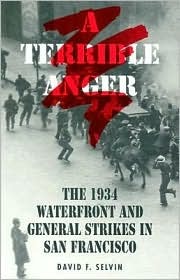
—p.208 A Terrible Anger: The 1934 Waterfront and General Strikes in San Francisco 18. The Second Day (Part 2) (204) by David F. Selvin
You added a note
4 hours ago

the whole force of American opinion is behind them

Neylan had no trouble convincing General Johnson to denounce the general strike. Johnson recalled (not without some dramatic license) that he had been "physically" shocked by his introduction to the general strike-transportation paralyzed, food supply "practically shut off," "the economic life of t…

—p.206 18. The Second Day (Part 2) (204) by David F. Selvin
You added a note
4 hours ago

REDS TURN BLACK AND BLUE

The next morning's Chronicle found the day's work hilarious. "REDS TURN BLACK AND BLUE,'' read a cutline under one of its photographs of the destruction. "This was a communists' meeting-place, a neighborhood where the radicals dropped in for a cozy chat about the impending revolution. It came soone…

—p.196 17. The Second Day (Part 1) (192) by David F. Selvin
You added a note
4 hours ago

police raids on Radical Meeting places

THE MORNING OF the second day of the general strike in San Francisco --Tuesday, July 17 -- found National Guardsmen, armed with rifles and a machine gun, manning a barricade at Jackson and Drumm streets, targeting the traffic in the first block of Jackson Street at number 65 where the Marine Worker…

—p.192 17. The Second Day (Part 1) (192) by David F. Selvin
You added a note
4 hours ago

that they are unwilling to starve the public

San Francisco's troubles provided an abundance of grist for the mills of the pundits and editorial writers, who turned out virtually instant volumes of exegesis and explanation, counsel and condemnation. In the main, they ignored the view of the general strike as basically a sympathetic protest. Ra…

—p.189 16. The First Day (182) by David F. Selvin