
by
Joan Copjec
(editor)
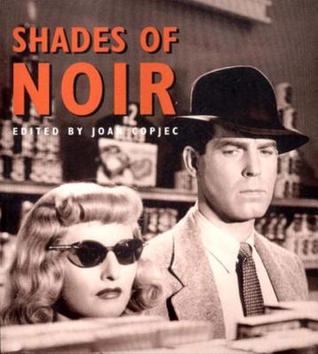
Shades of Noir: A Reader
Shades of Noir: A Reader
by
Joan Copjec
(editor)
by
Joan Copjec
(editor)
Shades of Noir: A Reader
by
Joan Copjec
(editor)
by
Joan Copjec
(editor)
This film, dating from 1933, was directed by Michael Curtiz, with William Powell and Margaret Lindsay in the main roles, and is an adaptation of a story by Raoul Whitfield, a colleague and friend of Dashiell Hammett. The hero, emblematically, is an American named Free. Like Samuel Spade or Philip Marlowe, he is a private detective, obliged to be in contact with corruption, fighting alone against all for the re-establishment of right. Like them, he got his training in the institution: an intelligence officer in Paris, he is unmasked by the French police. Abandoned by his bosses, he is deported to New York where he suddenly finds himself in the middle of the Depression. His first employers refuse to recognize him, and he is forced to seek work on his own. He finds a position with a shady and spineless detective who survives by kidnapping dogs and returning them to their owners for ransom. Free brings real, honest clients to the agency, but his boss finds it easier to be paid by a gangster in whose service he puts his knowledge of the law. It is in this framework that Free is obliged to carry out surveillance on a young woman who hangs out in chic clubs and fancy restaurants (she is a gambler) and is apparently connected with gangsters, but who quickly becomes an ally in his struggle against corruption. After some friction and bitter-sweet relations, they end up recognizing their mutual love once they have gained victory over evil. The film itself is not lacking in noir scenes, for example the first scenes in the shabby rooms of the detective agency or the incident in which the heroine is the victim of an attempted assassination in an apartment entirely plunged into darkness except for the windows lit from the street. What interests me in this film is the connection established between the private detective and the Depression: Free is dropped by the national institutions that were supposed to protect him and obliged to make do for himself. Tempted by fast and easy money, he none the less remains faithful to an ideal of justice, with a rigour tempered only by love. Private Detective 62 has one of the most classic of noir scripts, as much in its pessimistic tendencies (the solitary struggle of the individual in a universe overrun by evil) as those that are sentimental (pure love surviving in evil's midst). Above all, it makes evident the fact that this sort of script treats the question of the relations between the individual and institutions dialectically. As for the urban decors, they set forth an opposition between poverty and luxury every bit the equal of The Big Sleep (Howard Hawks, 1946) and its followers.