
by
Joan Copjec
(editor)
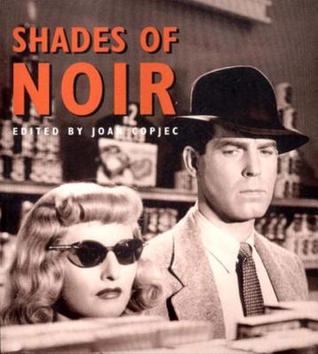
Shades of Noir: A Reader
Shades of Noir: A Reader
by
Joan Copjec
(editor)
by
Joan Copjec
(editor)
Shades of Noir: A Reader
by
Joan Copjec
(editor)
by
Joan Copjec
(editor)
The first thing that must be recognized is that, first of all, the expressionism at work here was present in the United States and in Russia from at least 1915 , if not in Denmark from 1911 or France from 1913, and that, moreover, a certain continuity exists through the 1920s and 1930s, but with the use of real night-time exteriors suffering a massive disappearance after 1934. The second thing that must be recognized is that 'noir' lighting also owes its perpetuation to the gothic film, whose ambiance and decor (an old house or mansion without electricity) allows effects of darkness to be played upon. Thus, before singing the (deserved) praises of Val Lewton and Jacques Tourneur at the beginning of the 1940s (see Cat People, 1942), it would be necessary to recognize, after the role of Alvin Wyckoff in the 1910s, that of Tod Browning in the 1920s, notably with respect to the films he made with Lon Chaney, as well as the influence of Lee Garmes (notably for his work in Shanghai Express [von Sternberg, 1932], or in City Streets [Rouben Mamoulian, 1931 ]) . We should in fact recall that the cinematographers used in films noirs are not callow youths seeking to impose a new style: on the contrary, they are usually veterans who got their start in the 1910s and 20s. Tony Gaudio (High Sierra) began working in 1911 , John F. Seitz (The Big Clock, Double Indemnity, This Gun for Hire) in 1916, Sol Polito (Sorry, Wrong Number) in 1918, Musuraca (Stranger on the Third Floor, Out of the Past and Where Danger Lives) in 1923, Joseph LaShelle (Laura, Fallen Angel, Where the Sidewalk Ends) in 1925, John Alton (The Big Combo, He Walked by Night, The People Against O'Hara, The Crooked Way) , in 1928.