
by
Joan Copjec
(editor)
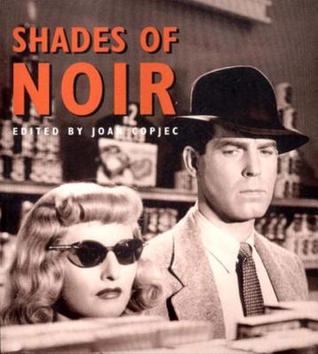
Shades of Noir: A Reader
Shades of Noir: A Reader
by
Joan Copjec
(editor)
by
Joan Copjec
(editor)
Shades of Noir: A Reader
by
Joan Copjec
(editor)
by
Joan Copjec
(editor)
[...] It has less often been noted that the gangster, as a character whose social ascension is 'too' fast, is the dark image of individualism subjected to religious condemnation ('whosoever shall exalt himself shall be abased'), from which the sin of pride is by no means absent. But the gangster is also a social condemnation to the extent that he reestablishes a class difference within society by placing a trench between poor and rich, between isolated individuals and those who enter into a system of organized understandings. Whether one is confronted in these fictions with rich bourgeois, the mafia, unions, or Nazi or communist networks (depending on the period), the fundamental question is always that of the struggle between freedom and individual happiness on one side and, on the other, the understandings and systems that secretly are spreading or threatening to spread their ramifications through the whole country by forbidding the sacrosanct operation of free enterprise and free competition. The private detective is a petty-bourgeois jealous of his independence, convinced of his moral worth and concerned with protecting what is, in his eyes, the exemplary value of American democracy. That in the process he conquers the young woman, who has all the attributes of the upper middle class, is only the necessary tribute to be paid to social ascension (but here by a love that glorifies the petty bourgeoisie) and a defeat inflicted upon the other camp. From this point of view, the detective film cannot be considered to be a critique of the system; on the contrary, it functions as a necessary denial of capitalism's tendency towards concentration, by constantly reaffirming the virtues of the petty bourgeoisie and of free enterprise, so long as the latter keeps a human scale.
At least two things were brought up to date through the detective film and the character of the private detective. The first was the repetition of the citizen's allegiance to national principles, but through a constant pact according to which national institutions can only maintain their power through the individual, through the simple citizen apparently lost in the masses and in the immensity of the country. [...]