
by
Joan Copjec
(editor)
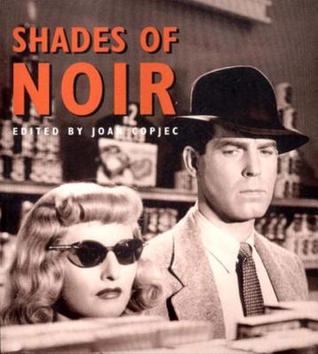
Shades of Noir: A Reader
Shades of Noir: A Reader
by
Joan Copjec
(editor)
by
Joan Copjec
(editor)
Shades of Noir: A Reader
by
Joan Copjec
(editor)
by
Joan Copjec
(editor)
Film noir then comes to occupy a bizarre position: it can be the rallying cry of those who do not want to be caught up in the Communist Party and the moralism with which it was associated after the war, as it can be the love-object of those who want to hate the United States but love its cinema. By affirming that film noir is a harsh critique of American capitalism, by explaining the importance of European directors and cinematographers, by emphasizing the membership of Dashiell Hammett, presented as the father of the hard-boiled novel and thus of the genre, in the American Communist Party, film critics (that is, those cinephiles to whom writing is necessary) gave themselves the means to justify a love that was forbidden - whether it was the war (the impossibility of seeing the films), the Communist Party (whether one was a member or an opponent of it), or the supporters of a morality of hardship (often the same), if not all three, that forbade it. Finally, the invention of a new genre, at a few years' distance from the New Wave, is one way among others for a generation coming onto the labour market, forgetful or ignorant of pre-war production, to force recognition of its own signature. Film noir thus finds itself to be literally (but also in all senses of the term) a critical object: invented by French criticism, it allows one to love the United States while criticizing it, or more exactly to criticize it in order to be able to love it, in a relation that is not without connection with, on the one hand, the conflicts inherent in the Oedipal relation and, on the other (by the split that such an attitude implies), a fetishistic economy.