
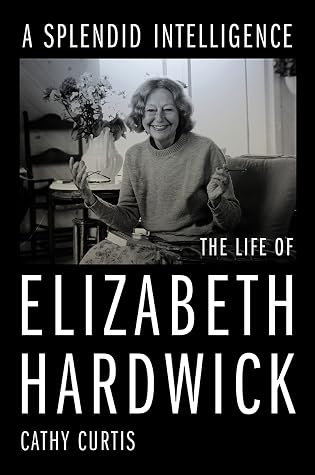
by
Cathy Curtis
Elizabeth was the last survivor of her circle of women who were notable twentieth-century cultural critics, including Mary McCarthy, Susan Sontag (who had died in 2004), and Hannah Arendt (1975). At her memorial service, Derek Walcott’s remarks—read by Hilton Als—described Elizabeth’s merry side. She was, he said, “more fun than any American writer I have known. She preferred gaiety to malice and had the laugh to go with it.”164 Joan Didion said, “every line she wrote suggested that moral courage required trusting one’s own experience in the world, one’s own intuitions about how it worked.” She had “a way of putting words together that could make the most subtle connection seem at once thrilling and matter-of-fact. . . . She never took for granted what is often presented as a given.” Elizabeth’s former student Darryl Pinckney recalled how she told the class that “there are really only two reasons to write: desperation or revenge” and that “the only way to learn to write is to read.”165 The December 16 memorial, held at the Lincoln Center Library for the Performing Arts, was an intimate affair befitting Elizabeth’s under-the-radar existence at the time of her death. After the service, a group of her friends gathered for dinner at Café des Artistes in her building to celebrate her long and extraordinary life.166