
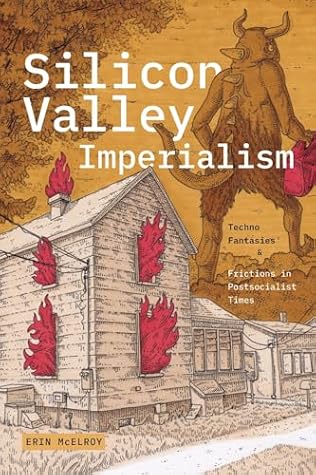
by
Erin McElroy
By abolition, here I am thinking with the work of Rinaldo Walcott, who suggests that while an abolitionist future is not possible without the abolition of police, nor is one feasible without the abolition of property.18 After all, it was the formation of private property that helped establish geographies of racial capitalism upon which racialized labor exploitation took place. The police were then required to concretize racial capitalist borders and logics, punishing those who transgressed its authority.19 An abolitionist geography, as Ruth Wilson Gilmore conceptualizes, then “starts from the homely premise that free- dom is a place.”20 This idea of abolition requiring unpropertied futures isn’t entirely new, and in fact Marx and Engels once suggested that “the theory of the Communists may be summed up in the single sentence: Abolition of private property.”21 Yet, and as Fred Moten has critiqued, Marx did not theorize the abolition of slavery when writing this, as he could not imagine “the commodity who shrieked.”22 An abolitionist politic then needs to entail more than decommodification of things rendered as property, but also the abolition of worlds in which p eople can be owned, incarcerated, and exploited. It is one that stands up against racial technocapitalism, freeing land, housing, bodies, and data from dispossessory logics. It would also seek to, as Wendy Liu argues, abolish Silicon Valley, which for her means remaking the world outside of capitalist logics, “decommodifying essential goods while also radically transforming the way we think about work.”23 Unbecoming Silicon Valley is thus a worldmaking project committed to remapping Siliconized lands and labor through abolitionist and anti-imperial visions.
:)