
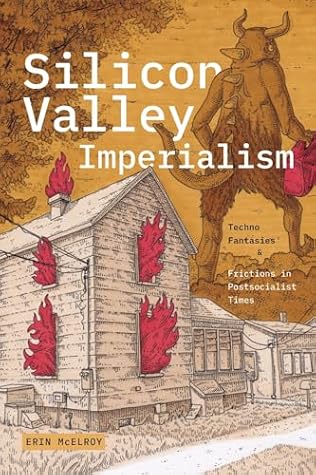
by
Erin McElroy
6
[...] That said, there are plenty of others who are paid far less to engage in more menial tasks “behind the curtain” of automation. Nevertheless, the dream of entrepreneurialism is strong. As Oana Mateescu writes, “With the professionalization of the hipster into the upster (which, in Cluj, signals involvement in the start-up ecosystem), labor becomes a form of social and urban belonging framed in the terms of a technomoral governance that can refashion the entire city into a laboratory.”13 Yet these fantasies are only accessible to some. Very few upsters are Roma, and many aspire to move to higher corporate echelons to eventually land gigs at Google or Oracle. Yet for the most part, technocapitalist logics reduce these workers to surrogate cogs in a machine that accumulates wealth in California’s San Francisco Bay Area region—a space that first “became” Silicon Valley during the Cold War.
[...] That said, there are plenty of others who are paid far less to engage in more menial tasks “behind the curtain” of automation. Nevertheless, the dream of entrepreneurialism is strong. As Oana Mateescu writes, “With the professionalization of the hipster into the upster (which, in Cluj, signals involvement in the start-up ecosystem), labor becomes a form of social and urban belonging framed in the terms of a technomoral governance that can refashion the entire city into a laboratory.”13 Yet these fantasies are only accessible to some. Very few upsters are Roma, and many aspire to move to higher corporate echelons to eventually land gigs at Google or Oracle. Yet for the most part, technocapitalist logics reduce these workers to surrogate cogs in a machine that accumulates wealth in California’s San Francisco Bay Area region—a space that first “became” Silicon Valley during the Cold War.
14
[...] as Brenna Bhandar puts it, colonial encounters have long relied on the logics of private property in order to create capitalist markets, in turn producing racial regimes of ownership that haunt the present. Such confrontations have manifested “a conceptual apparatus in which justifications for private property ownership remain bound to a concept of the h uman that is thoroughly racial in its makeup.” As she notes, while racial capitalism was indeed a core tenet of feudal Europe prior to the colonization of the Americas, it became globalized in the era of modern colonialism, which relied on new technologies of economic, racial, and spatial m easurement, codification, and abstraction. Such techniques were used to render colonized peoples “outside of history, lacking the requisite cultural practices, habits of thought, and economic organization to be considered as sovereign, rational economic subjects.”40 Prior imperial violence is thus not simply stuck in the past but is rather an ongoing condition of possibility that very much informs capitalist logics and their racial technologies.
[...] as Brenna Bhandar puts it, colonial encounters have long relied on the logics of private property in order to create capitalist markets, in turn producing racial regimes of ownership that haunt the present. Such confrontations have manifested “a conceptual apparatus in which justifications for private property ownership remain bound to a concept of the h uman that is thoroughly racial in its makeup.” As she notes, while racial capitalism was indeed a core tenet of feudal Europe prior to the colonization of the Americas, it became globalized in the era of modern colonialism, which relied on new technologies of economic, racial, and spatial m easurement, codification, and abstraction. Such techniques were used to render colonized peoples “outside of history, lacking the requisite cultural practices, habits of thought, and economic organization to be considered as sovereign, rational economic subjects.”40 Prior imperial violence is thus not simply stuck in the past but is rather an ongoing condition of possibility that very much informs capitalist logics and their racial technologies.
15
Most of the tech companies scattered about Cluj, but also Bucharest and other Romanian cities, are not from Silicon Valley per se (although plenty are); many are in fact based in the United Kingdom, Germany, France, Japan, and beyond. That said, they cumulatively serve as an alibi for Silicon Valley imperial visions, while also being hooked into Silicon Valley venture capital circuits, software, servers, data centers, and code. Today, not only does California’s Silicon Valley contain more billionaires, venture capitalists, and patents per square foot than anywhere else on earth, but also, the region hosts fifty of the top one hundred most expensive zip codes in the United States and most of the firms that power much of networked life globally. As scholars such as Margaret O’Mara and Linda Weiss have each observed, Silicon Valley economics have everything to do with the United States’ Cold War pursuit of technological supremacy and defense. This has continued in Cold War aftermaths, with Google’s former ceo, Eric Schmitt, leading a Pentagon advisory board while Meta’s Mark Zuckerberg embraces Cold War 2.0 logics which suggest that breaking up Facebook’s monopolies would empower Chinese tech. [...]
Most of the tech companies scattered about Cluj, but also Bucharest and other Romanian cities, are not from Silicon Valley per se (although plenty are); many are in fact based in the United Kingdom, Germany, France, Japan, and beyond. That said, they cumulatively serve as an alibi for Silicon Valley imperial visions, while also being hooked into Silicon Valley venture capital circuits, software, servers, data centers, and code. Today, not only does California’s Silicon Valley contain more billionaires, venture capitalists, and patents per square foot than anywhere else on earth, but also, the region hosts fifty of the top one hundred most expensive zip codes in the United States and most of the firms that power much of networked life globally. As scholars such as Margaret O’Mara and Linda Weiss have each observed, Silicon Valley economics have everything to do with the United States’ Cold War pursuit of technological supremacy and defense. This has continued in Cold War aftermaths, with Google’s former ceo, Eric Schmitt, leading a Pentagon advisory board while Meta’s Mark Zuckerberg embraces Cold War 2.0 logics which suggest that breaking up Facebook’s monopolies would empower Chinese tech. [...]
15
US empire helped engineer and then capitalize on the collapse of communism (though of course this had to do with a range of factors notwithstanding increased authoritarian rule, nationalism, and a shift away from the antifascist ideals that originally contoured the socialist project). Silicon Valley imperialism in particular orchestrated the co-optation of socialist-era infrastructure, knowledge, and technofuturity. This then adds a new layer of empire into the mix, one that embraced technoliberal grammars. Here, by technoliberalism, I invoke what Atanasoski and Vora describe as a “political alibi of present-day racial capitalism that posits humanity as an aspirational figuration in relation to technological transformation, obscuring the uneven racial and gendered relations of labor, power, and social relations that underlie the contemporary conditions of capitalist production.”46 Technoliberalism then unevenly powers the appropriation of space, race, labor, and futurity to embolden racial technocapitalism. Not only does it transit Western understandings of race and technology into the East, but it also galvanizes the coloniality undergirding California’s so-called Silicon Valley. In this way, racial technocapitalism in Romania is a stratified constellation marked by variegated imperial histories, each of which transits different relational understandings of race, ethnicity, and class.
US empire helped engineer and then capitalize on the collapse of communism (though of course this had to do with a range of factors notwithstanding increased authoritarian rule, nationalism, and a shift away from the antifascist ideals that originally contoured the socialist project). Silicon Valley imperialism in particular orchestrated the co-optation of socialist-era infrastructure, knowledge, and technofuturity. This then adds a new layer of empire into the mix, one that embraced technoliberal grammars. Here, by technoliberalism, I invoke what Atanasoski and Vora describe as a “political alibi of present-day racial capitalism that posits humanity as an aspirational figuration in relation to technological transformation, obscuring the uneven racial and gendered relations of labor, power, and social relations that underlie the contemporary conditions of capitalist production.”46 Technoliberalism then unevenly powers the appropriation of space, race, labor, and futurity to embolden racial technocapitalism. Not only does it transit Western understandings of race and technology into the East, but it also galvanizes the coloniality undergirding California’s so-called Silicon Valley. In this way, racial technocapitalism in Romania is a stratified constellation marked by variegated imperial histories, each of which transits different relational understandings of race, ethnicity, and class.
18
[...] Though the term “Silicon Valley” did not appear until 1971 in reference to semiconductor success by known eugenicist William Shockley,63 such events had everything to do with Stanford University, which had established a research park in 1951 that became home to many of the Valley’s earliest companies. Yet Stanford University would not have come into being in the first place if it weren’t for capital from founder Leland Stanford’s prior frontier ventures in gold and railroads. In this sense, the bedrock of Cold War Silicon Valley has always been stained by the ravages of empire.
don hoefler was the first to put it in print as a journalist, but the term was commonplace in vernacular even then
[...] Though the term “Silicon Valley” did not appear until 1971 in reference to semiconductor success by known eugenicist William Shockley,63 such events had everything to do with Stanford University, which had established a research park in 1951 that became home to many of the Valley’s earliest companies. Yet Stanford University would not have come into being in the first place if it weren’t for capital from founder Leland Stanford’s prior frontier ventures in gold and railroads. In this sense, the bedrock of Cold War Silicon Valley has always been stained by the ravages of empire.
don hoefler was the first to put it in print as a journalist, but the term was commonplace in vernacular even then
40
While Nokia did manage to establish a short-lived factory building in the outskirts of Cluj in Jucu—a former state farmland and industrial zone—it never completed its downtown office building. Yet the assembly plant, “Nokia Village,” provided temporary employment for hundreds of Romanians hungry for work in the postrecession economy. There, workers processed keyboards, screens, motherboards, headphones, chargers, and more into packaged products to be shipped to retail stores. At the time, the press heralded Nokia Village as the “factory of the future,” one that would create at least fifteen thousand jobs and make Romania “the seventh power of Europe.”8 While these aspirational promises set in motion ongoing Silicon fantasies, soon after, Nokia was offered a deal to relocate to China, where new tax breaks awaited. They quickly closed up shop and left the city before completing their downtown office building (though Nokia does maintain offices in Bucharest and Timișoara today). A five-thousand-square-meter parcel of the Coastei Street region where the Cluj office was going to be built was instead handed over to the Christian Orthodox Archbishop to build a Faculty of Theology, replete with student dormitories. The church’s leader baldly suggested that the education perks of the project would “make up” for the eviction of Roma residents.9 There were even conversations of developing an ikea in the area.
devastating
While Nokia did manage to establish a short-lived factory building in the outskirts of Cluj in Jucu—a former state farmland and industrial zone—it never completed its downtown office building. Yet the assembly plant, “Nokia Village,” provided temporary employment for hundreds of Romanians hungry for work in the postrecession economy. There, workers processed keyboards, screens, motherboards, headphones, chargers, and more into packaged products to be shipped to retail stores. At the time, the press heralded Nokia Village as the “factory of the future,” one that would create at least fifteen thousand jobs and make Romania “the seventh power of Europe.”8 While these aspirational promises set in motion ongoing Silicon fantasies, soon after, Nokia was offered a deal to relocate to China, where new tax breaks awaited. They quickly closed up shop and left the city before completing their downtown office building (though Nokia does maintain offices in Bucharest and Timișoara today). A five-thousand-square-meter parcel of the Coastei Street region where the Cluj office was going to be built was instead handed over to the Christian Orthodox Archbishop to build a Faculty of Theology, replete with student dormitories. The church’s leader baldly suggested that the education perks of the project would “make up” for the eviction of Roma residents.9 There were even conversations of developing an ikea in the area.
devastating
46
Yet nonetheless, just as Orientalist tales emerged from the heart of Western empires, so too do digital nomad fantasies of today. In digital nomad Daniel Kay’s self-reflection, “Digital nomads are unintentional pawns in a new wave of economic imperialism.”34 This fantasy embodies Silicon Valley imperialism—a phenomenon in which the Valley materializes new nodes and edges to facilitate surplus capital accumulation at home in California. Yet the nomadic avatar—as an allegory for a highly paid worker or even a roving tech company like Nokia itself—is conditioned by nineteenth-century colonial fiction. Reliant on location independence, they give up spatial rootedness for exotic locales, cheap living costs, and an ability to remain anchored in Western capital flows through remote labor and outsourcing. As a form of geographic arbitrage—in which commodities and labor are bought and sold in uneven markets to capitalize on better prices35—digital nomads such as James Taylor mobilize Sil- icon Valley platforms like Upwork to accumulate money while sleeping. As another self-proclaimed “libertarian nomad” from San Francisco living in Cluj explained, the idea of settling down is not at all appealing. The world is global, and success means being at home in the global world. “People used to brag about buying and selling real estate developments. I brag about developing my own apps while living in Airbnbs,” he told me. In his analysis, apps, data, and the sharing economy hold more value than real estate. While this elides the materialities that digitality both necessitates and produces, from hardware min- ing to outsourced labor,36 it also erases the dispossessions that digital nomads impart. As digital nomad Kay self-critiques: “This is gentrification at its simplest. This is globalization. . . . Every dollar we spend, every blog post we write, and every coworking space we patronize contributes to this inequality. . . . We appropriate places and lead trends, we go where life is cheap but hip, and we are a little bit in love with our own lives. . . . We have the economic potential to destroy communities.”37 As I continue to explore, the landing of digital nomads and nomadic firms reproduces nineteenth-century imperial desires while also materializing novel contexts of dispossession and exploitation.
Yet nonetheless, just as Orientalist tales emerged from the heart of Western empires, so too do digital nomad fantasies of today. In digital nomad Daniel Kay’s self-reflection, “Digital nomads are unintentional pawns in a new wave of economic imperialism.”34 This fantasy embodies Silicon Valley imperialism—a phenomenon in which the Valley materializes new nodes and edges to facilitate surplus capital accumulation at home in California. Yet the nomadic avatar—as an allegory for a highly paid worker or even a roving tech company like Nokia itself—is conditioned by nineteenth-century colonial fiction. Reliant on location independence, they give up spatial rootedness for exotic locales, cheap living costs, and an ability to remain anchored in Western capital flows through remote labor and outsourcing. As a form of geographic arbitrage—in which commodities and labor are bought and sold in uneven markets to capitalize on better prices35—digital nomads such as James Taylor mobilize Sil- icon Valley platforms like Upwork to accumulate money while sleeping. As another self-proclaimed “libertarian nomad” from San Francisco living in Cluj explained, the idea of settling down is not at all appealing. The world is global, and success means being at home in the global world. “People used to brag about buying and selling real estate developments. I brag about developing my own apps while living in Airbnbs,” he told me. In his analysis, apps, data, and the sharing economy hold more value than real estate. While this elides the materialities that digitality both necessitates and produces, from hardware min- ing to outsourced labor,36 it also erases the dispossessions that digital nomads impart. As digital nomad Kay self-critiques: “This is gentrification at its simplest. This is globalization. . . . Every dollar we spend, every blog post we write, and every coworking space we patronize contributes to this inequality. . . . We appropriate places and lead trends, we go where life is cheap but hip, and we are a little bit in love with our own lives. . . . We have the economic potential to destroy communities.”37 As I continue to explore, the landing of digital nomads and nomadic firms reproduces nineteenth-century imperial desires while also materializing novel contexts of dispossession and exploitation.
50
Romania’s portrayal as both safe and exotic, as freed from its aberrant past and yet not fully Western, continues to appeal to nomadic fantasy. During the winter of 2018, I sat down in a fancy coffee shop with a German digital nomad, Fabian, who founded a geospatial data firm in 2007 in Cluj, which has since expanded to San Francisco, Detroit, Berlin, and China. As he sipped a green tea latte, he described Cluj’s appeal. After college, he began dabbling in Berlin politics but found it boring. He then realized that the one thing that would never bore him was entrepreneurship. Attracted to the “the wild east of Europe,” he considered Romania, Bulgaria, and Ukraine. It became a toss-up between Cluj and Sofia, as he wanted to remain in the eu and as Bucharest was “too political.” Cluj won because of the plethora of cheap flights between the city and Berlin. While his employees d idn’t earn much at first, now they make three times as much as doctors in the region, competing within an international market. His international travels are nonstop, and he even owns an apartment in San Francisco that he rarely visits. It’s a great life, but he’s thinking of selling his share and starting something new soon, just for fun.
the penultimate sentence broke me
Romania’s portrayal as both safe and exotic, as freed from its aberrant past and yet not fully Western, continues to appeal to nomadic fantasy. During the winter of 2018, I sat down in a fancy coffee shop with a German digital nomad, Fabian, who founded a geospatial data firm in 2007 in Cluj, which has since expanded to San Francisco, Detroit, Berlin, and China. As he sipped a green tea latte, he described Cluj’s appeal. After college, he began dabbling in Berlin politics but found it boring. He then realized that the one thing that would never bore him was entrepreneurship. Attracted to the “the wild east of Europe,” he considered Romania, Bulgaria, and Ukraine. It became a toss-up between Cluj and Sofia, as he wanted to remain in the eu and as Bucharest was “too political.” Cluj won because of the plethora of cheap flights between the city and Berlin. While his employees d idn’t earn much at first, now they make three times as much as doctors in the region, competing within an international market. His international travels are nonstop, and he even owns an apartment in San Francisco that he rarely visits. It’s a great life, but he’s thinking of selling his share and starting something new soon, just for fun.
the penultimate sentence broke me
53
Most work conducted in these firms is far from glamorous, and involves monotonous and repetitive tasks. Less technical work is increasingly sourced not from tech schools, but from liberal arts programs. But even this work is considered desirable. Per Mateescu, “Slaving away on the night shift at the service desk—on a meager salary but with the imagined promise of potentially spectacular advancement—is preferable to picking strawberries in Spain, harvesting asparagus in Germany or caring for the Italian elderly,” common employment sources for poor diasporic Romanians.76 Tech work is also more secure than gig work, which grew more popular throughout the covid-19 pandemic.77 As couriers for companies such as Uber and Glovo, delivery workers are not digital nomads, but rather pawns of companies themselves fantasizing unrestricted “Gypsy-like” transit across the pandemic planet. A tech job then means finding a bit more job security, but also, often enough, aligning with Western promises.
:/
Most work conducted in these firms is far from glamorous, and involves monotonous and repetitive tasks. Less technical work is increasingly sourced not from tech schools, but from liberal arts programs. But even this work is considered desirable. Per Mateescu, “Slaving away on the night shift at the service desk—on a meager salary but with the imagined promise of potentially spectacular advancement—is preferable to picking strawberries in Spain, harvesting asparagus in Germany or caring for the Italian elderly,” common employment sources for poor diasporic Romanians.76 Tech work is also more secure than gig work, which grew more popular throughout the covid-19 pandemic.77 As couriers for companies such as Uber and Glovo, delivery workers are not digital nomads, but rather pawns of companies themselves fantasizing unrestricted “Gypsy-like” transit across the pandemic planet. A tech job then means finding a bit more job security, but also, often enough, aligning with Western promises.
:/
58
There has been more attention allocated to the strange properties of property itself throughout transition, which admittedly has been, as Katherine Verdery marks, contentious, to say the least. In the mid-1990s, past communist leaders known as the nomenklatura became what she describes as “entrepratchicks,” or former party elites who became entrepreneurs overnight. Entrepratchicks, at least at first, didn’t want to sell the country to foreign investors in order to guard their own financial interests. However, when possibilities of Romania joining the eu were first considered in 1999, things began to change. Many who capitalized on “fuzzy property rights” following transition ended up exploiting popular trust in Western institutions such as the eu and nato. Utilities soon became privatized per an eu mandate in order to “promote the principles of market economy,” resulting in countless people losing heat while transnational companies began forming new monopolies.120 Thus as Emanuela Grama suggests, “The pocess of Europeanization could be viewed as a form of gentrification on a continental scale: the constitution of a union of European states aimed to engender flows of capital, people, and goods has been accompanied by an intensification of border control and international surveillance meant to identify those who do not have the right to move freely and evict them.”
:(
There has been more attention allocated to the strange properties of property itself throughout transition, which admittedly has been, as Katherine Verdery marks, contentious, to say the least. In the mid-1990s, past communist leaders known as the nomenklatura became what she describes as “entrepratchicks,” or former party elites who became entrepreneurs overnight. Entrepratchicks, at least at first, didn’t want to sell the country to foreign investors in order to guard their own financial interests. However, when possibilities of Romania joining the eu were first considered in 1999, things began to change. Many who capitalized on “fuzzy property rights” following transition ended up exploiting popular trust in Western institutions such as the eu and nato. Utilities soon became privatized per an eu mandate in order to “promote the principles of market economy,” resulting in countless people losing heat while transnational companies began forming new monopolies.120 Thus as Emanuela Grama suggests, “The pocess of Europeanization could be viewed as a form of gentrification on a continental scale: the constitution of a union of European states aimed to engender flows of capital, people, and goods has been accompanied by an intensification of border control and international surveillance meant to identify those who do not have the right to move freely and evict them.”
:(