
by
James Wood
why/read
Robert Hass,
James Wood,
William H. Gass,
Annie Dillard,
Jonathan Franzen,
Frank Conroy,
Michel Houellebecq,
Ursula K. Le Guin,
Liv Ullmann
Why read?

And in our own reading lives, every day, we come across that blue river of truth, curling somewhere; we encounter scenes and moments and perfectly placed words in fiction and poetry, in film and drama, which strike us with their truth, which move and sustain us, which shake habit's house to its foundations [...]
this makes me melt

We read books to find out who we are. What other people, real or imaginary, do and think and feel - or have done and thought and felt; or might do and think and feel - is an essential guide to our understanding of what we ourselves are and may become. A person who had never known another human being [...] could not know anything about himself, no matter how long he lived with himself. And a person who had never listened to nor read a tale or myth or parable or story, would remain ignorant of his own emotional and spiritual heights and depths, would not know fully what it is to be human. [...]
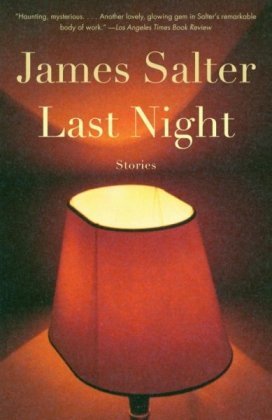
He was a poet, of course. He even looked like a poet, intelligent, lank. He’d won the Yale prize when he was twenty-five and went on from there. When you pictured him, it was wearing a gray herringbone jacket, khaki pants, and for some reason sandals. Doesn’t fit together, but a lot of things about him were like that. Born in Galveston, ROTC in college, and even married while an undergraduate, although what became of that wife he never clearly explained. His real life came after that, and he had lived it ever since, teaching sometimes in community classes, travelling to Greece and Morocco, living there for a period, having a breakdown, and through it all writing the poem that had made his name. I read the poem, a third of it anyway, standing stunned in a bookshop in the Village. I remember the afternoon, cloudy and quiet, and I remember, too, almost leaving myself, the person I was, the ordinary way I felt about things, my perception of—there’s no other word for it—the depth of life, and above all the thrill of successive lines. The poem was an aria, jagged and unending. Its tone was what set it apart— written as if from the shades. There lay the delta, there the burning arms . . . was the way it began, and immediately I felt it was not about rivers uncoiling but about desire. It revealed itself only slowly, like some kind of dream, the light fluttering on the fronds, with names and nouns, Naples, worn benches, Luxor and the kings, Salonika, small waves falling on the stones. There was repetition, even refrain. Lines that seemed unconnected gradually became part of a confession that had at its center rooms in the burning heat of August where something has taken place, clearly sexual, but it is also the vacant streets of rural Texas, roads, forgotten friends, the slap of hands on rifle slings and forked pennants limp at parades. There are condoms, sun-faded cars, soiled menus with misspellings, a kind of pyre on which he had laid his life. That was why he seemed so pure—he had given all. Everyone lies about their lives, but he had not lied about his. He had made of it a noble lament, through it always running this thing you have had, that you will always have, but can never have. There stood Erechtheus, polished limbs and greaves . . . come to me, Hellas, I long for your touch.

This is, ultimately, a book about the world. It inquires about the world’s meaning. It attempts to do unlicensed metaphysics in a teacup. The teacup at hand, in this case, is contemporary fiction.
Why read fiction to think about the world? You may, like most of us most of the time, read fiction for other things. You may read fiction to enjoy the multiplicity and dazzle of the vivid objects it presents to the imagination; to hear its verbal splendor and admire its nimble narrative; to enter lives not your own; to feel, on one hand, the solemn stasis and immutability of the work as enclosed art object—beginning and ending the same way every time you read it, as though a novel were a diagram inscribed forever under the vault of heaven—and to feel, on the other hand, the plunging force of time compressed in its passage, and that compressed passage like a river’s pitch crowded with scenes and scenery and actions and characters enlarged and rushing headlong down together. You may, I say, enjoy fiction for these sensations, and turn to nonfiction for thought.
Fiction can deal with all the world’s objects and ideas together, with the breadth of human experience in time and space; it can deal with things the limited disciplines of thought either ignore completely or destroy by methodological caution, our most pressing concerns: personality, family, death, love, time, spirit, goodness, evil, destiny, beauty, will.
Fiction writers are, I hope to show, thoughtful interpreters of the world. But instead of producing interpretations—instead of doing research or criticism—they doodle on the walls of the cave. They make art objects which must themselves be interpreted. How convolute, how absurd, how endlessly interesting is this complexity! The world is filling up with works of fiction, with these useless, beautiful objects of thought—to what end? What links any work of fiction with anything we want to learn? To the world we see? To our understanding of the world we see? Does fiction illuminate the great world itself, or only the mind of its human creator?

The five-minute warning bell had rung. I sat with my ankles on the railing reading a novel about the Second World War. I should have used the time to do my homework, but the appeal of Nazis, K rations, and sunlight slanting through the forest while men attempted to kill one another was too great. I read four or five hours every night at home, but it was never quite as sweet as in school, when even a snatch read as I climbed the stairs seemed to protect me from my surroundings with an efficacy that bordered on the magical. And if the story dealt with questions of life and death, so much the better. How could I be seriously worried about having nothing to hand in at Math when I was pinned in a shallow foxhole, under a mortar barrage, a dead man across my back and a hysterical young lieutenant weeping for his mother by my side? I could not resist the clarity of the world in books, the incredibly satisfying way in which life became weighty and accessible. Books were reality. I hadn't made up my mind about my own life, a vague, dreamy affair, amorphous and dimly perceived, without beginning or end.
[...] I read very fast, uncritically, and without retention, seeking only to escape from my own life through the imaginative plunge into another. Safe in my room with milk and cookies I disappeared into inner space. The real world dissolved and I was free to drift into fantasy, living a thousand lives, each one more powerful, more accessible, and more real than my own. It was around this time that I first thought of becoming a writer. In a cheap novel the hero was asked his profession at a cocktail party. "I'm a novelist," he said, and I remember putting the book down and thinking, my God what a beautiful thing to be able to say,

[...] Yet the special thing about literature, the major art form of a Western civilisation now ending before our very eyes, is not hard to define. Like literature, music can overwhelm you with sudden emotion, can move you to absolute sorrow or ecstasy; like literature, painting has the power to astonish, and to make you see the world through fresh eyes. But only literature can put you in touch with another human spirit, as a whole, with all its weaknesses and grandeurs, its limitations, its pettinesses, its obsessions, its beliefs; with whatever it finds moving, interesting, exciting or repugnant. Only literature can give you access to a spirit from beyond the grave – a more direct, more complete, deeper access than you’d have in conversation with a friend. Even in our deepest, most lasting friendships, we never speak as openly as when we face a blank page and address a reader we do not know. The beauty of an author’s style, the music of his sentences have their importance in literature, of course; the depth of an author’s reflections, the originality of his thought certainly can’t be overlooked; but an author is above all a human being, present in his books, and whether he writes very well or very badly hardly matters – as long as he gets the books written and is, indeed, present in them. (It’s strange that something so simple, so seemingly universal, should actually be so rare, and that this rarity, so easy to observe, should receive so little attention from philosophers in any discipline: for in principle human beings possess, if not the same quality, at least the same quantity of being; in principle they are all more or less equally present; and yet this is not the impression they give, at a distance of several centuries, and all too often, as we turn pages that seem to have been dictated more by the spirit of the age than by an individual, we watch these wavering, ever more ghostly, anonymous beings dissolve before our eyes.) In the same way, to love a book is, above all, to love its author: we want to meet him again, we want to spend our days with him. During the seven years it took me to write my dissertation, I lived with Huysmans, in his more or less permanent presence.[...]

Of course, there’s irony to this, as well, because the whole of Inside is about getting outside, about escaping the facility that is the game you’re playing, and the allegorical game designers seem to be trying to help you do that, even though you’re not actually escaping anything, because it’s all just the game. To escape this—to make it more than a prepubescent meta-snort of postmodernism—you have to broaden your understanding of what escape might mean. If escape means distraction, then Inside fails as art, but if escape means enlarging the boundaries of the self, then it succeeds. In other words, Inside is not about whether the kid, or his sister, is dead or alive at the beginning or the end of the game, it’s about whether you are.
The much remarked-upon narrator of Raymond Carver’s classic short story, “Cathedral,” experiences such a moment as the story climaxes with a blind man helping him draw a church. “My eyes were still closed,” the narrator says. “I was in my house. I knew that. But I didn’t feel like I was inside anything.”
At its most ambitious, Inside aspires to a similar feeling. Escape in art that is not transcendence is cheap, and if you can climb beyond the foolish puzzles and the Easter eggs and the hidden meanings, you can feel, for a moment, that you are not alone on your sofa with your phone, playing a game; rather, you are somewhere else—somewhere grassy, bathed in warmth by a ray of sunlight falling from above.
aw i like this

"Who are my contemporaries?" Juan Gelman asks himself.
Juan says that sometimes he comes across men who smell of fear, in Buenos Aires, Paris, or anywhere in the world, and feels that these men are not his contemporaries. But there is a Chinese who, thousands of years ago, wrote a poem about a goatherd who is far from his beloved, and yet can hear in the middle of the night, in the middle of the snow, the sound of her comb running through her hair. And reading this distant poem, Juan finds that yes, these people - the poet, the goatherd and the woman - are truly his contemporaries.