
misc/poetry
Leonard Cohen,
Philip Larkin,
Fernando Pessoa,
Pablo Neruda,
Mark Doty,
Alex Gallo-Brown,
Maggie Smith,
Robert Hass,
Matthew Zapruder
poems i like
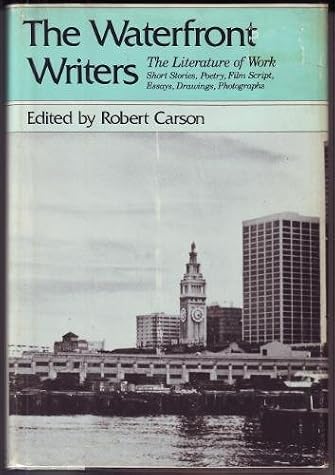
We went to a bar. Discussed new dimensions
for the writing of words and making of books.
Shuffled thoughts like cards, and suddenly
he threw the deck out.
"We're still building pyramids for the Pharoahs."
He was getting weepy. I looked where he looked.
New buildings going up, old crumbling piers.
Men hauling lines and rigging gear on ships.
A huge crate was landed on deck.
"Still building pyramids," he flew on.
He downed another drink, popped a pill for
his stomach, and joked from the tension and
incongruities of working for a wage, working as a poet.
Sky falling into the bay.
Buildings contradicting the heavens.
He took another pill.
"Man," he said, rolling his eyes, swilling a drink,
"I must be the only hippie in the world
who has to take anti-acid pills."
Born a Leo,
Cancer was his
rotting sign.
Build of a lumberjack,
soul of a sailor,
brains of a bolshevik,
dreams of a savior;
crucified by coronaries,
tormented by tumors.
Tobacco-stained smiles.
A snarling slap
during drunken interludes.
Bear hugs across
the funny papers
on Sunday morning.
Standing in the
luminous hospital hallway
I saw him begin to crumble,
but never saw him
fall.
</3
that winter stepdad lost his job
people became thinner
their eyes worried
thinking of the crash
steelmills shut down
streets shabbier
shuffle of panhandlers
in front of the theater
a woman in evening gown and tennis shoes
looking for fun, mister?
as if there was any fun left anywhere in the world
as if some magician had plucked four out of five cars
off the streets
no butter, steaks, oranges
no coffee, tea, or milk
tailormade cigarettes had vanished
two people committed suicide
in our building in one week
they didn't even know each other
an elderly woman who plugged the keyhole
the gap under her door
turned on the gas
the hungarian,
goulash cooking on the stove,
when he did his dive
from a side window
head first.

I was a worker once.
Lent my labor to
the appetites of mass.
Like a caged animal,
my master said,
beautiful, self-contained.
Only once was I asked to sacrifice
the fingers of my left land,
which I gave willingly
and mostly without regret.
I could follow
my master's reasoning.
I was sympathetic
to her plight.
The company had
its own hunger.
We all would
have to give.
What of the other workers?
Where did they figure in?
I kept my gaze
on the task
in front of me.
I waited for
my shift
to end.
You want more police, you said, more patrols,
all of the Aurora crap pushed away,
to some other neighborhood, some other
place, someone else's
problem now, another
community's fate.
Those people don't want
help, anyway.
They want to snort powder
in the back seats of cars,
to break into decent
people's homes, to make
your mom afraid.
Our system is capitalism
and democracy, which means
people will be poor.
Just keep them the hell away.
In the poem
I have been trying
to write you,
I tell you about the hole
in my car
where the radio used to be,
how it was taken
two days before
we shared garlic prawns
at the Thai restaurant on Eastlake,
everything civil,
our disagreements peaceful,
all of us equal
so long as our bank accounts were sturdy enough
to sustain cocktails and Pad Thai and beef salad
alongside talk of the homeless
and criminal justice and the mayor and your lawn
You see? I have been trying to write you a poem,
but all I can come up with
are these banal thoughts
and prosaic observations.
In the poem I have been trying
to write you, I tell you about the hole
in my car where the radio used to be,
how before work each morning
I look down at cords and wires
and Styrofoam.
How its absence reproaches me
like a wound, a rupture
between how I live now
and the experience that used
to belong to me.
I tell you about the thief,
who I never saw but now sense,
a small man a little ashamed
as he reached down to detach
the wires exacting the minimum
amount of damage.
I tell you about the pity
that he felt for me
and the lack of peace
that he held in himself.
I tell you about his sadness
and fragility and fear.
I tell you that the police
will not help you.
I tell you that the prawns
will not help you.
I tell you that playing civil
or socialized or familial
will not help you.
I tell you
that you will die.
fuck
At home, I tell my vegetarian friends
that I admire them,
and I do, I think, sneaking mouthfuls
of boiled bird
from the walk-in freezer
I am a dissolute
and undisciplined creature,
but I harbor no illusions
that I am alone.

There are poems of not-knowing that are, for me, very connected to this and have the same quality. One of my favorite haiku is by Basho, who is a poet I think of as actually having many connections to Emily Dickinson. It’s a poem that takes the classic, almost cliché subject of the haiku, the middle high part of the autumn season—the phrase in Japanese is aki fukaki, usually translated “deep autumn” or “autumn deepens,” and there are many such poems: “deep autumn the leaves are falling . . .” “deep autumn even now the quinces . . . ,” deep autumn this and that; the poem of Basho’s on this subject goes:
Deep autumn—
my neighbor,
how does he live, I wonder?
Paraphrasing haiku, I know, is like explaining jokes; it’s a sort of hopeless enterprise. But what is deeply moving to me about this poem is the way it gets whatever it is in our bodies that groans with gorgeous and painful knowledge in the turning of the year. And it gets the feeling of separateness from other people that accompanies it. And the longing to be connected back to them. Or an awakened curiosity about them, as if, waking to the fact that there are other people with other lives, the speaker in the poem has a sudden taste of his own self, of his having one and being one. Both these poems borrow on long religious traditions. One might not think so, but to speak of “deep autumn” in the Buddhist tradition is to speak of a fundamental idea about nature, that it is impermanent and contingent, as much as talking about light recalls the Gospel of John for a Christian—both of them are poems of essential loneliness that have in them a long experience of religion and a longing for it and a deep separateness from it. And what they have pledged themselves to, as a representation of spirituality, is the work of imagination.
In talking about this with Judith, I was able to quote a haiku that I love by the nineteenth-century poet Kobayashi Issa, which goes like this—seventeen syllables in the Japanese:
     The man pulling radishes
   Pointed my way
     With a radish.
Can you imagine the situation? The narrator of the poem is hiking along a road. He stops and asks for directions. And the fellow working in the field waves his radish—it’s a daikon, one of those long skinny Japanese radishes—and says, “Oh, it’s about four miles down the road on the left.” That’s my image of myself teaching poetry: I was the guy with the radish.

From the library I procured a book and started reading the poems. There was no reason to think I was going to enjoy them. I was not a particularly artistic kid, and I didn’t work on our high school literary magazine, or write. Nothing was auspicious. I do not remember opening the book. Yet to this day I still remember reading the first few lines of “Musée des Beaux Arts”:
About suffering they were never wrong,
The Old Masters: how well they understood
Its human position: how it takes place
While someone else is eating or opening a window or just
walking dully along
and something just clicked. I can’t say I felt I immediately understood everything, but the poem seemed to mean something I could not quite put my finger on, something important to me.
I think this is one reason why Ashbery is often thought of as difficult or elusive. It can seem to readers either like there is nothing there, or that they are missing something. “The poem is sad, because it wants to be yours, and cannot,” he writes in another poem, “Paradoxes and Oxymorons,” which begins:
This poem is concerned with language on a very plain level.
Look at it talking to you. You look out a window
Or pretend to fidget. You have it but you don’t have it.
You miss it, it misses you. You miss each other.