
by
Helen DeWitt
inspo/funny
Martin Amis,
Thomas Pynchon,
Charlie Kaufman,
Miranda July,
Helen DeWitt,
Elaine Dundy,
Lucia Berlin,
Iris Murdoch,
Shirley Hazzard
otherwise uncaptured moments of humor

I was reading a book on solid state physics. Sibylla gave it to me for my birthday because it said inside the front cover that the extension of our understanding of the properties of solids at the microscopic level is one of the important achievements of physics this century and because she had found a damaged copy on sale for £2.99. Unfortunately it wasn’t quite the bargain it looked, because the blurb went on to say: Dr. Rosenberg’s book requires only a fairly basic background in mechanics, electricity, and magnetism, and atomic physics along with relatively intuitive ideas in quantum physics. Sibylla thinks no one is put off by difficulty only by boredom and if something is interesting no one will care how hard it is; it is certainly an absorbing subject but to follow it you really need at least some kind of introductory materials on the above-mentioned subjects. I was getting rather frustrated but I thought I would rather die than sell the heart, not because I wanted to keep it but because it would be horrible to take money for it.
[...] I was thinking about the Umklapp process, or thinking about it as much as you can think about it if you don’t have a fairly basic background in mechanics, electricity, and magnetism, and atomic physics along with relatively intuitive ideas in quantum physics.
god she is so funny
I sat on a doorstep across the street from Quaglino’s and tried to read The Solid State, but the light was too bad. So I started reciting Iliad 1. I am planning to learn the whole thing in case I am thrown in jail some day.
People went in and out of Quaglino’s. I finished Iliad 1; it was still only 12:30. A couple of people stopped and asked if I was all right. I said I was. I started going through weak Arabic verbs. My favourites are the double and triple weak verbs because they practically shut down in the imperative, but I made myself start with initial hamza and work through.
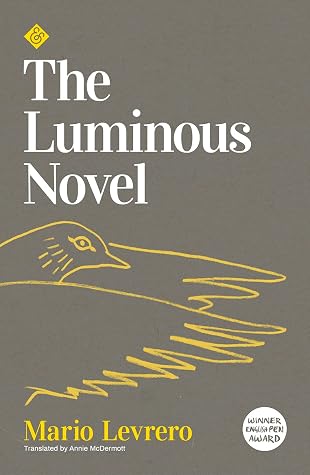
Only your soul, young man, can show you the way. Wind it up, set it in motion, and let it be whatever God wants. The sublime, that dimension we never consider, that thing we’re missing: it’s nowhere and it might be anywhere; here today, there tomorrow, gone completely the day after, and in twenty years it’ll be back again, or perhaps it won’t; it all depends on the Grace of God – and how you’re getting on with yourself. Once, perhaps by chance, Grace brushed against me in a church. I was thirty-six years old, and that experience, which I’ll write about in due course, made me take Communion for the first time. Not even churches are off limits to the hand of God.
the last line kills me

Meanwhile, the administration was understaffed and over-worked. The theatre director’s secretary was also the press officer. The costume studios were disintegrating and the permanent stage designers were ill or alcoholics. Communication was an unknown concept.
lmao
I high-handedly moved to the Savoy Hotel and swore I was prepared to pay whatever it cost. Lord Olivier offered me his pied-a-terre at the top of a high-rise in one of the more genteel areas of the city. He assured me I would not be disturbed. He and his wife, Joan Plowright, lived in Brighton, and he might spend the odd night in London occasionally, but we would not embarrass one another. I thanked him for his thoughtfulness and moved in, to be welcomed by a Dickensian character who was his housekeeper. She was Irish, four feet tall and moved crabwise. In the evenings she read her prayers so loudly, I first thought it was a service being broadcast through a loudspeaker in her room.
im sorry but this is hilarious

I was astonished at how little she understood me, but as a matter of fact I didn't understand her very well either. She believed that, for us, work was nothing but a means of achieving fortune and success, and I was vaguely convinced that all those snobs would have gladly traded their social position for intellectual talents and accomplishments. When I was a child, a teacher seemed to me a much greater person than a duchess or a millionaire, and through the years that hierarchy had not changed appreciably. Claudie, however, believed that the supreme reward for an Einstein would be to be received in her salon. We-could hardly reach any real understanding.

[...] She wanted to brag, but she wanted to seem like she was being discreet. She kept talking about what good money she made as a waitress on Pier 39. She said, as if she somehow knew what I did for a living, “I make my money respectably.” Pier 39 is garbage.

We went to three night-clubs in quick succession. They were sad and sleazy and awful in a way I’d never quite come across before. It was the sadness mainly. The what-went-wrong look on the waiters’ faces as they stood staring bewilderedly at an empty room most certainly on the brink of bankruptcy. One thing that went wrong was the night-club comic with his hair too long and combed all funny singing “There’s no business like Shoe Business” to “There’s no business like etc.,” and doing impersonations of King Kong falling for a butterfly. Another wrong thing was the young man with a guitar who sang dirty Scottish ballads about goats sleeping with women (Trad.). Another was the girl in tights with a stocking cap pulled down over her eyes and ears who did a totally inexplicable dance with the lights out, mostly writhing on the floor. And lastly, the audience—a sprinkling of debs and their escorts who jeered and hurled pennies on the stage as the acts progressed—they were awfully wrong. It was discouraging. How was I going to get C. D. hooked on this dissolute way of life—let alone how was I myself going to bear it? How was I going to keep him out till dawn every night, exhausted and spent and running downhill until the final—what?—how about a heart attack?—would carry him off? What I had in mind was some divine little boîte that had good jazz and a sensational entertainer; one that was dark, smoky, and unhealthy and served rot-gut strong enough to melt the mind, rip out the lining of the stomach, explode the liver, and curdle the kidneys. Or, if that was too much to ask, at least a place interesting enough to keep him up late. He went to bed much too early. They all did in London. I never saw such people for leaving each other’s houses at the stroke of midnight.
The fourth night-club was a strip-tease joint. I got us out of there even faster. I wasn’t going to have him going around with erotic images other than my own on his mind if I could help it. The fifth—an enormous one—had not only tumblers but ice-skaters and a ventriloquist. We left during the juggling act.
lolll
“Not at all. Simply another use for my money. Protection money so I don’t have to spend the rest of my life worrying about you sticking pins in my image.”
“How did you find out about that?” I asked startled.
He gave me a really terrible look. “What?” he roared. “This is the last straw,” he thundered. “Out, out, OUT!” He had risen large and looming, filling the room with his fury, pointing a chubby finger theatrically towards the drawing-room doors. And I jumped up cringing, little Eva turned out into the storm.
lmao

LAPHAM: Maybe I'd try to tell the wonderful story of Robert Benchley, who was given an examination at Harvard when he was in law school. He hadn't been to a single class in his entire year and was asked to discuss the fishing rights off the Grand Bank from the point of view of the French, the British and the Americans. It was a three-hour exam. Benchley's opening sentence was to the effect that he never knew what the French position was, he never wanted to know what the British position was and he didn't care what the American position was. He would, however, like to discuss the question from the point of view of the fish. Then follows a long conversation between a cod and a flounder as to whether it's better to be fried by the French or boiled by the British.