
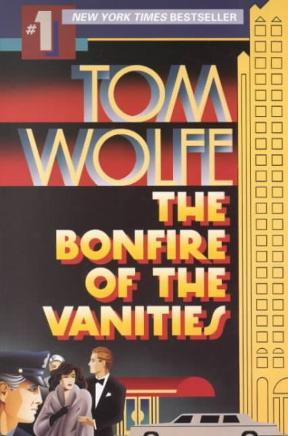
by
Tom Wolfe
164
Catching the Fish
0
terms
6
notes
169
Christ God! Scalping her must have been an undertaking! Had he been feeling better, Fallow would have paid a silent tribute to the extraordinary esthetique de I'abattoir that enabled these shameless devils, his employers, his compatriots, his fellow Englishmen, his fellow progeny of Shakespeare and Milton, to come up with things like this day after day. Just think of the fine sense of gutter syntax that inspired them to create a headline that was all verbs and objects, with the subject missing, the better to make you claw your way inside these smeary black pages to find out what children of evil were fiendish enough to complete the sentence! Just think of the maggot's perseverance that enabled some reporter to invade chez Perez and extract a picture of Granny that made you feel the bloody act in your fingertipsin your very shoulder joints! Just think of the anticlimax of "scalp Grandma" . . . "then rob her." The pointless brilliant anticlimax! Christ, if they'd had more room, they would have added, "then leave all the lights on in her kitchen."
lol
172
[...] Like more than one Englishman in New York, he looked upon Americans as hopeless children whom Providence had perversely provided with this great swollen fat fowl of a continent. Any way one chose to relieve them of their riches, short of violence, was sporting, if not morally justifiable, since they would only squander it in some tasteless and useless fashion, in any event.
[...] Like more than one Englishman in New York, he looked upon Americans as hopeless children whom Providence had perversely provided with this great swollen fat fowl of a continent. Any way one chose to relieve them of their riches, short of violence, was sporting, if not morally justifiable, since they would only squander it in some tasteless and useless fashion, in any event.
181
"Yo ho ho," said Kramer.
The wagon train. "Yo-ohhhhhhh" was the cry of John Wayne, the hero and chief scout, signaling the pioneers to move the wagons. This was Indian country and bandit country, and it was time to put the wagons in a circle for the night. Anybody who thought he was going to be able to walk two blocks from Gibraltar to the parking lot after dark in the Four-four and drive peacefully home to Mom and Buddy and Sis was playing the game of life with half a deck.
185
Out on the sidewalk, Peter Fallow could see the cars and taxis speeding uptown on West Street. Christ God, how he longed to be able to crawl into a taxi and go to sleep until he reached Leicester's. No! What was he thinking? No Leicester's tonight; not a drop of alcohol in any form. Tonight he was going straight home. It was getting dark. He'd give anything for a taxi ... to curl up in a taxi and go to sleep and head straight home . . . But the ride would be nine or ten dollars, and he had less than seventy-five dollars to last him until payday, which was next week, and in New York seventy-five dollars was nothing, a mere sigh, a deep breath, a passing thought, a whim, a snap of the fingers. He kept looking at the front entrance to the City Light building, which was a dingy Moderne tower from the 1920s, hoping to spot some American from the newspaper with whom he could share a taxi. The trick was to find out where the American was heading and then to pick out some destination four or five blocks short of there and announce that as one's own destination. No American had the nerve to ask one to share the cost of the ride under those circumstances.
After a bit there emerged an American named Ken Goodrich, the City Light's director of marketing, whatever in God's name marketing was. Did he dare once more? He had already hitched rides with Goodrich twice in the past two months, and the second time Goodrich's delight over the opportunity to converse with an Englishman on the ride uptown had been considerably less intense; considerably. No, he did not dare. So he girded his loins for the eight-block walk to City Hall, where he could catch the Lexington Avenue subway.
192
Only the problem of dinner remained to be solved. Dinner at Leicester's, even without wine, was at least forty dollars per person. Fallow headed for the coin telephone on the corner. There was this Bob Bowles, the American magazine editor . . . It should work out . . . The skinny woman he lived with, Mona something, was very nearly unbearable, even when she wasn't talking. But everything in life had its price, didn't it?
He entered the booth and dropped a quarter in the slot. With luck he would be back inside of Leicester's within the hour, eating his favorite dish, the chicken paillard, which tasted especially good with red wine. He liked Vieux Galouches, a French wine that came in a bottle with an eccentric neck, the best.
god
196
Kramer didn't know how much of this to believe. He had once read an article in The Village Voice describing Bacon as a "street socialist," a black political activist who had arrived at his own theories about the shackles of capitalism and the strategies required to give black people their due. Kramer had no interest in left-wing politics, and neither did his father. Yet in their house, when he was growing up, the word socialist had religious overtones. It was like Zealot and Masada. There was something Jewish about it. No matter how wrongheaded a socialist might be, no matter how cruel and vindictive, he possessed somewhere in his soul a spark of the light of God, of Yahweh. Maybe Bacon's operation was extortion, and maybe it wasn't. Looked at one way, the entire history of the labor movement was extortion. What was a strike but extortion backed up by real or implied threat of violence? The labor movement had a religious aura in Kramer's house, too. The unions were a Masada uprising against the worst of the goyim. His father was a would-be capitalist, a servant of capitalists in actual fact, who had never belonged to a labor union in his life and felt infinitely superior to those who did. Yet one night Senator Barry Goldwater had been on TV promoting a right-to-work bill, and his father had started growling and cursing in a way that would have made Joe Hill and the Wobblies look like labor mediators. Yes, the labor movement was truly religious, like Judaism itself. It was one of those things you believed in for all mankind and didn't care about for a second in your own life. It was funny about religion . . . His father wrapped it around himself like a cape . . . This guy Bacon wrapped it around himself . . . Herbert wrapped it around himself . . . Herbert ... All at once Kramer saw a way to talk about his triumph.
Kramer didn't know how much of this to believe. He had once read an article in The Village Voice describing Bacon as a "street socialist," a black political activist who had arrived at his own theories about the shackles of capitalism and the strategies required to give black people their due. Kramer had no interest in left-wing politics, and neither did his father. Yet in their house, when he was growing up, the word socialist had religious overtones. It was like Zealot and Masada. There was something Jewish about it. No matter how wrongheaded a socialist might be, no matter how cruel and vindictive, he possessed somewhere in his soul a spark of the light of God, of Yahweh. Maybe Bacon's operation was extortion, and maybe it wasn't. Looked at one way, the entire history of the labor movement was extortion. What was a strike but extortion backed up by real or implied threat of violence? The labor movement had a religious aura in Kramer's house, too. The unions were a Masada uprising against the worst of the goyim. His father was a would-be capitalist, a servant of capitalists in actual fact, who had never belonged to a labor union in his life and felt infinitely superior to those who did. Yet one night Senator Barry Goldwater had been on TV promoting a right-to-work bill, and his father had started growling and cursing in a way that would have made Joe Hill and the Wobblies look like labor mediators. Yes, the labor movement was truly religious, like Judaism itself. It was one of those things you believed in for all mankind and didn't care about for a second in your own life. It was funny about religion . . . His father wrapped it around himself like a cape . . . This guy Bacon wrapped it around himself . . . Herbert wrapped it around himself . . . Herbert ... All at once Kramer saw a way to talk about his triumph.