
by
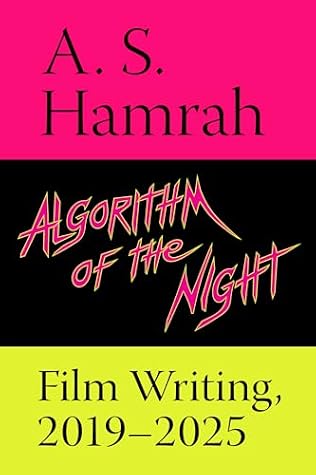
A S Hamrah
447
The film’s light-pink and dark-green palette makes it look like Lilly Pulitzer was hired to design Hook. Jon M. Chu has directed it so dutifully that no musical number can become a showstopper, which doesn’t really matter because the film’s audience already knows the songs by heart. Heart, however, is what the film lacks. It contains nothing within a Kansas mile of Judy Garland singing “Over the Rainbow.” There is no longing here, nothing sad. Emotions in The Wizard of Oz were anchored to Dorothy’s dream of a world in which her relatives and the people in her town could be other than what they were. Wicked’s longing is to be a Harry Potter movie.
omg
447
Idiotic cultural appropriation is paid back to Netflix, the distributor of Emilia Pérez. Netflix sent the French Emily in Paris, the French sent back this film — the titles are practically the same. A Mexico-set musical about a transgender narco (Karla Sofía Gascón) who starts an NGO to help the families of people murdered by the cartels, the film actually stars Zoe Saldaña as Emilia’s lawyer and the facilitator of her gender-affirming surgeries. It is a thankless role, predicated on Saldaña taking seriously the idea that Gascón is, as a review in the Los Angeles Times had it, giving a “sensually charged portrayal [that] wouldn’t be out of place anchoring a classic Hollywood woman’s noir.” Sure, Tommy Wiseau could play Philip Marlowe in The Big Sleep, too, if you gave him the chance.
The idea that this galoot would be unrecognizable to even her children requires a special suspension of disbelief. Therefore the director, Jacques Audiard, had to include a song about it called “Papa,” in which the kid has an inkling that is soothingly dispelled by Emilia herself. If the film had anything of a fairy-tale element to it, which it does not, a scene like that might have worked. But everything in Emilia Pérez is too easy, a neoliberal cakewalk. It’s the kind of movie in which Emilia makes sure to assure us her NGO is “not a replacement for public services.” The film is a preposterous nightmare of first-world self-regard.
lolllll
453
The small, transparent network logo that used to appear in the corner of TV screens was called a “bug,” or “the bug,” and it was invented by ABC Sports during this armed standoff, we learn here. That was the highlight of the movie for me. I’d always wondered about that. In the end, September 5 is a tribute to Nielsen ratings. Nine hundred million people watched this tragedy unfold on live TV. Now that TV news has become unprofitable for the entertainment conglomerates that own it, and the Olympics are viewed piecemeal across many platforms, the film can be seen as nostalgic longing for a time when terrorism got everybody to watch the same thing at the same time. That is not what movies are for.
lmao
462
It’s important to remember that even as Hollywood was ignoring Lynch, much of the mainstream, middlebrow critical establishment in the US was also disparaging his work. It wasn’t just that it was too weird. It elicited really hateful reactions from Siskel & Ebert, among others. At the New Yorker, one of the film critics instantly dismissed Twin Peaks: The Return as soon as the first episode ended, tweeting that Lynch had been superseded by Wes Anderson, and their TV critic simply refused to watch it, while at the same time insisting it was TV, not cinema. Even the highest-browed American, Fredric Jameson, who died four months before Lynch, saw in his work some kind of threat, writing against him in Postmodernism, or, the Cultural Logic of Late Capitalism by calling his work “evil.” Just last summer, Phillip Lopate’s latest collection of his film criticism, My Affair with Art House Cinema, came out, and included a piece on the inadequacy of Mulholland Drive in which this dean of American film critics described Lynch as “prone to jejune self-indulgence, capricious phantasmagoria, and vulgarity.”
Such big, dismissive words! As for me, my mind was blown open by Blue Velvet when I saw it college-aged in first run in 1986 at the Nickelodeon Cinema in Boston with my then-girlfriend. We could not speak when we left the theater, so rattled were we by this terrifying new thing that had come into the world (the same summer and fall as Down by Law, She’s Gotta Have It, Big Trouble in Little China, and Something Wild). This filmic world of smashed TVs, diners, wood paneling, the ominous hum of electricity, and rose-pink wall-to-wall carpeting was not, as some viewers may now think, an alien place. It was the actual America of that time, put on screen by David Lynch in a way no one had ever seen before.
:)