
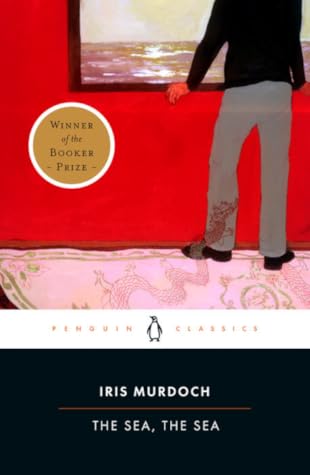
by
Iris Murdoch
vii
Introduction by Mary Kinzie
(missing author)
0
terms
2
notes
xii
There is a contradiction built into the literary use of what we might see as the mode of Marsyas, the mode of lifelikeness or a realism of the physical as it leads to the edge of the spiritual: The catch is that although an artwork needs a shape, the ordinary world and our experiences within it are unformed and inartistic, an ill-sorted jumble of events and crisscrossing motives and roughly joined disguises—false and foolish integuments. Beauty of form is far removed from most lives. The texture of consciousness is sluggish when not venal (nobody really thinks in the shaped linguistic patternings of Hermann Broch’s Vergil or Beckett’s Watt or García Márquez’s patriarch or Coetzee’s magistrate), while the many occasions in literary art for tempting closure in the shaping of event are all too often triggered by fantasy or will. Paradoxically, it is this willed closure or neatness of finish that the true artist needs to resist, fending off the urge to smooth out the rough surfaces of pain, necessity, and accident. Instead, as in Shakespeare, exemplary in bearing witness to the terrible even in those plays most given over to a maniac tidying up of bodies in marriage and death, the goal is to render clearly and without flinching the truth of all the infinite varieties of untruth. Like Shakespeare, Murdoch canvasses the truth of untruth—human vanity, jealousy, idleness. “People lie so,” says James Arrowby to his cousin Charles, “even we old men do. Though in a way, if there is art enough it doesn’t matter, since there is another kind of truth in the art” (p. 173).
There is a contradiction built into the literary use of what we might see as the mode of Marsyas, the mode of lifelikeness or a realism of the physical as it leads to the edge of the spiritual: The catch is that although an artwork needs a shape, the ordinary world and our experiences within it are unformed and inartistic, an ill-sorted jumble of events and crisscrossing motives and roughly joined disguises—false and foolish integuments. Beauty of form is far removed from most lives. The texture of consciousness is sluggish when not venal (nobody really thinks in the shaped linguistic patternings of Hermann Broch’s Vergil or Beckett’s Watt or García Márquez’s patriarch or Coetzee’s magistrate), while the many occasions in literary art for tempting closure in the shaping of event are all too often triggered by fantasy or will. Paradoxically, it is this willed closure or neatness of finish that the true artist needs to resist, fending off the urge to smooth out the rough surfaces of pain, necessity, and accident. Instead, as in Shakespeare, exemplary in bearing witness to the terrible even in those plays most given over to a maniac tidying up of bodies in marriage and death, the goal is to render clearly and without flinching the truth of all the infinite varieties of untruth. Like Shakespeare, Murdoch canvasses the truth of untruth—human vanity, jealousy, idleness. “People lie so,” says James Arrowby to his cousin Charles, “even we old men do. Though in a way, if there is art enough it doesn’t matter, since there is another kind of truth in the art” (p. 173).
xii
Does this model of the true art-of-the-untruth pertain in The Sea, the Sea? How far can Charles Arrowby, the scot-free predator upon other men’s women, theatrical Tartar and tyrannus tonans , enter into an understanding of the backwardness—the lies—of his own character? On the surface, he admits he has nothing extraordinary to show for his sixty-some-odd years, that he leaves nothing of lasting value behind (no offspring, for example), that he has not been generous or ever, really, courageous—and certainly not “good.” Yet he cannot seem to get up and move elsewhere with this recognition; he remains sanguine about his prospects, sunk in that self while lavish in his criticisms of traits in others that resemble his own bad ones. The hard, the necessary, and the fated truths of existence do not seem to affect or even brush against him—or when they do, they do so in beckonings of apparent reprieve or unanticipated blessing (as in his two visions of the starry night, the second ending with a visit from the selkies).
Does this model of the true art-of-the-untruth pertain in The Sea, the Sea? How far can Charles Arrowby, the scot-free predator upon other men’s women, theatrical Tartar and tyrannus tonans , enter into an understanding of the backwardness—the lies—of his own character? On the surface, he admits he has nothing extraordinary to show for his sixty-some-odd years, that he leaves nothing of lasting value behind (no offspring, for example), that he has not been generous or ever, really, courageous—and certainly not “good.” Yet he cannot seem to get up and move elsewhere with this recognition; he remains sanguine about his prospects, sunk in that self while lavish in his criticisms of traits in others that resemble his own bad ones. The hard, the necessary, and the fated truths of existence do not seem to affect or even brush against him—or when they do, they do so in beckonings of apparent reprieve or unanticipated blessing (as in his two visions of the starry night, the second ending with a visit from the selkies).