
by
BOMB Magazine
(editor)
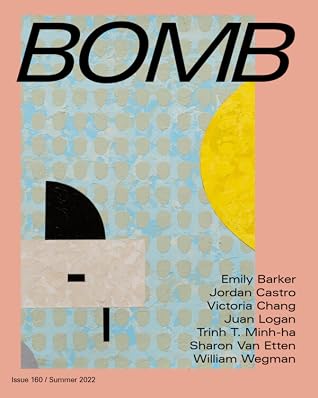
BOMB Magazine Summer 2022 (#160)
BOMB Magazine Summer 2022 (#160)
by
BOMB Magazine
(editor)
by
BOMB Magazine
(editor)
BOMB Magazine Summer 2022 (#160)
by
BOMB Magazine
(editor)
by
BOMB Magazine
(editor)
114
Interviews:
Literature: Jordan Castro
by Juliet Escoria
(missing author)
by Juliet Escoria
(missing author)
0
terms
2
notes
117
I’m sorry you’ve been falling into it. Nihilism is one of these words that has seeped into our everyday language, but people forget that Nietzsche’s nihilism diagnosis was a claim about the loss of transcendent values. It’s related to what we were just talking about. One of the ways Nietzsche defined nihilism is that it is what happens “when there is no Truth.” Modern secular people say they don’t believe in absolute Truth, but “there is no truth” is a truth claim. Instead, we have “my truth,” which doesn’t mean anything. It actually just means power—eventually “my truth” will come up against “your truth”—since there isn’t The Truth, all that is left is power. It’s the same with all of our other values. Now, we are subordinate to the market, which has infected every aspect of our lives: we are becoming timeless, placeless, history-less individuals, seeking the immediate fulfillment of our most base desires, scrambling for scraps of validation… We are nihilists. The Novelist is largely about trying to emerge from nihilism.
Earlier today Nicolette reminded me of an HTMLGIANT piece, where I kept saying how nothing is inherently good or bad… This is almost always just cope for living a shitty life. But tbh, I don’t know how much philosophy has helped me. I think “coming up against myself” enough to get humbled and then focusing on actions outside of my comfort zone—like prayer, nourishing friendships, lifting weights, trying to continually, incrementally change—helps more than anything. There are things we can only understand through the act; trying to understand everything beforehand doesn’t work. The Truth is not something you can just think or say. Truth does not belong to the Smarty-pants; it belongs to the fully alive human being, who increasingly conforms himself to Love.
the rest of the interview is a little disappointing cus it feels like a crude dismissal of politics but this is interesting
I’m sorry you’ve been falling into it. Nihilism is one of these words that has seeped into our everyday language, but people forget that Nietzsche’s nihilism diagnosis was a claim about the loss of transcendent values. It’s related to what we were just talking about. One of the ways Nietzsche defined nihilism is that it is what happens “when there is no Truth.” Modern secular people say they don’t believe in absolute Truth, but “there is no truth” is a truth claim. Instead, we have “my truth,” which doesn’t mean anything. It actually just means power—eventually “my truth” will come up against “your truth”—since there isn’t The Truth, all that is left is power. It’s the same with all of our other values. Now, we are subordinate to the market, which has infected every aspect of our lives: we are becoming timeless, placeless, history-less individuals, seeking the immediate fulfillment of our most base desires, scrambling for scraps of validation… We are nihilists. The Novelist is largely about trying to emerge from nihilism.
Earlier today Nicolette reminded me of an HTMLGIANT piece, where I kept saying how nothing is inherently good or bad… This is almost always just cope for living a shitty life. But tbh, I don’t know how much philosophy has helped me. I think “coming up against myself” enough to get humbled and then focusing on actions outside of my comfort zone—like prayer, nourishing friendships, lifting weights, trying to continually, incrementally change—helps more than anything. There are things we can only understand through the act; trying to understand everything beforehand doesn’t work. The Truth is not something you can just think or say. Truth does not belong to the Smarty-pants; it belongs to the fully alive human being, who increasingly conforms himself to Love.
the rest of the interview is a little disappointing cus it feels like a crude dismissal of politics but this is interesting
118
JE: I’ve had similar major shifts in my worldview, which I attribute to multiple causes, but mostly to sobriety and doing the things that it takes to be sober (“outside my comfort zone” things). I’m grateful for that. While I still slip into negative thinking, mostly I am able to find joy and wonder in small things, like a positive interaction with one of my students or even the seasons changing. Sometimes I think how funny it is that my life is so wholesome now, and how much better it is to seek a wholesome life, rather than the life of chaos that I avoided personal responsibility for because I thought of myself as having an “artistic temperament” or whatever. (Which I guess is still true, given my emotional volatility, but at least now I attempt to regulate it.) Sometimes I think I’m ridiculous because I’ve gotten into sober clichés like meditation and exercise. I think it’s cute/funny that you’ve turned to weightlifting and Jesus for similar reasons. How do you feel about being a sober cliché?
JE: I’ve had similar major shifts in my worldview, which I attribute to multiple causes, but mostly to sobriety and doing the things that it takes to be sober (“outside my comfort zone” things). I’m grateful for that. While I still slip into negative thinking, mostly I am able to find joy and wonder in small things, like a positive interaction with one of my students or even the seasons changing. Sometimes I think how funny it is that my life is so wholesome now, and how much better it is to seek a wholesome life, rather than the life of chaos that I avoided personal responsibility for because I thought of myself as having an “artistic temperament” or whatever. (Which I guess is still true, given my emotional volatility, but at least now I attempt to regulate it.) Sometimes I think I’m ridiculous because I’ve gotten into sober clichés like meditation and exercise. I think it’s cute/funny that you’ve turned to weightlifting and Jesus for similar reasons. How do you feel about being a sober cliché?